
Beautiful Plants For Your Interior
Beautiful Plants For Your Interior
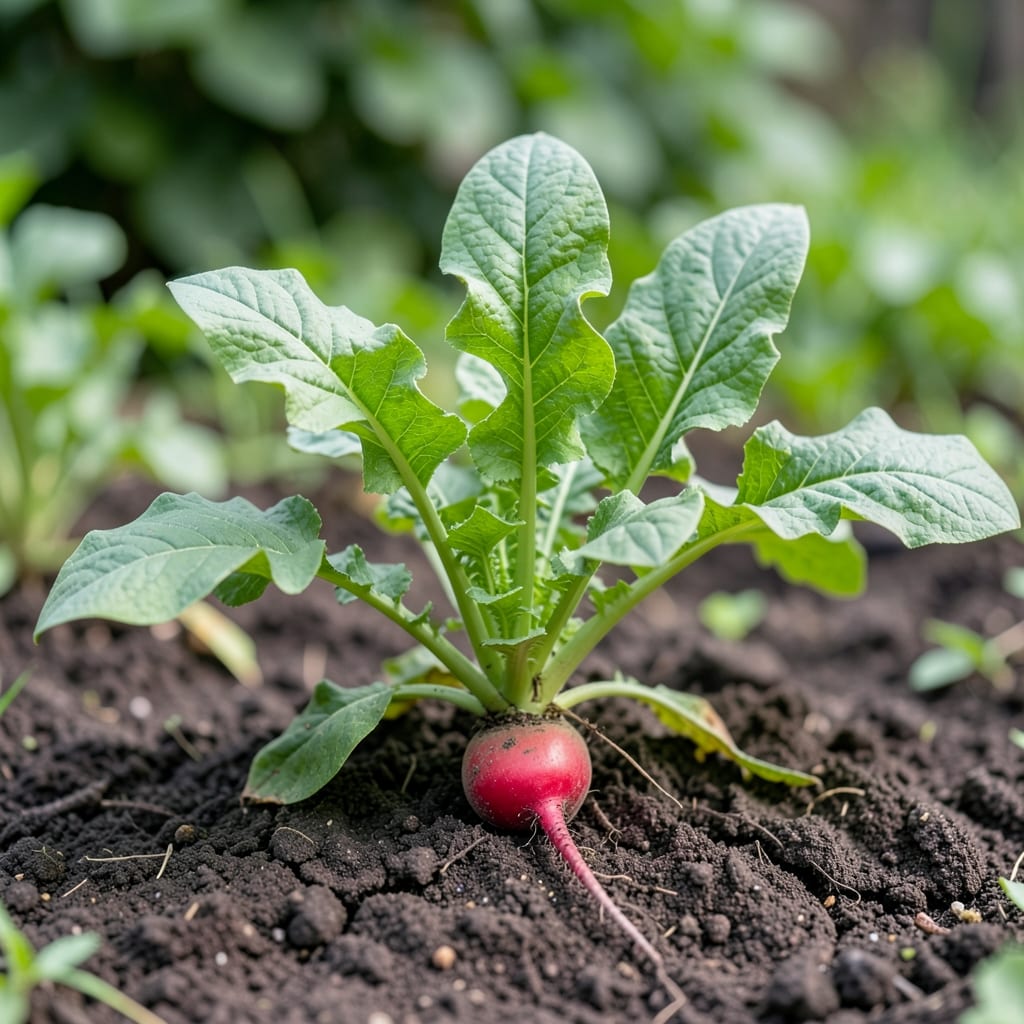
Radishes deliver that first taste of homegrown success faster than anything else in my garden. I’ve pulled perfect crisp roots just 25 days after planting, when most vegetables are still getting started.
These root vegetables thrive in cool weather with minimal fuss—just loose soil, consistent moisture, and a little sunshine. You’ll be harvesting bunches before you know it, while other crops are still growing.
📚 In This Guide
Radishes reward you faster than any other crop, with crisp roots ready in weeks, not months.
Choose a location with full sun—at least 6 hours of direct light daily—and loose, well-draining soil. I always loosen the top 6 inches of soil with a garden fork, breaking up any compacted areas that could deform the roots. Radishes struggle in heavy clay, so if your soil is dense, work in a 2-inch layer of compost to improve texture and fertility.
Remove rocks, sticks, or debris that might obstruct root growth. You’ll know the soil is ready when it crumbles easily in your hand and feels light and airy. Avoid fresh manure, which can cause forking or excessive leaf growth at the expense of the roots.
Plant seeds ½ inch deep and 1 inch apart in rows spaced 6 inches apart. I use a ruler or the edge of a board to create shallow furrows for even spacing. Cover the seeds lightly with soil and press down gently to ensure good seed-to-soil contact.
Water immediately after sowing with a fine mist or gentle spray to avoid washing seeds out of place. Keep the soil consistently moist but not soggy—you’ll see sprouts in 3-7 days if conditions are right. Dry soil delays germination, while waterlogged soil causes rot.
Once seedlings emerge and reach 2 inches tall, thin them to 2 inches apart. I know it feels wasteful, but overcrowding leads to stunted, misshapen roots. Use small scissors to snip unwanted seedlings at soil level rather than pulling—the disturbance can damage neighboring roots.
Thinning is critical for uniform sizing. If you skip this step, you’ll end up with a mix of tiny, crowded radishes and a few oversized ones. The thinned seedlings are edible—toss them in salads for a peppery bite.
Radishes need 1 inch of water per week, either from rain or irrigation. I water deeply every 2-3 days if there’s no rain, ensuring the soil stays evenly moist. Uneven watering causes roots to split or develop a woody texture.
If temperatures climb above 80°F, provide afternoon shade to prevent bolting—when radishes flower prematurely, the roots turn bitter and tough. Watch for the first sign of flowering and harvest immediately if it occurs.
Most varieties are ready in 25-30 days, but check the seed packet for specifics. I harvest when the tops of the roots are about 1 inch in diameter and visible above the soil. Pull gently by the leaves—if the root resists, use a fork to loosen the soil around it.
Don’t leave radishes in the ground too long. Overmature roots become pithy and develop a sharp, unpleasant flavor. Harvest in the morning for the crispest texture, and rinse off soil immediately to preserve freshness.
These quick insights will help you avoid the most common pitfalls when growing radishes.
Soil Preparation: In Step 1, when loosening the top 6 inches of soil, make sure to break up any compacted areas thoroughly. Radishes grow quickly but can become deformed in dense soil. Adding that 2-inch layer of compost not only improves drainage but also provides the nutrients needed for rapid growth without promoting excessive leaf development.
Seed Planting Depth: For Step 2, stick to the ½ inch planting depth precisely. Seeds planted too deep may struggle to emerge, while those too shallow can dry out. The 1 inch spacing between seeds and 6 inches between rows ensures each radish has enough room to develop properly without competing for resources.
Thinning Technique: When you reach Step 3 and your seedlings hit 2 inches tall, thinning to 2 inches apart is non-negotiable. Overcrowding is the number one cause of stunted, misshapen roots. Use scissors to snip at soil level rather than pulling to avoid disturbing the roots of the plants you’re keeping.
Watering Consistency: Step 4’s requirement of 1 inch of water per week is critical. rather than watering daily, aim for deep watering every 2-3 days as specified. This encourages strong root development and prevents the splitting or woody texture that comes from uneven moisture levels.
Radishes are one of the fastest-growing vegetables! Most varieties mature in just 3-4 weeks, making them perfect for quick harvests. For larger types, expect 6-8 weeks.
Absolutely! Use a container at least 6 inches deep with well-draining soil. Keep the soil moist, and ensure the pot gets 6+ hours of sunlight daily for best results.
This usually happens if they’re left in the ground too long. Harvest them promptly once they reach maturity. Overcrowding or hot weather can also cause toughness.
Radishes grow well with lettuce, spinach, and carrots. Avoid planting near cabbage or hyssop, as they may hinder growth. Companion planting can also deter pests!