
Beautiful Plants For Your Interior
Beautiful Plants For Your Interior
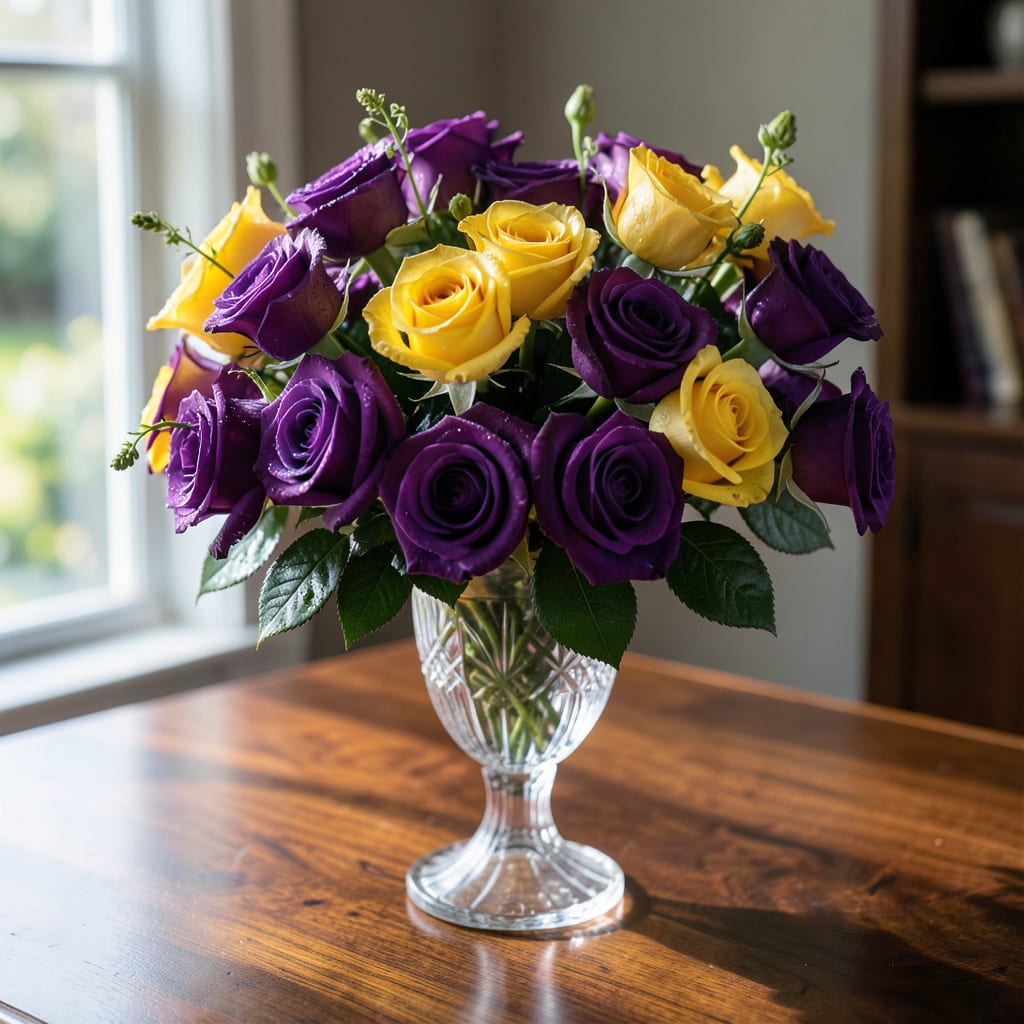
Nothing beats the drama of purple and yellow roses side by side. The contrast pops like a sunset against twilight, turning any garden into a living painting.
I’ve arranged them in clusters along pathways and as focal points in mixed borders. The purple adds depth while the yellow brings light, creating a balance that feels both bold and natural.
📚 In This Guide
Here’s the method I use to create stunning color contrast with minimal effort.
Choose purple roses like ‘Night Owl’ or ‘Ebb Tide’ and pair them with yellow varieties such as ‘Julia Child’ or ‘Sunflare’. I always check the mature size first—planting a climbing purple next to a dwarf yellow creates an unbalanced look that’s hard to fix later.
Look for varieties with similar bloom times so you get that color contrast when both are in full flower. The tag should list spring through fall for continuous color. Avoid varieties that only bloom once per season—they’ll leave you with bare stems when the other is flowering.
Select a location that gets full sun (at least 6-8 hours daily). Roses need plenty of light to produce those rich colors. I dig a hole 2 feet wide and 18 inches deep for each plant, spacing them 3-4 feet apart so air circulates between them.
Amend the soil with compost to improve drainage—roses hate soggy roots. Test your soil pH; roses prefer slightly acidic conditions between 6.0-6.5. If your soil is heavy clay, mix in some sand or perlite to prevent waterlogging.
Remove the plant from its container and loosen the roots gently if they’re circling. Place the rose in the hole so the graft union (that bulge near the base) sits 1-2 inches above soil level in cold climates or at soil level in warmer zones.
Backfill with native soil, watering as you go to eliminate air pockets. Once planted, create a water ring around each rose by mounding soil in a circle 6 inches from the base. This helps direct water to the roots where it’s needed most.
Give each plant a deep watering immediately after planting—1-2 gallons per rose. The soil should feel moist 6 inches down. I check by sticking my finger in the ground; if it comes out dry at the second knuckle, it’s time to water again.
Apply a 2-3 inch layer of organic mulch like shredded bark around the base, keeping it 2 inches away from the stem to prevent rot. Mulch conserves moisture and keeps roots cool during hot summer days, which is crucial for vibrant bloom color.
After planting, prune back any dead or damaged canes using clean, sharp shears. I cut at a 45-degree angle just above an outward-facing bud to encourage growth away from the center. This opens up the plant for better airflow, which prevents fungal diseases.
Remove any suckers that emerge from below the graft union—they’ll drain energy from your rose. Regular deadheading (removing spent blooms) encourages more flowers. Cut back to the first 5-leaflet leaf below the spent bloom to promote new growth and continuous blooming.
These insights will help you create that perfect color contrast without the common pitfalls.
Variety Selection: In Step 1, always verify the mature size of both varieties before planting. I learned the hard way that a towering purple climber next to a compact yellow shrub creates an awkward visual imbalance that’s difficult to correct once established.
Sunlight Essential: The 6-8 hours of daily full sun mentioned in Step 2 isn’t just a suggestion—it’s critical for achieving those vibrant purple and yellow hues. Without sufficient light, the colors will appear muted and the plants may struggle to produce abundant blooms.
Planting Depth: For Step 3, pay special attention to the graft union placement. In colder climates, that 1-2 inches above soil level makes all the difference in protecting your roses from winter damage, while warmer zones can safely plant at soil level.
Watering Wisdom: The 1-2 gallons per rose immediately after planting in Step 4 might seem like overkill, but it’s necessary to settle the soil and eliminate air pockets. The finger test—checking moisture 6 inches down—is more reliable than any schedule for determining when to water again.
Purple roses represent enchantment and royalty, while yellow roses symbolize friendship and joy. Combined, they convey a message of deep admiration and cheerful connection, making them perfect for expressing gratitude or celebrating a unique bond.
Plant bare-root roses in early spring or fall, when temperatures are mild. For container-grown roses, you can plant anytime during the growing season. Ensure well-draining soil and full sunlight (6+ hours daily) for vibrant blooms.
Yes! Just ensure both varieties have similar sunlight, water, and soil needs. Space them 2-3 feet apart to allow airflow and prevent disease. Pairing them creates a stunning, high-contrast garden display.
Try pairing deep red roses with white or orange roses with blue delphiniums for bold contrast. Other options include purple tulips with yellow daffodils or lavender with marigolds for a similar vibrant effect.
Lack of sunlight, improper pruning, or nutrient deficiencies can hinder blooming. Ensure they get 6+ hours of sun, fertilize with a balanced rose food, and prune dead wood in early spring to encourage healthy growth.
