
Beautiful Plants For Your Interior
Beautiful Plants For Your Interior
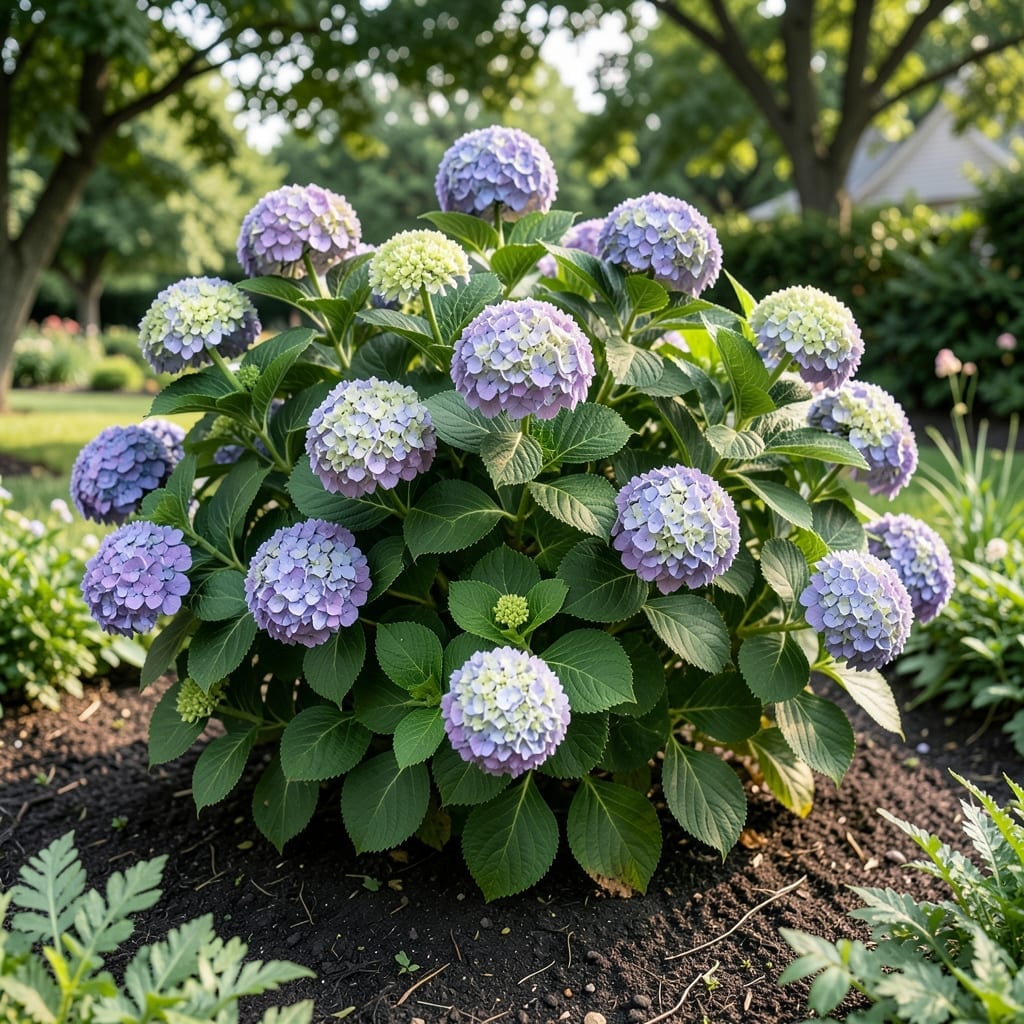
That moment when your 🌸 Hydrangea blooms shift from deep purple to soft green feels like garden magic. But here’s the secret: it’s not random luck or Mother Nature’s whim.
With a few simple tweaks to your soil and care routine, you can control these stunning color transformations. I’ve seen gardeners turn their blooms into living artworks.
Let me show you exactly how to achieve and maintain those gorgeous purple and green hues in your own garden. It’s easier than you think.
The color-changing magic of hydrangeas comes down to soil chemistry. In acidic soils with a pH below 6, aluminum becomes available to the plant, creating those vibrant purple blooms we love.
When the soil is more alkaline, typically pH above 7, aluminum gets locked away. This forces the hydrangea to produce green or pink hues instead. The transition between these states creates those beautiful bicolor effects.
| Soil Condition | pH Range | Hydrangea Color |
|---|---|---|
| Highly Acidic | Below 5.5 | Deep Purple |
| Slightly Acidic | 5.5 – 6.5 | Purple-Blue |
| Neutral | 6.5 – 7.5 | White/Green |
| Alkaline | Above 7.5 | Pink/Green |
I always recommend starting with a simple soil test. You can find affordable kits at any garden center. These will tell you your current pH and whether you need to amend your soil.
For purple blooms, work in aluminum sulfate or elemental sulfur. These lower pH gradually. For green hues, add lime to raise pH. Remember, changes take time—often one full growing season.
The aluminum availability in your soil is the key player. Even if your pH is slightly acidic, if aluminum isn’t present, you won’t get those purple tones. That’s why I suggest using aluminum sulfate specifically for quick results.
Your water source can affect pH too. If you have hard water, it may gradually make your soil more alkaline. Consider using rainwater for your hydrangeas when possible.
Don’t forget that variety matters. Some hydrangeas like Nikko Blue are more sensitive to pH changes than others. Bigleaf hydrangeas generally show the most dramatic color shifts.
I’ve found that consistent moisture helps maintain color stability. Hydrangeas in drought conditions may produce more green tones regardless of pH, as the plant conserves energy.
The most stunning purple and green hydrangeas often appear during the transition period. As blooms age, they naturally shift from purple to green, creating that sought-after two-tone effect many gardeners adore. ☀️
Achieving those perfect purple and green hydrangeas is all about precision in care. The colors respond directly to your gardening choices, from soil amendments to watering habits.
I’ve tested these methods in my own garden, and the results are always stunning. The key is consistency—small, regular adjustments work better than dramatic, one-time changes.
Start by testing your soil pH in early spring. This gives you a baseline to work from. Home test kits are inexpensive and provide results in minutes. I recommend testing multiple spots in your garden.
For vibrant purple blooms, apply aluminum sulfate around the base of the plant. Follow package instructions carefully, as too much can harm your hydrangea. I’ve found that 1 tablespoon per gallon of water works well.
To encourage green hues, sprinkle dolomitic lime around your plants. This raises the pH gradually. Remember, it can take several months to see the full effect, so be patient.
Your watering routine also impacts color. Hard tap water can make soil more alkaline over time. If possible, collect rainwater for your hydrangeas. This simple change can make a noticeable difference.
Finally, choose a balanced fertilizer with low phosphorus. High phosphorus levels can interfere with color changes. I use a 10-10-10 formula every 4-6 weeks during the growing season. 🌿