
Beautiful Plants For Your Interior
Beautiful Plants For Your Interior
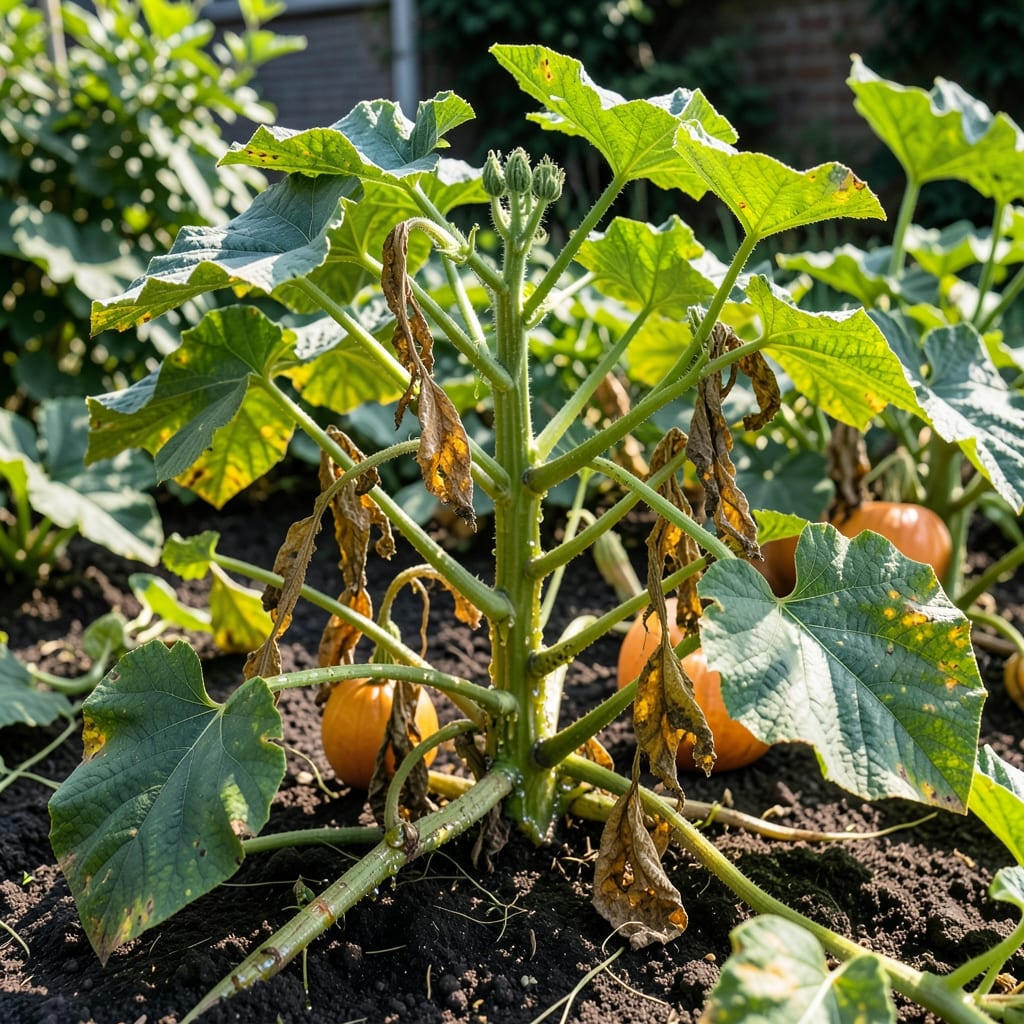
Watching healthy pumpkin vines collapse overnight is heartbreaking. I lost an entire crop to bacterial wilt once, and the lesson stuck with me forever.
This sneaky disease spreads through cucumber beetles and infected tools. The first sign is wilting leaves that never recover, even when watered. It moves fast, turning vibrant vines into crispy stubs in days.
Prevention starts with row covers early in the season and consistent beetle control. Once plants show symptoms, removal is the only option to protect the rest of your patch.
With the right strategy, you can grow pumpkins that stay strong from seed to harvest. Here’s how to keep your vines thriving all season long.
Pumpkin bacterial wilt is a devastating disease that can quickly turn a thriving patch into a wilted mess. Understanding its causes is key to prevention. Here’s why it happens:
The primary culprit is Erwinia tracheiphila, a bacterium that clogs the plant’s vascular system, blocking water and nutrient flow. It thrives in warm, humid conditions and spreads rapidly through infected plants or contaminated tools.
Cucumber beetles and other pests act as carriers, transmitting the bacteria from plant to plant as they feed. Their chewing creates entry points, allowing the pathogen to invade the stems and leaves.
Bacteria can overwinter in soil or plant debris, infecting new crops the following season. Poor crop rotation or leaving infected plants in the field increases the risk of recurrence.
Excess moisture and poor air circulation create an ideal environment for bacterial growth. Overwatering or dense plantings can accelerate the spread of wilt among pumpkin vines.
Addressing these root causes—through pest control, sanitation, and proper spacing—can significantly reduce the likelihood of an outbreak.
Once pumpkin bacterial wilt appears, quick action is key to saving your crop. Below are targeted fixes for the most common causes, paired with prevention tips to keep your patch healthy.
Pull and destroy all wilted or yellowing plants as soon as you spot symptoms. Do not compost them—this only spreads the bacteria. Bag and dispose of them in the trash or burn them if local regulations allow. Sanitize your tools afterward with a 10% bleach solution to avoid cross-contamination.
These pests spread the bacteria as they feed. Cover young plants with floating row covers until they start flowering. Secure edges with soil or sandbags to block beetles. Remove covers during flowering to allow pollination. For existing infestations, apply kaolin clay or neem oil as a deterrent.
Wet foliage creates a breeding ground for bacteria. Use drip irrigation or a soaker hose to water at the base of plants, keeping leaves dry. Water in the early morning so any accidental splashes dry quickly in the sun. Avoid working with plants when they’re wet to prevent spreading pathogens.
Bacterial wilt thrives in soil where cucurbits (pumpkins, squash, cucumbers) have grown year after year. Rotate crops with non-host plants like corn, beans, or lettuce for at least 3 years before replanting pumpkins in the same spot. This starves the bacteria and reduces its presence in the soil.
💡 Pro Tip: Plant resistant varieties like ‘Crown’ or ‘Gladonitor’ if bacterial wilt is a recurring issue in your garden. Pair this with the prevention steps above for the best defense.
It can devastate a patch in just 2-3 days under warm conditions. Once symptoms appear, remove infected plants immediately to prevent further spread through cucumber beetles or contaminated tools.
Avoid replanting cucurbits in the same soil for at least 3 years. Rotate with non-host crops like corn or beans to starve the bacteria. Sanitize tools and clear all plant debris after harvest.
Yes! Try resistant varieties like ‘Crown’ or ‘Gladonitor’. While not immune, these handle bacterial pressure better than standard types when combined with prevention methods.
Neem oil deters cucumber beetles but won’t cure infected plants. Use it as a preventive measure alongside row covers and crop rotation for best results.