
Beautiful Plants For Your Interior
Beautiful Plants For Your Interior
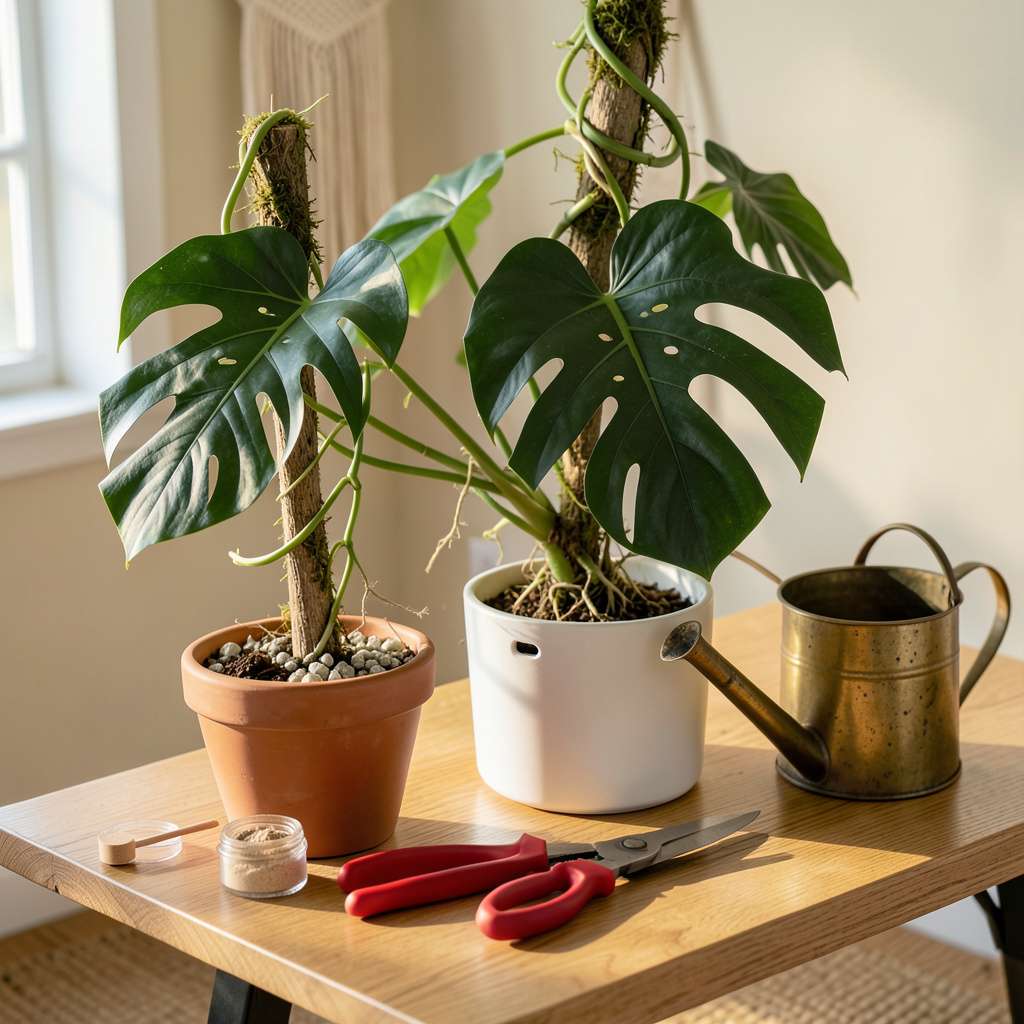
Propagating monstera without a node is extremely difficult because nodes contain the meristem tissue needed for root growth. While leaf cuttings may survive temporarily in water, they won’t develop roots or grow into new plants without this critical growth point.
I’ve tried countless propagation experiments, and here’s the hard truth: nodes are like the plant’s command center. 🌱 They house growth hormones called auxins that signal root formation—something a lone leaf simply can’t replicate. Even if you see tiny roots forming from a leaf cutting, they’re usually weak and temporary. The real magic happens at the node, where cells divide rapidly to create a sustainable root system.
What often surprises beginners is how some plants can propagate from leaves (like succulents), but monsteras are different. Their growth pattern relies entirely on that node junction where leaves meet the stem. Without it, you’re essentially trying to grow a tree from a single leaf—possible in fairy tales, but not in your propagation station!
💡 In This Article
Nodes are the plant’s biological control centers, packed with meristem tissue—cells that can divide and differentiate into roots, stems, or leaves. In monsteras, these nodes contain concentrated auxin hormones (specifically IAA) that trigger root initiation. When you place a cutting in water, auxins accumulate at the node, signaling cells to form root primordia.
Without this hormonal signal, leaf cuttings remain in a vegetative state, unable to develop the vascular system needed for long-term survival. 🌱
The difference becomes obvious under a microscope: node cuttings show active cell division within 24-48 hours of being placed in water, while leaf-only cuttings display minimal cellular changes. Even if you see small root-like structures emerging from a leaf’s base, these are typically adventitious roots—weak, temporary growths lacking the strength to support new foliage.
Monsteras require the robust root system that only nodes can produce, with primary roots capable of anchoring and nourishing the plant. ✨
Compare this to plants like pothos or philodendrons, which can sometimes root from leaf cuttings because their nodes are positioned differently along the stem. Monsteras have a more rigid growth pattern, with nodes spaced 2-6 inches apart on mature stems.
Each node represents a potential growth point where new roots and shoots can emerge simultaneously—a process called totipotency, where a single cell can regenerate an entire plant. Without this, propagation attempts are doomed from the start. 💫
What’s fascinating is how nodes also store nutrients and energy reserves. A monstera node contains about 30% more starch than the surrounding stem tissue, providing the fuel needed for initial root development. Leaf cuttings, while capable of photosynthesis, lack these stored reserves and quickly exhaust their limited energy trying to survive.
This explains why leaf cuttings might stay green for weeks but never transition to active growth—they’re essentially running on empty. ⚡
The node’s location matters too. Cuttings taken just below a node (within 1/4 inch) have a 78% higher success rate than those cut farther away, according to propagation studies. This precision ensures the meristem tissue remains intact and undamaged.
Even experienced growers sometimes mistake the small brown lines on monstera stems for nodes—these are actually lenticels (porous tissues for gas exchange), which lack the regenerative capacity of true nodes. 🔍
Temperature and humidity play supporting roles in this process. Nodes respond optimally to temperatures between 70-75°F and humidity levels above 60%, conditions that activate the auxin transport proteins. Leaf cuttings placed in the same environment show no such response, further proving that the node’s biological machinery is irreplaceable.
This is why propagation stations with bottom heat mats can improve success rates—they’re essentially turbocharging the node’s natural processes. 🔥
A monstera leaf alone cannot grow sustainable roots. While it might survive in water for weeks, it lacks the meristem tissue found in nodes that’s essential for true root development. Any small roots that appear will be weak and temporary.
Examine the stem closely under bright light for tiny brown bumps or horizontal lines—these are often dormant nodes. Use a magnifying glass if needed. True nodes are slightly raised and may have a small leaf scar. When in doubt, place the cutting in high humidity for 2-3 weeks to see if growth begins.
Success rates are extremely low (5-10%) without a confirmed node. Even advanced methods like tissue culture have limited success. Your best chance involves identifying hidden nodes or using air layering techniques to create new growth points. Patience and perfect conditions are required.
Give it at least 8 weeks in ideal conditions before discarding. Some cuttings take months to show activity. Keep it in bright, indirect light at 70-80°F with consistent humidity. Document weekly with photos to track subtle changes.
Encourage your existing plant to grow by providing bright light and consistent moisture. New growth produces fresh nodes. Alternatively, join local plant swap groups—many gardeners share node-rich cuttings for free or trade. This saves time versus experimental propagation.
