
Beautiful Plants For Your Interior
Beautiful Plants For Your Interior
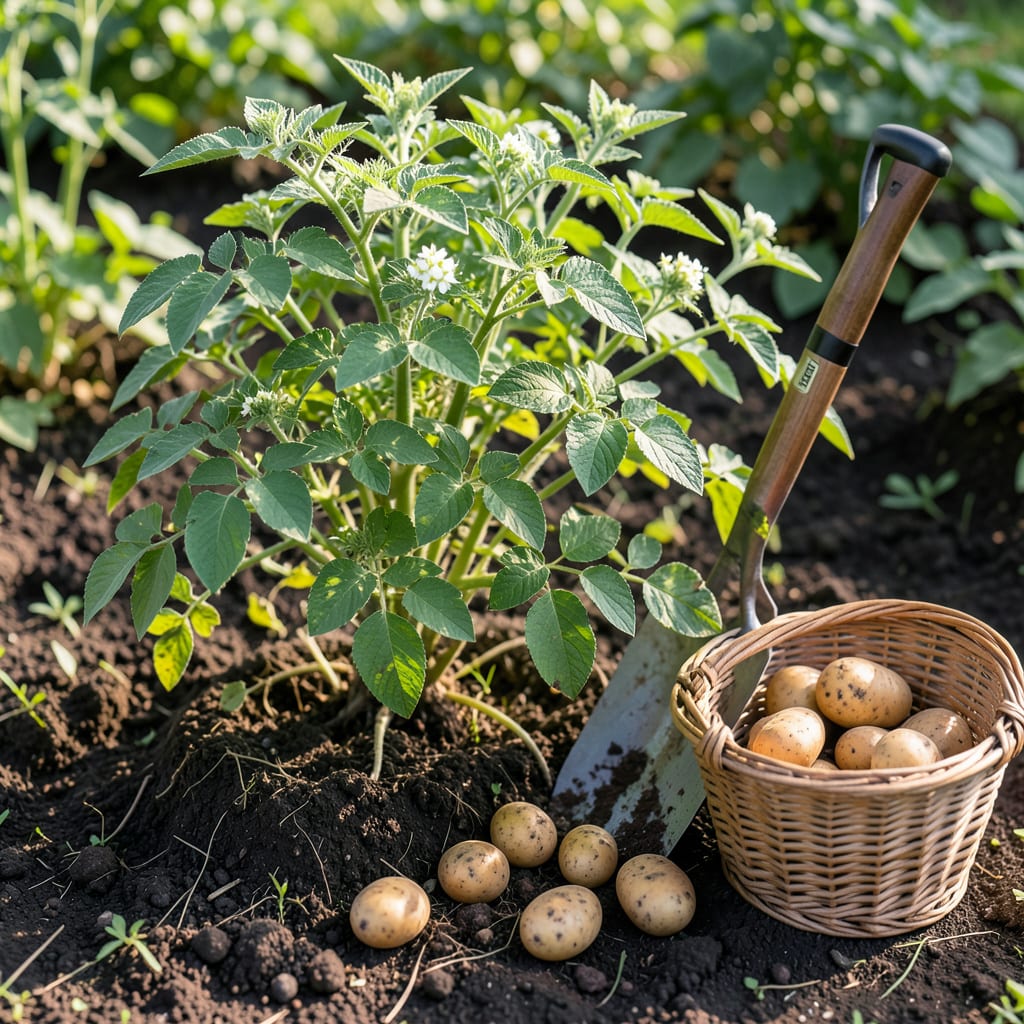
Ever dug up potatoes 🥔 too early and found them disappointingly small? Timing is everything when it comes to harvesting this versatile crop. The difference between 60 and 120 days can mean the contrast between new potatoes and fully mature ones.
I’ll walk you through the growth stages and key signs that tell you your potatoes are ready. Whether you’re growing in zone 6 or elsewhere, these tips will help you maximize your yield.


I’ve found that early potato varieties like Yukon Gold and Red Norland are ready in as few as 60-70 days. These are perfect if you want a quick harvest.
For mid-season potatoes, such as Kennebec or Purple Majesty, you’ll typically wait 80-95 days. They strike a great balance between yield and flavor.
| Variety | Days to Harvest | Type |
|---|---|---|
| Yukon Gold | 60-70 | Early |
| Red Pontiac | 80-90 | Mid-season |
| Russet Burbank | 100-120 | Late |
| Kennebec | 80-95 | Mid-season |
| Purple Majesty | 90-100 | Mid-season |
Late-season potatoes like Russet Burbank can take up to 120 days. These are ideal for storage and baking but require patience.
I always recommend checking the seed packet for exact days, as soil temperature and growing conditions can shift the timeline slightly.
In my experience, early varieties often produce smaller tubers but are great for fresh eating. Late varieties yield larger spuds perfect for storing.
If you’re in a cooler climate, like USDA Zone 6, you might need to start early varieties indoors to hit the 60-day mark before frost.
For warmer regions, you can plant mid or late varieties directly in the ground and enjoy a longer growing season without rushing.
I’ve noticed that consistent watering and full sun help potatoes reach maturity faster. Aim for at least 6-8 hours of sunlight daily.
Remember, these are average timelines. Your potatoes might be ready a few days earlier or later, so keep an eye on the foliage and skin set for the best results.
In my garden, I mark the planting date on a calendar and count forward to estimate harvest time. This simple step keeps me on track.
I always watch for the first sign: flowering stops and the foliage begins to yellow and die back. This tells me the tubers are nearing maturity.
Another key indicator is the skin set. When the skin resists scratching with your fingernail, it’s a sure sign your potatoes are ready to come out of the ground.
I’ve learned that early varieties like Yukon Gold often show these signs around 60-70 days, while late varieties may take up to 120 days.
Avoid harvesting when the skin rubs off easily or the tubers are still small. These are clear signs they need more time in the soil.
In my garden, I gently brush away soil near the base of the plant to check tuber size. If they’re 2-5 inches in diameter, they’re likely ready.
Remember, consistent moisture and full sun help potatoes mature evenly. A sudden drought or overwatering can delay readiness 🌱
I’ve noticed that soil temperature plays a huge role in how quickly potatoes mature. Cooler soils slow growth, while 60-70°F is the sweet spot for most varieties.
Watering consistency is another critical factor. Too much water can cause rot, while too little stunts tuber development. I aim for 1-2 inches of water weekly.
Planting 2-3 inches deep in loose, well-draining soil helps potatoes grow faster and larger. Avoid compacted or clay-heavy soil.
Planting depth and spacing also impact harvest time. Crowded plants compete for nutrients, which can delay maturity by 10-15 days.
I’ve seen that full sun exposure (6-8 hours daily) speeds up growth. Shaded areas often produce smaller tubers that take longer to mature.
Fertilizer type and timing matter too. I use a 5-10-10 NPK at planting and again when shoots reach 6 inches tall. This boosts tuber formation.
In my experience, pest pressure like Colorado potato beetles can stress plants, extending the days to harvest. Regular scouting helps keep them on track.
Yes, but only if you want “new potatoes.” These are smaller and have thinner skins. For mature potatoes with storage potential, wait until the foliage has completely died back and the skin is firm.
Cool, wet springs can delay maturity by 10-15 days, while warm, consistent weather speeds it up. Extreme heat can stress plants, potentially reducing yield. Aim for 60-70°F soil temps for optimal growth.
Overmature potatoes may develop thick skins or begin to sprout. In warm climates, they can rot in damp soil. Harvest within 2 weeks after the foliage dies to avoid these issues.
Gently dig around the plant edges to remove some tubers while leaving others to mature. This “stealing” method lets you enjoy fresh potatoes without disturbing the entire plant.
