
Beautiful Plants For Your Interior
Beautiful Plants For Your Interior
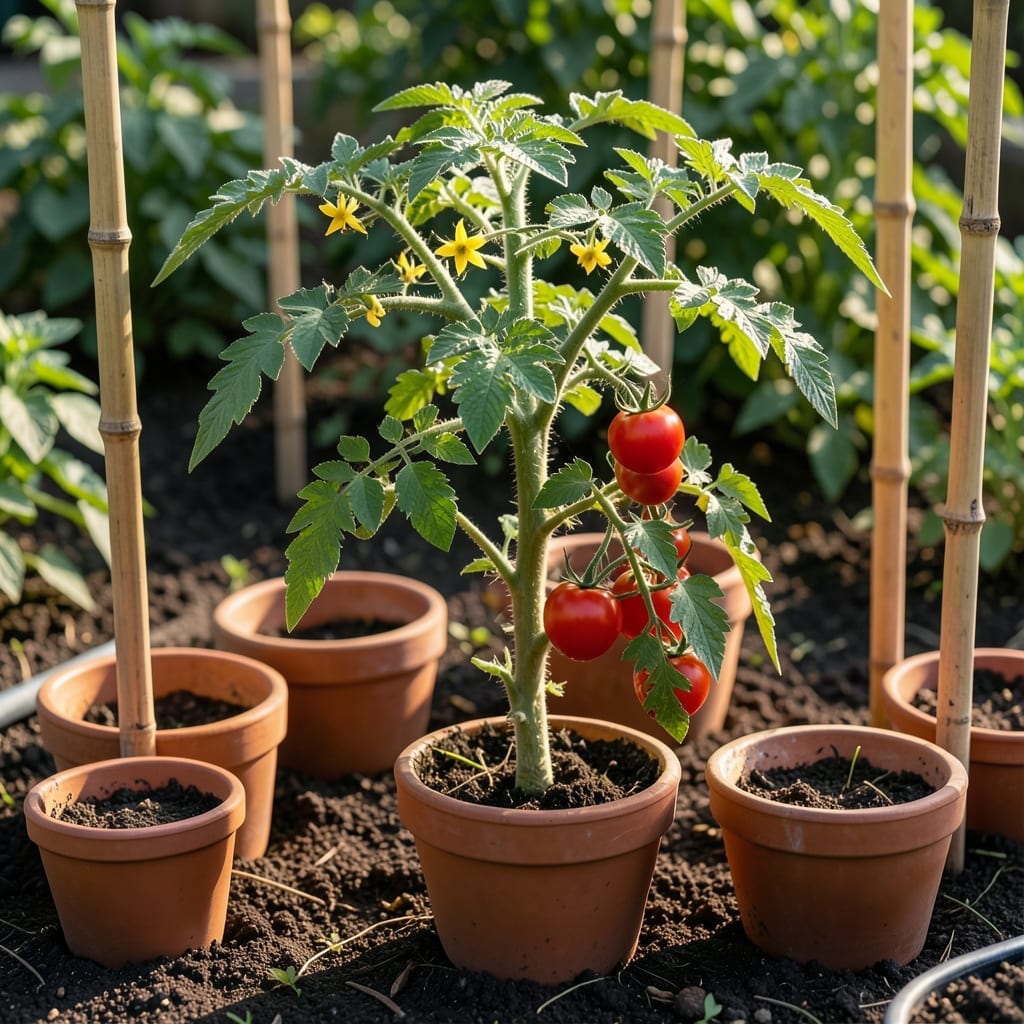
I remember the first time I tried growing Tomato plants in containers. The tiny pots I chose seemed perfect—until my plants started wilting within weeks. The truth is, pot size can make or break your harvest.
Whether you’re growing cherry tomatoes or beefsteak varieties, the right container dimensions directly impact root health and fruit production. Too small, and your Tomato plants will struggle to thrive.
Discover how to choose the ideal pot size for your Tomato plants and unlock the secret to a bountiful, homegrown harvest this season.


I’ve learned the hard way that tomato plants need space to thrive. Even compact cherry tomatoes will struggle in a tiny container, while indeterminate varieties can become root-bound in anything too small.
Choosing the right pot size ensures healthy root development and robust growth. Different tomato types have unique needs, so let’s break it down by variety.
| Tomato Type | Minimum Pot Size | Depth | Notes |
|---|---|---|---|
| Cherry Tomatoes | 1-2 gallons | 8-10 inches | Compact growth, great for patios |
| Determinate | 3-5 gallons | 10-12 inches | Bush-type, stops growing at set height |
| Indeterminate | 5+ gallons | 12-18 inches | Vining growth, needs staking |
| Heirloom | 7+ gallons | 18+ inches | Large root systems, heavy feeders |
For cherry tomatoes, a 1-gallon pot is the absolute minimum, but I recommend 2 gallons for better results. These plants stay small but produce prolifically when given enough room.
Determinate tomatoes, which grow to a set size, do well in 3-5 gallon containers. They’re perfect for container gardens since they won’t outgrow their space.
Indeterminate varieties are the most demanding. They keep growing until frost, so they need at least 5 gallons and preferably more. I’ve seen these plants thrive in 10-gallon pots with proper support.
Heirloom tomatoes often have the largest root systems. If you’re growing these beauties, aim for 7+ gallons and a deep container to accommodate their extensive roots.
Remember, these are minimums. I always say, when in doubt, go bigger. Larger pots provide better water retention and nutrient availability, which means less maintenance for you.
Drainage is non-negotiable. Even the perfect-sized pot will fail if it lacks drainage holes. I’ve lost plants to root rot in containers that didn’t allow excess water to escape.
Finally, consider your climate. In hot areas, larger pots help insulate roots from temperature swings. In cooler regions, they provide the extra warmth that tomato plants crave. 🌱
I’ve seen too many gardeners pick the wrong containers for their tomato plants, leading to stunted growth and poor yields. Even small oversights can make a big difference in your harvest.
From drainage issues to material choices, these mistakes are easy to avoid once you know what to look for.
A small pot is the most common error. I’ve watched cherry tomatoes struggle in 1-quart containers when they need at least 1 gallon to thrive. Always check variety requirements.
Drainage holes are non-negotiable. Without them, water pools at the bottom, leading to root rot and dead plants. I learned this the hard way with my first container garden.
Material matters more than you think. Dark plastic absorbs heat, potentially cooking roots in summer. I prefer fabric pots for their breathability and temperature control.
Shallow containers topple over easily and restrict root development. Aim for at least 12 inches of depth for most tomato varieties. Deeper pots also mean less frequent watering.
Finally, avoid narrow pots. A wide base provides stability and allows roots to spread. I’ve found that square or round containers work best for healthy growth. 🌱