
Beautiful Plants For Your Interior
Beautiful Plants For Your Interior
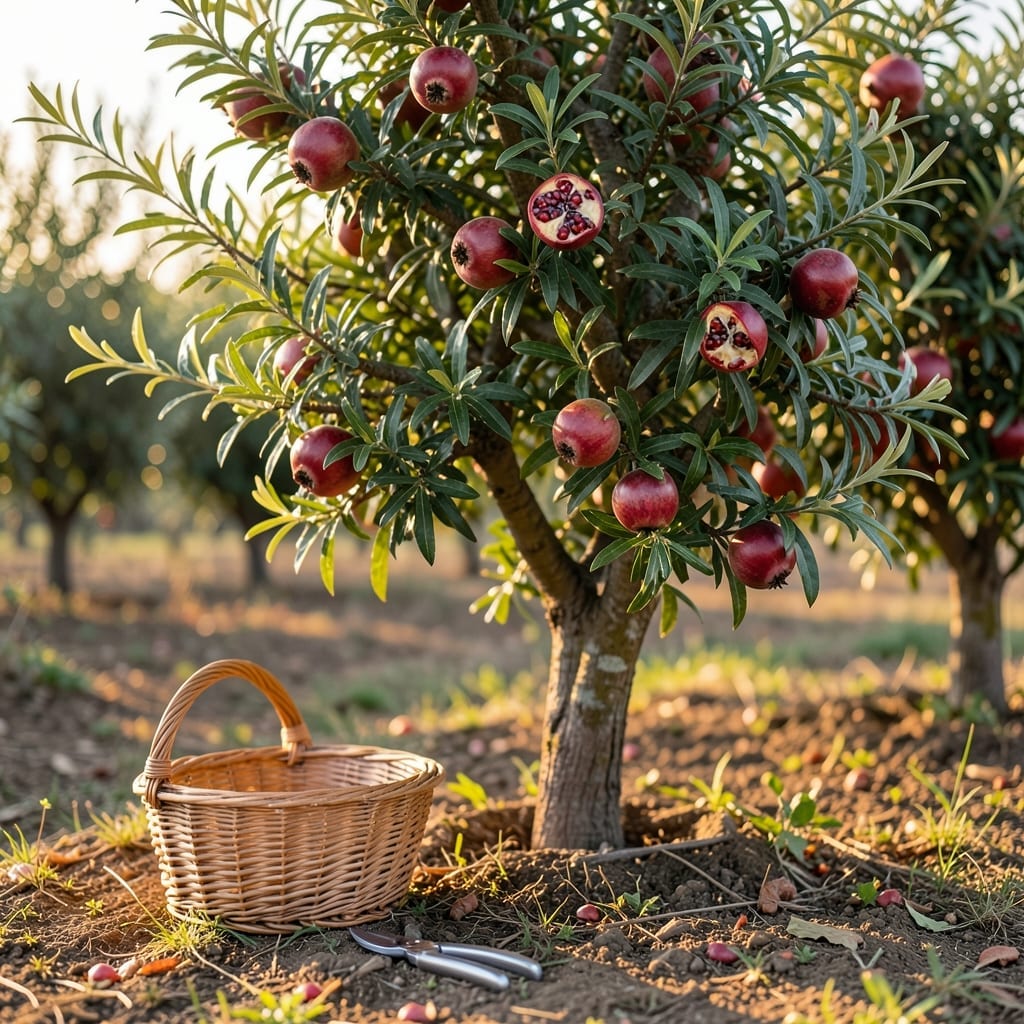
There’s nothing worse than cutting into a pomegranate only to find it’s not quite ready. The 🍈 Pomegranate’s harvest window is August through October, but timing depends on more than just the calendar.
Visual cues are your best guide. A deep, vibrant color and that telltale metallic sound when tapped signal peak ripeness. These signs ensure you’ll get the sweetest, juiciest arils every time.
Regional differences matter too. Gardeners in zones 7-11 may see variations based on local weather patterns. What works in one area might need adjustment in another.
I’ll show you exactly how to read these signs and adapt to your climate. Let’s make sure your next pomegranate harvest is the most flavorful one yet.

I always tell gardeners that pomegranate harvesting time is all about visual cues and tactile tests. The most reliable sign is a deep red color that spreads evenly across the fruit’s skin.
Another key indicator is the skin texture. When ready, it should feel slightly leathery rather than smooth or glossy. This change signals that the fruit has reached its peak ripeness inside.
I’ve found that the weight test is surprisingly effective. A ripe pomegranate will feel heavy in your hand, indicating that the arils inside are plump and juicy.
The metallic sound test is another favorite. Gently tap the fruit—if it produces a hollow, tinny sound, it’s ready. A dull thud means it needs more time on the tree.
For yellow varieties like ‘Golden Globe,’ look for a golden-yellow color with a slight blush. The same leathery texture and heavy feel apply to these as well.
I always recommend checking multiple fruits on the tree. Pomegranates don’t all ripen at once, so test a few to ensure consistency. This way, you won’t miss the optimal window for harvesting.
If the skin is still smooth or the color is uneven, leave the fruit a little longer. Rushing the harvest can result in tart, underdeveloped arils that lack sweetness.
Remember, early morning harvesting is ideal. The fruits are firmer and less likely to split when picked cool. Plus, it’s a more comfortable time to work in the garden.
Finally, trust your senses. With practice, you’ll recognize the perfect pomegranate harvesting time by sight, sound, and touch every time 🌳
I’ve found that pomegranate harvesting time varies greatly by climate zone and variety. In warmer regions like California, fruits often ripen earlier, while cooler areas may see a later window. This timing shift impacts both flavor development and storage potential. USDA Zones 7-11 are ideal for growing these shrubs. ☀️
The typical harvest window spans August to October, but I always check for local microclimates. For instance, desert climates might see ripe fruit in late July, while coastal areas could extend into November. These variations mean I adjust my harvest schedule annually.
| Region | Harvest Months | Climate Notes |
| California | August-October | Hot, dry summers |
| Texas | September-November | Warm, humid conditions |
| Florida | October-December | Subtropical climate |
Even within the same zone, I notice early varieties like ‘Wonderful’ may ripen 2-3 weeks sooner than late varieties such as ‘Eversweet’. This means I must track each plant’s progress individually. Frost warnings can also accelerate my harvesting plans.
I always recommend checking the local extension office for precise harvest timing. They provide region-specific advice that accounts for unusual weather patterns. This step helps me avoid premature picking or overripening on the vine. 🌡️
For container-grown pomegranates, I’ve observed they often ripen 1-2 weeks earlier than in-ground plants. This is due to root zone warmth and controlled conditions. I
Finally, I remind myself that patience pays off. Waiting for the perfect ripeness ensures the sweetest flavor and longest storage life. I use a garden journal to track my harvest dates year to year for consistency. 🌿