
Beautiful Plants For Your Interior
Beautiful Plants For Your Interior
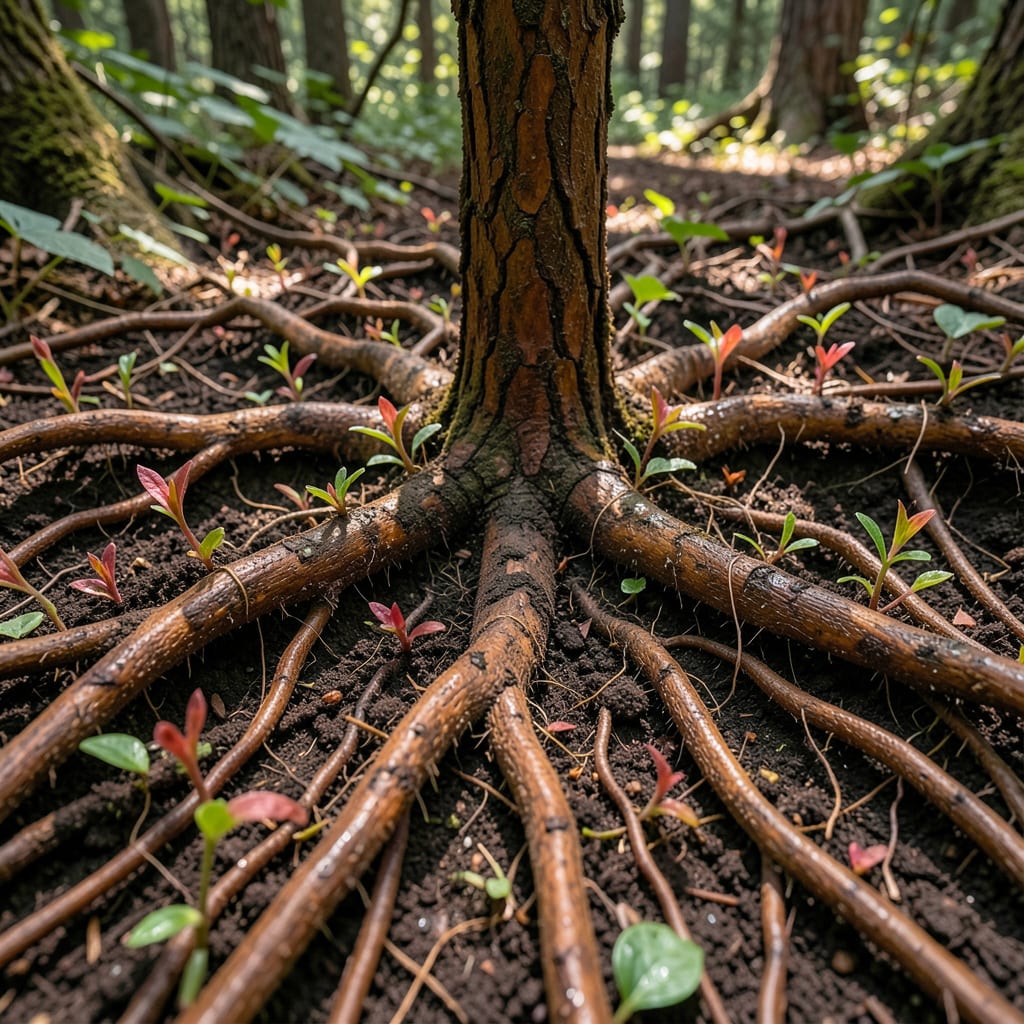
That vine creeping along your fence isn’t just a nuisance—it’s poison ivy with a deep, spreading root system that can take over faster than you think.
I learned the hard way that pulling the leaves does nothing. The roots run horizontal and vertical, sending up new shoots 10 feet away. Safe removal means digging deep and wearing protection.
📚 In This Guide
Here’s the method I rely on to safely eliminate this persistent garden nuisance.
Poison ivy develops an extensive woody root system that spreads both horizontally and vertically. The primary root can grow 8-12 inches deep while lateral roots extend several feet outward, sending up new shoots. Look for thick, hairy brown vines snaking through the soil or climbing nearby structures.
I’ve found the most telling sign is the presence of aerial rootlets on climbing vines. These fine, hair-like growths help the plant cling to trees or fences. The underground portion often resembles a tangled network of brown ropes just beneath the surface—this is what you need to target for complete removal.
Begin by carefully digging around the base of visible plants with a garden fork. Poison ivy roots are surprisingly tough, often pencil-thick or larger. Work slowly to avoid breaking the roots, as any remaining pieces can regenerate.
Pay special attention to areas where the plant transitions from underground to above-ground growth. The junction point often looks like a knotted, swollen section. I always wear long sleeves and gloves during this phase, as even dead roots can cause skin reactions.
Use pruners to cut roots into manageable sections. For established plants, you may need to use a mattock or shovel to pry out the deeper portions. The key is removing at least 6 inches of root beyond where the plant emerges to prevent regrowth.
I’ve learned that smaller root fragments left behind will sprout new growth within 2-3 weeks. Collect all removed plant material in heavy-duty trash bags, as even discarded roots can cause allergic reactions if handled later.
Check the area weekly for new sprouts, which will emerge from any root pieces left behind. These appear as small, red-tinged shoots that quickly develop the characteristic three-leaf pattern. I mark these spots with small flags to track progress.
If new growth appears, dig down 1-2 feet around the sprout to find the remaining root section. Repeat the removal process until no new shoots appear for 4-6 weeks, which confirms you’ve eliminated the entire network.
Never compost poison ivy roots or vines. The urushiol oil that causes allergic reactions can remain active for years. Instead, seal all plant material in plastic bags and dispose of it with your regular trash.
I always double-bag the material and label the bags clearly to prevent accidental contact. For particularly large infestations, you may need to make multiple trips to the trash—never burn poison ivy, as the smoke can carry urushiol and cause severe lung irritation.
These practical insights will help you tackle the removal process more effectively and safely.
Identification Tip: Focus on the aerial rootlets mentioned in Step 1—they’re the most reliable indicator of poison ivy. These hair-like growths are unique to this plant and will confirm you’re dealing with the right target. The woody root system’s brown, rope-like appearance beneath the surface is another dead giveaway.
Safety First: In Step 2, when tracing and exposing roots, wear long sleeves, gloves, and even eye protection. I’ve learned from experience that urushiol oil can linger on tools and clothing. Wash everything thoroughly with soap and water immediately after handling any part of the plant, even if you wore gloves.
Removal Precision: Step 3 emphasizes removing at least 6 inches of root beyond the emergence point, and for good reason. I’ve found that anything less often leads to regrowth within those 2-3 weeks. Use a sharp mattock to sever roots cleanly rather than tearing them, which can leave behind viable fragments.
Monitoring Strategy: For Step 4, those weekly checks are crucial. Mark regrowth spots immediately with flags as suggested—this helps track the 4-6 weeks needed to confirm complete removal. New shoots often appear in clusters, so dig wide and deep around each one to find the source.
Poison ivy roots can extend 4–12 inches deep, with lateral roots spreading up to 20 feet. The main taproot may grow even deeper, making complete removal challenging. Always dig carefully to avoid leaving fragments behind.
Yes! Even small root pieces can regrow if left in the soil. To prevent regrowth, remove all roots and dispose of them properly—never compost poison ivy.
Early spring or late fall is ideal, when the plant is dormant and the soil is softer. Avoid summer removal, as the urushiol oil (which causes rashes) is more potent then.
Yes! Smothering with thick cardboard or mulch can starve the roots over time. Vinegar or boiling water may also help, but these methods often require repeat applications.
Likely, some roots or rhizomes were missed. Use a shovel to dig deep around the base, removing as much of the root system as possible to prevent resprouting.
