
Beautiful Plants For Your Interior
Beautiful Plants For Your Interior
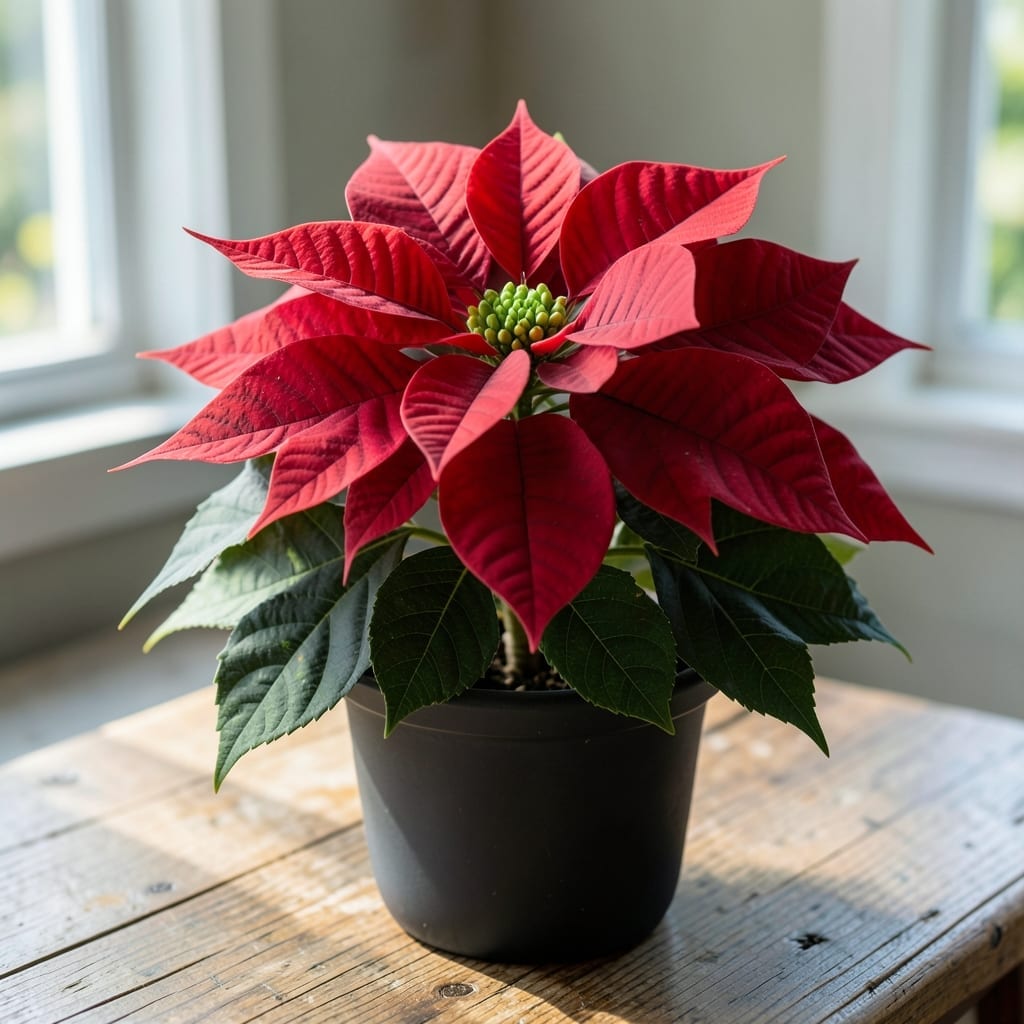
Poinsettias are the holiday season’s most iconic plants, but their vibrant red, pink, or white bracts fade fast without the right light.
Mastering light conditions is the secret to keeping your 🌺 Poinsettia stunning long after the decorations come down. These festive plants have specific needs that set them apart from typical houseplants.
I’ve seen too many Poinsettias lose their luster because they weren’t getting the bright, indirect light they crave. It’s a common mistake, but an easy one to fix with the right knowledge.
Discover exactly how to provide the ideal lighting to keep your Poinsettia thriving and vibrant. Let’s make sure yours stays the star of the season.

Poinsettias thrive when they receive the right amount of light. I’ve found that 6+ hours of bright, indirect sunlight daily keeps their colorful bracts vibrant and healthy. Direct sun can scorch their leaves, so filtering light through a sheer curtain works wonders.
For indoor care, place your poinsettia near a south-facing window where it can soak up plenty of gentle light. If your home lacks natural light, I recommend supplementing with LED grow lights for 12-14 hours a day during shorter winter days.
| Requirement | Specification |
|---|---|
| Daily Light | 6+ hours bright indirect |
| Best Window | South-facing preferred |
| Avoid | Direct harsh sun or deep shade |
| Supplemental | Grow lights for low-light homes |
During winter, when daylight is limited, I adjust my poinsettia’s position to ensure it still gets enough exposure. Rotating the plant weekly helps all sides receive even light distribution, preventing lopsided growth. This small effort makes a big difference in maintaining its shape.
If you notice the leaves starting to fade or turn yellow, it’s often a sign of insufficient light. Moving the plant closer to the window or adding a grow light can quickly revive its color. I’ve saved many poinsettias this way!
Outdoor poinsettias in USDA zones 9-11 can handle morning sun but need protection from intense afternoon rays. A spot with dappled shade under a tree works perfectly. Just
For post-holiday care, continue providing bright light to encourage new growth. Many people discard poinsettias after the holidays, but with proper light, they can thrive for months. I’ve kept mine blooming well into spring with consistent care.
Artificial lighting can be a game-changer for poinsettias in dimly lit spaces. I use full-spectrum LED bulbs placed about 12 inches above the plant. This mimics natural sunlight and keeps the bracts colorful even in a north-facing room.
Remember, poinsettias are sensitive to cold drafts and sudden temperature changes. Keep them away from chilly windows or doors, even if the light seems perfect. A stable environment is key to their success.
With these light requirements in mind, your poinsettia will stay vibrant and healthy. It’s amazing how such a simple adjustment in lighting can transform its appearance and longevity. ☀️
Even with the best intentions, your Poinsettia might struggle if it’s not getting the right light. I’ve noticed that leggy stems are often the first red flag, signaling the plant is stretching toward any available light source.
A pale or yellowing appearance in the bracts is another telltale sign. These vibrant leaves lose their richness when light is insufficient. Leaf drop or stunted growth can also indicate your plant is starving for more brightness.
Don’t worry—these issues are fixable! I recommend moving your Poinsettia to a south-facing window where it can soak up 6+ hours of bright, indirect light daily. This simple adjustment often revives its spirits quickly.
If natural light is limited in your home, consider supplementing with LED grow lights. These are a game-changer for keeping Poinsettias thriving, especially during shorter winter days. Place the light about 12 inches above the plant for best results.
Another quick fix is rotating your Poinsettia every few days. This ensures all sides receive equal light exposure, preventing uneven growth and promoting a balanced, full shape.
Remember, consistency is key. Once you find the perfect spot, avoid moving it frequently. Poinsettias respond best to stable conditions, and sudden changes can stress them. With the right light, your plant will reward you with stunning color all season long. ☀️