
Beautiful Plants For Your Interior
Beautiful Plants For Your Interior
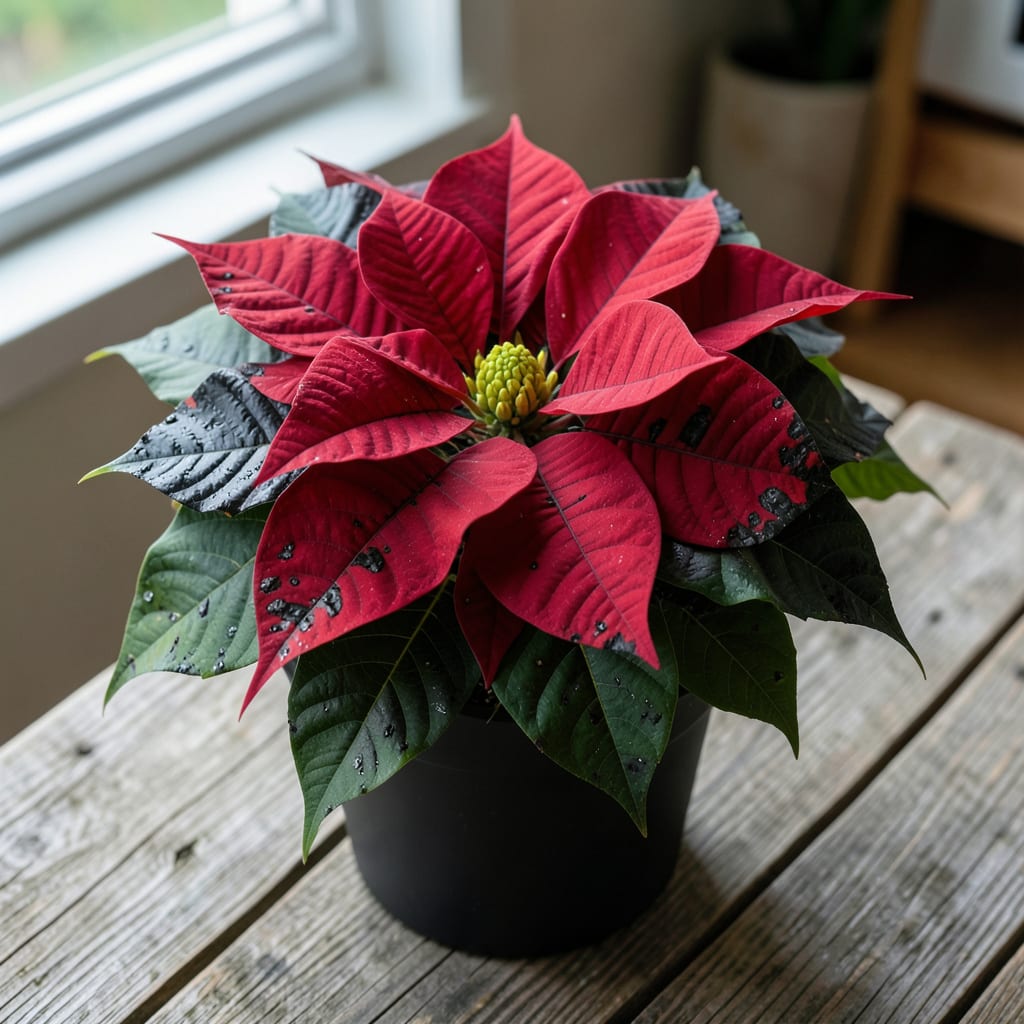
Black edges on your poinsettia leaves aren’t just unsightly—they’re a distress signal. I’ve saved countless plants from this exact issue, and the fix is simpler than you’d think.
Usually, it’s one of three culprits: too much water, not enough light, or a sudden temperature swing. The leaves start darkening at the tips, then spread inward like ink on paper. Catching it early makes all the difference.
With a few adjustments to your care routine, you’ll see new growth returning to that vibrant red and green within 2-3 weeks. The key is consistency—no more guesswork with watering or placement.
This works for holiday plants and year-round keepers alike. Let’s turn those black leaves around before the damage spreads further.
Poinsettia leaves turning black is often a sign of underlying stress or disease. Here are the most common causes, explained with actionable insights:
Poinsettias thrive in stable environments (60–70°F). Exposure to cold drafts (below 50°F) or heat stress (above 80°F) disrupts cellular function, leading to necrosis (tissue death). Even brief contact with cold windows or heating vents can trigger blackening.
Root rot from Phytophthora or Pythium fungi occurs when soil stays soggy. These pathogens attack roots, blocking water/nutrient uptake. Leaves wilt, turn yellow, then blacken as they starve. Check soil moisture—water only when the top inch is dry.
Alternaria or Botrytis fungi cause dark, spreading spots. Bacterial leaf spot (Xanthomonas) creates water-soaked black patches. Both thrive in high humidity or wet foliage. Prune infected leaves and improve airflow.
Excess fertilizer (especially calcium or boron) burns roots, manifesting as black leaf margins. Conversely, deficiencies (e.g., phosphorus) weaken plants, making them susceptible to secondary infections.
Spider mites or scale insects pierce leaf cells, causing localized necrosis. Their feeding wounds also invite fungal/bacterial invaders. Inspect leaf undersides for webbing or sticky residue.
Addressing poinsettia leaves turning black starts with pinpointing the cause and applying targeted fixes. Here’s a practical guide to revive your plant and keep it thriving.
Fix: Move your poinsettia away from cold drafts, heaters, or direct sunlight. Keep it in a room with stable temperatures between 65–75°F (18–24°C). If the leaves are already damaged, trim them with clean scissors to redirect energy to healthy growth.
Prevention: Avoid placing poinsettias near doors, windows, or vents. Use a thermometer to monitor the environment if needed. 💡
Fix: Stop watering immediately and let the soil dry out. Repot the plant in fresh, well-draining soil if root rot is suspected. Ensure the pot has drainage holes to prevent waterlogging.
Prevention: Water only when the top inch of soil feels dry. Use a pot with drainage and empty the saucer after watering. ✨
Fix: Remove blackened leaves and treat the plant with a copper-based fungicide or neem oil spray. Isolate the poinsettia to prevent spreading the infection to other plants.
Prevention: Improve air circulation around the plant and avoid wetting the leaves when watering. Sterilize pruning tools with rubbing alcohol before use. 🎯
Fix: Flush the soil with water to remove excess salts or fertilizers. Repot the plant if the soil is heavily contaminated. Use a balanced, water-soluble fertilizer (e.g., 10-10-10) at half strength every 2–4 weeks during the growing season.
Prevention: Fertilize sparingly—poinsettias are sensitive to overfeeding. Always dilute fertilizers to avoid burning the roots. 🔥
Fix: Inspect the plant for pests like spider mites or aphids. Wipe leaves with a damp cloth or spray with insecticidal soap. For severe infestations, use a systemic insecticide.
Prevention: Regularly check the undersides of leaves for pests. Keep the plant clean and free of debris where pests can hide. 🌿
No, once poinsettia leaves turn black, the damage is permanent. Remove them to help the plant focus on new, healthy growth. With proper care, fresh leaves will appear within 2-3 weeks.
Water only when the top 1 inch of soil feels dry. Overwatering is a top cause of blackening, so ensure pots have drainage holes and empty saucers after watering.
Yes, but isolate it if fungal or bacterial infections are present. Prune affected areas with sterilized tools to prevent spreading. Healthy parts can still thrive.
Even brief exposure to temperatures below 50°F can cause cell damage. Keep plants away from windows, doors, or vents during cold weather.
