
Beautiful Plants For Your Interior
Beautiful Plants For Your Interior
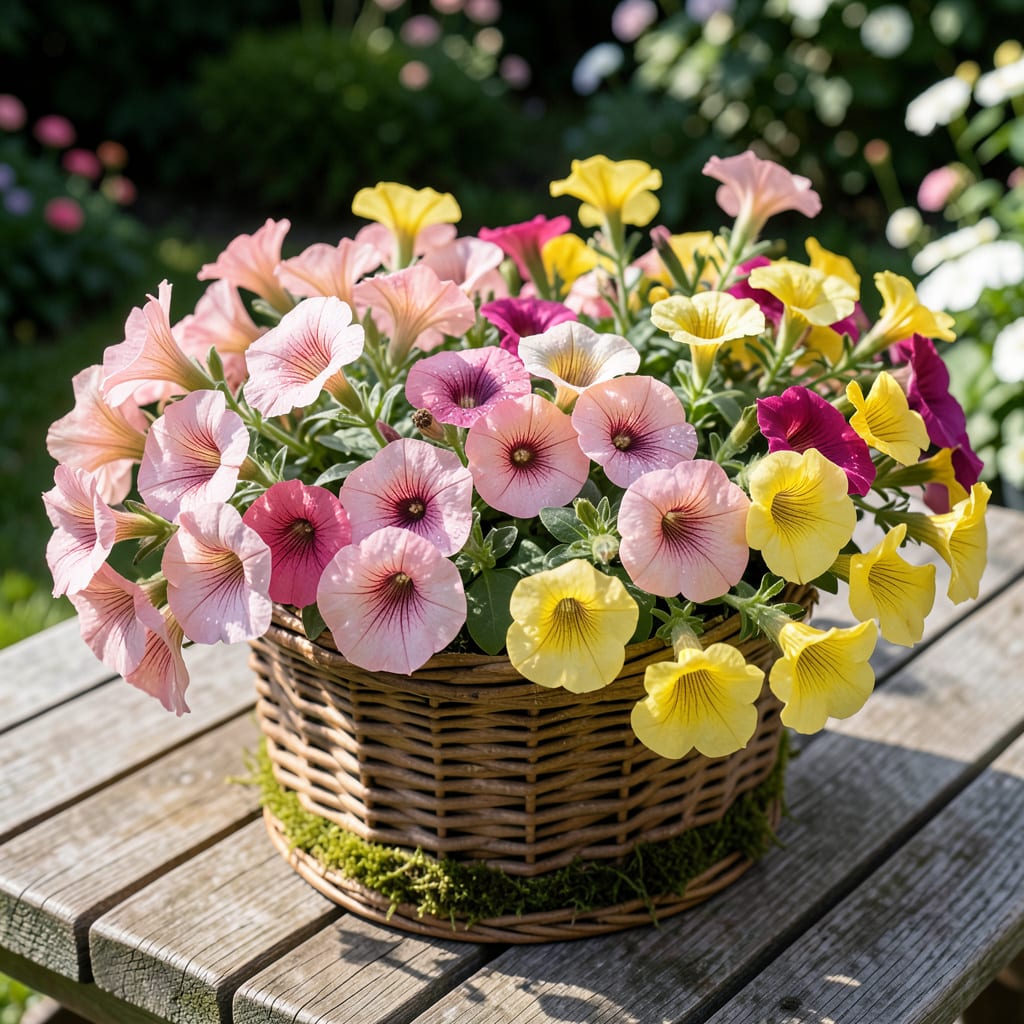
These cheerful bicolors brighten any sunny spot with their bold stripes and ruffled edges. I first planted them along my front walk and got compliments all summer from neighbors.
They thrive in well-draining soil with 6+ hours of sun, blooming nonstop until frost. Deadhead weekly for continuous waves of pink and yellow that pop against green foliage.
📚 In This Guide
Here’s my proven method for growing these vibrant bicolor blooms in your garden.
Select a site with full sun—at least 6-8 hours of direct sunlight daily. Petunias thrive in bright, warm conditions, and insufficient light leads to leggy growth and fewer blooms. Test your soil’s drainage by digging a 1-foot hole and filling it with water. If it drains within 1 hour, you’re good to go.
Amend the soil with 2-3 inches of organic compost to improve fertility and structure. Work it into the top 6-8 inches of soil. Petunias prefer slightly acidic to neutral soil (pH 6.0-7.0). If your soil is heavy clay or sand, consider raising the bed or using containers for better control.
Space petunia plants 10-12 inches apart to allow for air circulation and reduce disease risk. Dig a hole slightly larger than the root ball, place the plant in, and ensure the top of the root ball sits ½ inch above the soil line. This prevents waterlogging at the stem base, which can cause rot.
Gently firm the soil around the plant and water thoroughly to settle the roots. I always mulch with a 1-inch layer of organic mulch (like shredded bark) to retain moisture and suppress weeds. Avoid piling mulch against the stems, as this can trap moisture and invite disease.
Water deeply at the base of the plant 2-3 times per week, depending on your climate. Petunias are drought-tolerant but bloom best with consistent moisture. Check the soil by sticking your finger 1 inch deep—if it feels dry, it’s time to water. Avoid overhead watering, which can lead to fungal issues.
Fertilize weekly with a balanced, water-soluble fertilizer (10-10-10 or 20-20-20) to encourage continuous blooming. I’ve found that a ½-strength solution works well to avoid burning the roots. Deadhead spent blooms regularly to redirect energy into new flower production.
Pinch back the growing tips when plants are 4-6 inches tall to promote branching. Use clean, sharp shears to remove 1-2 inches from each stem. This encourages a compact, bushy habit and more blooms. Repeat this process every 4-6 weeks throughout the growing season.
Monitor for pests like aphids or spider mites, which can stress the plants. If you notice yellowing leaves or stunted growth, inspect the undersides of leaves for signs of infestation. A strong blast of water or insecticidal soap can usually resolve minor issues before they escalate.
Small adjustments in your approach can make a big difference in achieving those lush, colorful blooms.
Sunlight Priority: That 6-8 hours of direct sunlight daily in Step 1 isn’t just a suggestion—it’s essential. I’ve seen petunias in partial shade grow tall and spindly with far fewer flowers. If your garden doesn’t get full sun, consider containers you can move to follow the light.
Drainage Check: The 1-hour drainage test from Step 1 is your first defense against root rot. If water sits longer than that, amend with more compost or plant in raised beds. Petunias hate wet feet more than they hate dry spells.
Pruning Precision: When you’re pinching back in Step 4 at that 4-6 inch height, don’t be timid—remove a full 1-2 inches from each stem. This seems aggressive but produces significantly bushier plants with more blooms. Repeat that pinch every 4-6 weeks for continuous dense growth.
Watering Wisdom: The 2-3 times weekly watering in Step 3 should be deep and at the base. Many gardeners make the mistake of light daily watering, which encourages shallow roots. Stick your finger that 1 inch deep as directed—if it’s dry there, it’s time to water thoroughly.
Keep them in full sun (6+ hours daily) and water when the top inch of soil is dry. Fertilize weekly with a balanced liquid fertilizer for vibrant blooms. Deadhead spent flowers to encourage continuous blooming.
Plant after the last frost in spring when soil temperatures reach 60°F (15°C). They thrive in warm weather and can bloom until the first frost in fall.
Yes! Use well-draining potting mix and containers with drainage holes. They’re perfect for hanging baskets, window boxes, or patio pots. Just ensure they get plenty of sunlight.
Lack of sunlight, overwatering, or nutrient deficiency may be the cause. Check for 6+ hours of sun, water only when dry, and fertilize regularly. Prune leggy stems to promote new growth.
Try calibrachoa (million bells) or verbena for bicolor pink and yellow blooms. Both are low-maintenance and thrive in similar conditions.
