
Beautiful Plants For Your Interior
Beautiful Plants For Your Interior
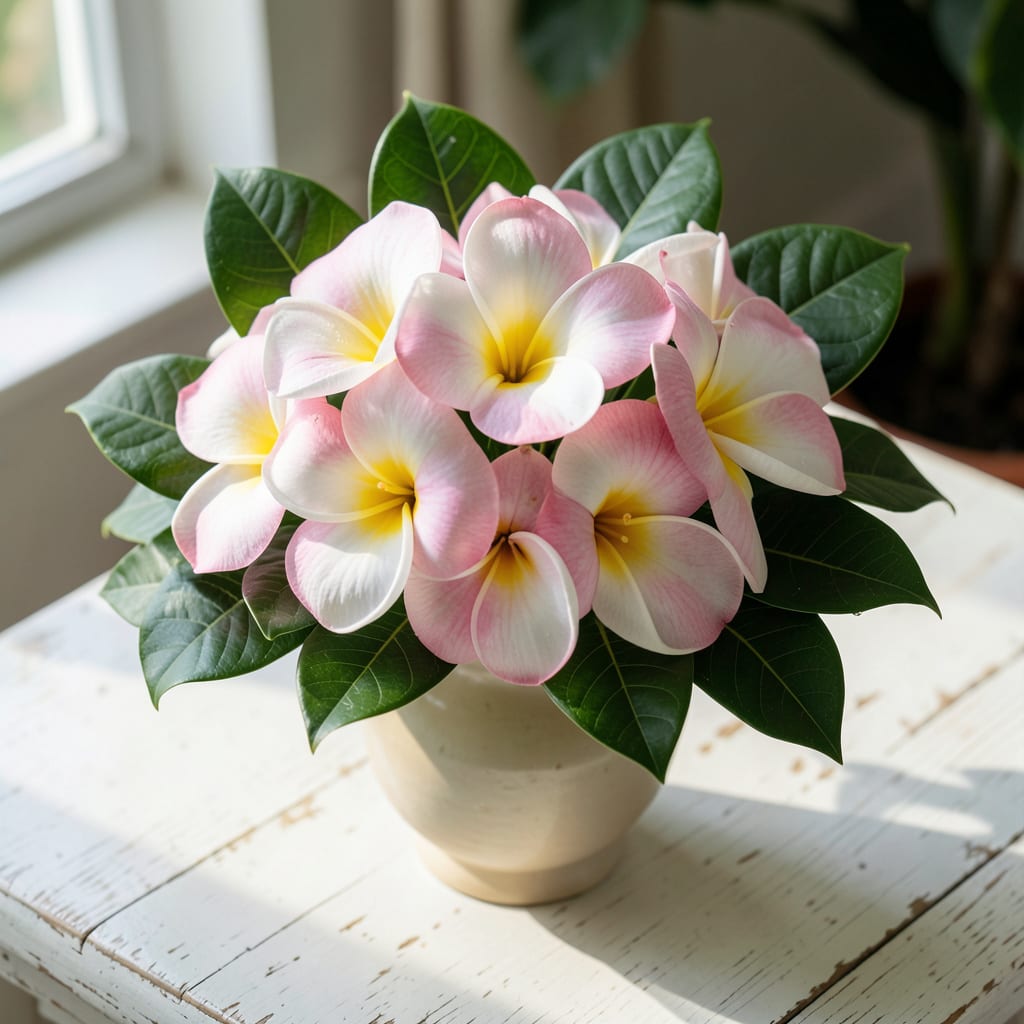
My first whiff of plumeria in bloom stopped me in my tracks. These pink and white stunners bring the tropics to your backyard with their heady, sweet scent and vibrant colors.
They thrive with minimal fuss—just well-draining soil, 6-8 hours of sun, and occasional water once established. The reward? Months of fragrant blooms that cut beautifully for indoor arrangements.
📚 In This Guide
Here’s the method I use to cultivate these stunning tropical blooms with minimal fuss.
Choose a spot with full sun exposure—plumeria thrive in 6-8 hours of direct sunlight daily. Without sufficient light, you’ll notice sparse blooming and weak stem growth. I always position mine where they receive morning sun and afternoon shade in the hottest months to prevent leaf scorch.
The soil must drain exceptionally well. Plumeria roots rot quickly in soggy conditions. If your garden has heavy clay, amend the area with coarse sand or perlite to improve drainage. A slight slope helps too, but even flat ground works if the soil composition is right.
Dig a hole that’s twice as wide as the root ball but no deeper. Plumeria are sensitive to being planted too deep—this can lead to stem rot. The crown (where the roots meet the stem) should sit 1-2 inches above the soil line to allow for settling.
Space plants 3-4 feet apart to accommodate their mature size. I’ve found that closer spacing reduces air circulation, which invites fungal issues. Backfill with native soil mixed with 50% perlite or coarse sand for the best drainage. Water lightly to settle the soil, but don’t soak it.
Water deeply but infrequently—once every 7-10 days is ideal once established. The key is letting the soil dry out completely between waterings. I check by sticking my finger 2-3 inches into the soil; if it feels dry at that depth, it’s time to water.
During the first month after planting, water more frequently (every 4-5 days) to help roots establish. After that, taper off. Overwatering is the most common mistake with plumeria—it causes more problems than underwatering. Yellowing leaves often signal too much moisture, not too little.
Use a high-phosphorus fertilizer (like 10-30-10) to encourage flowering. I apply a slow-release granular type every 4-6 weeks during the growing season. Liquid fertilizers work too but require more frequent application (every 2 weeks).
Stop fertilizing completely in late fall as the plant prepares for dormancy. Resume in early spring when new growth appears. This timing prevents tender new growth from being damaged by cold snaps. You’ll see a dramatic increase in blooms the season after proper fertilization.
Prune in early spring before new growth starts. Remove dead or crossing branches first, then shape the plant as desired. I cut back leggy stems by one-third to encourage bushier growth. Always use clean, sharp pruners to prevent tearing the bark.
After pruning, you’ll notice new branches emerging from just below the cut within 3-4 weeks. This is where your future flowers will form. Avoid heavy pruning in late summer—it can stimulate tender growth that won’t harden off before winter, especially in cooler climates.
These insights will help you avoid the most common pitfalls when growing these tropical beauties.
Sunlight Strategy: The 6-8 hours of direct sunlight daily isn’t just a suggestion—it’s critical for vibrant blooms. I learned the hard way that morning sun with afternoon shade in extreme heat prevents leaf scorch while still delivering that full-sun requirement. Position your plants where they’ll get consistent light without baking all day.
Drainage is Non-Negotiable: In Step 1, when amending heavy clay soil, don’t skimp on the coarse sand or perlite. I’ve seen plumeria rot in just a few days when planted in soil that doesn’t drain properly. Even a slight slope makes a surprising difference in preventing water from pooling around the roots.
Planting Depth Precision: That 1-2 inch crown elevation above soil in Step 2 exists for a reason. Planting too deep causes stem rot, and I’ve lost two plants this way. Use a ruler if needed—this small detail prevents big problems later. The same goes for spacing: 3-4 feet apart isn’t just about aesthetics, it’s about air circulation.
Watering Wisdom: The every 7-10 days watering schedule in Step 3 works perfectly once established, but that first month of every 4-5 days is crucial for root establishment. I check soil moisture at 2-3 inches depth religiously. Yellow leaves? Almost always overwatering, not underwatering—this plant prefers dry feet to wet ones.
Water deeply every 7–10 days in warm weather, allowing the soil to dry between waterings. Overwatering can cause root rot, so ensure good drainage.
Blooming typically occurs from late spring to fall, depending on the climate. Warmer regions may see flowers year-round, while cooler areas experience seasonal blooms.
Yes! Use a well-draining potting mix and a container with drainage holes. Dwarf varieties are ideal for pots, but larger types need more space for roots.
Yellow leaves often signal overwatering, poor drainage, or nutrient deficiencies. Check soil moisture, improve drainage, and fertilize with a balanced formula if needed.
Yes! Consider frangipani varieties like Plumeria obtusa (white) or Plumeria rubra (red/pink) for similar tropical beauty and fragrance.
