
Beautiful Plants For Your Interior
Beautiful Plants For Your Interior
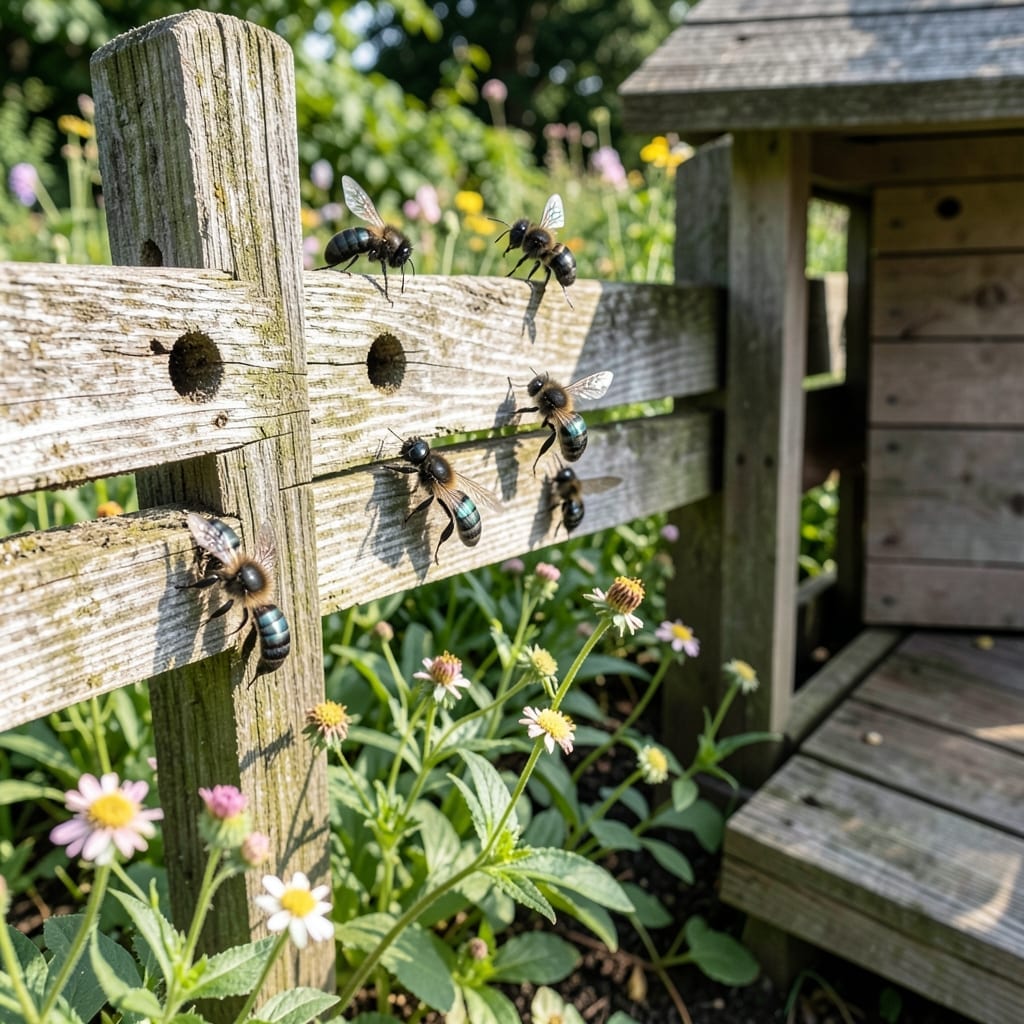
Those black-and-yellow bees hovering near your deck aren’t bumblebees. I learned this the hard way after spotting perfectly round holes in my fence last summer.
Carpenter bees look similar but have shiny, hairless abdomens. They don’t eat wood—they excavate it for nests, leaving sawdust-like piles below entry points.
The good news? They’re important pollinators, especially for open-faced flowers. The bad news? Untreated wood structures can take a beating over time.
Identifying them early saves you headaches. Here’s what to look for in your yard.
Understanding why carpenter bees create their distinctive nests helps explain their behavior—and why you might spot them (or their damage) in pictures of carpenter bees. These solitary insects don’t eat wood like termites; instead, they excavate it for shelter. Here’s why it happens:
Female carpenter bees are hardwired to build nests in soft, untreated wood to protect their offspring. They chew into wood to create tunnels, where they lay eggs and provision them with pollen and nectar. This behavior is purely instinctual, driven by their role as primary caregivers in their species’ lifecycle.
Carpenter bees target wood that’s weathered, unpainted, or untreated—like decks, fences, or old wooden structures. The softer the wood, the easier it is to excavate. Moisture and age can soften wood fibers, making it more appealing for nesting. This explains why you often see their handiwork in older, exposed wooden surfaces.
These bees prefer nesting in wood that receives ample sunlight. Sun-warmed wood helps regulate the temperature inside the nest, which is crucial for the development of their larvae. South-facing or sunlit surfaces are prime real estate for carpenter bees.
In areas where natural predators (like woodpeckers or certain wasps) are scarce, carpenter bee populations can thrive unchecked. Without these checks, they freely excavate wood to expand their nesting sites, leading to more visible damage over time.
Carpenter bees can wreak havoc on wooden structures, but with the right approach, you can reclaim your property. Below are targeted solutions for common issues caused by these wood-boring insects, along with prevention tips to keep them from returning.
If you spot holes in wooden surfaces, act fast. Use a wood filler to plug the tunnels, then sand and repaint the area to restore its appearance. For deeper infestations, inject boric acid or insecticidal dust into the holes before sealing to kill larvae. Prevention tip: Apply a wood preservative or paint to untreated wood to deter future nesting.
To reduce the bee population, set up carpenter bee traps near problem areas. These traps lure bees in with untreated wood and prevent them from escaping. Alternatively, spray citrus-based or almond oil repellents around entry points—the scents deter bees without harming them. Prevention tip: Hang fake wasp nests nearby; carpenter bees avoid areas they think are already claimed by predators.
If bees are targeting your deck, fence, or outdoor furniture, create a barrier with hardware cloth or metal mesh over vulnerable spots. For a chemical-free option, rub bar soap into the wood—bees dislike the residue. Prevention tip: Replace or treat aging wood promptly, as carpenter bees prefer weathered, unpainted surfaces.
💡 Pro tip: Early spring is the best time to take action, as this is when carpenter bees emerge to mate and nest. Stay vigilant, and your wood will stay bee-free!
Look at the abdomen: carpenter bees have a shiny, hairless black rear end, while bumblebees are fuzzy all over. Also, carpenter bees fly solo, whereas bumblebees live in colonies.
They prefer soft, untreated wood like pine, cedar, or redwood. Old decks, fences, and outdoor furniture are prime targets. Painted or pressure-treated wood is less appealing.
No, males can’t sting—they’re all bluster! Females can sting but rarely do unless directly provoked. They’re generally docile and more focused on nesting.
Tunnels typically run 4-6 inches deep, with side chambers for eggs. You’ll often see a small pile of sawdust beneath the entry hole as evidence.