
Beautiful Plants For Your Interior
Beautiful Plants For Your Interior
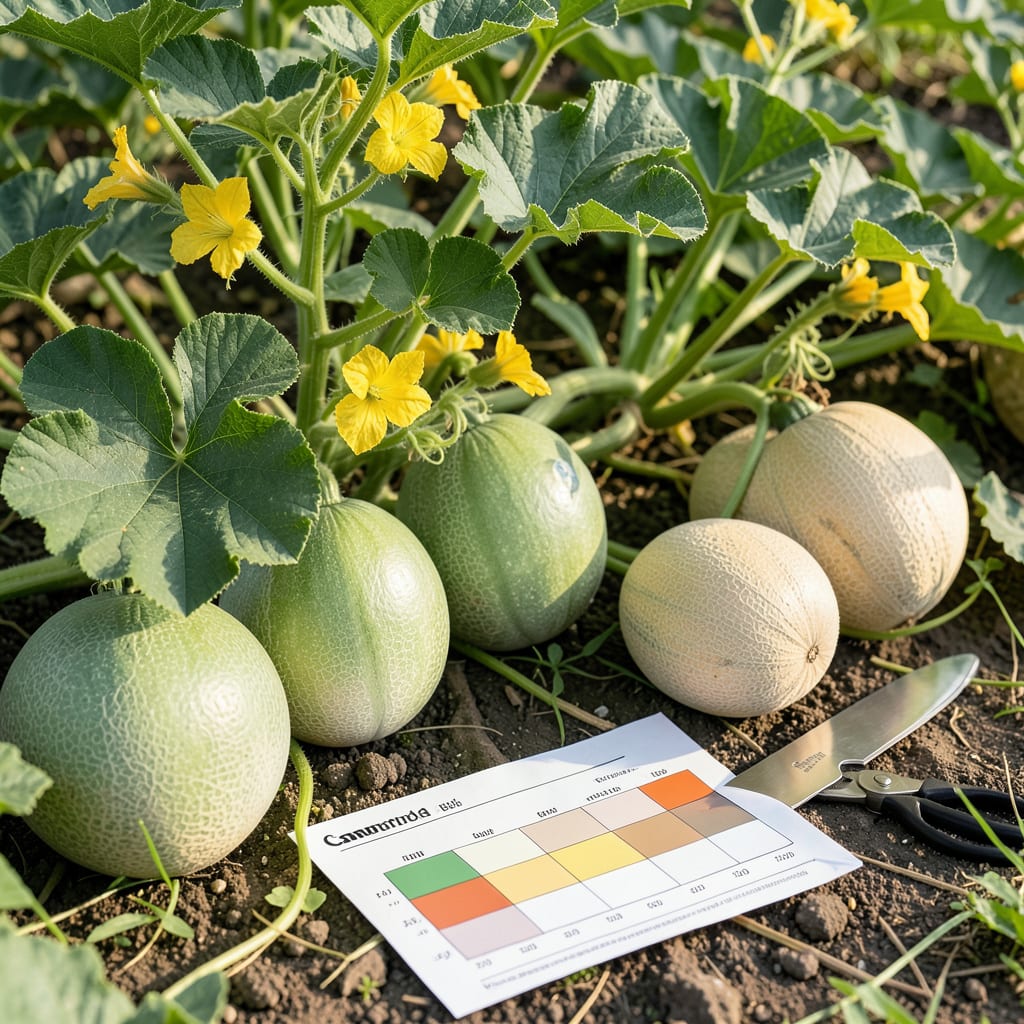
Nothing beats biting into a perfectly ripe 🍈 Cantaloupe—sweet, juicy, and bursting with flavor. But picking one at the wrong time can leave you disappointed.
I’ll share the most important visual cues and a simple chart to help you identify ripeness every time. Say goodbye to guesswork and hello to melon perfection.


Knowing when to pick cantaloupe is all about reading the visual signs. The netting pattern, rind color, and stem attachment are your best indicators of ripeness.
I always check the color under the netting first—when it shifts from green to beige, the melon is getting close. The stem end will also start to detach slightly when it’s ready.
| Stage | Netting | Color | Stem |
|---|---|---|---|
| Unripe | Smooth | Green | Firm |
| Almost Ripe | Developing | Light Green | Slight Give |
| Ripe | Rough | Beige | Full Slip |
| Overripe | Very Rough | Yellow | Detached |
The netting on the rind becomes more pronounced and rough as the cantaloupe matures. If it’s still smooth, the melon needs more time on the vine.
Another key sign is the blossom end—the opposite side of the stem. When ripe, it will feel slightly soft when pressed gently with your thumb.
I’ve found that the stem attachment is the most reliable indicator. A full slip means the melon detaches completely with minimal pressure, while a half slip needs a bit more encouragement.
The aroma at the stem end is another giveaway. A ripe cantaloupe will have a sweet, musky fragrance that you can smell without cutting it open.
Don’t rely on size alone—some varieties stay small but are perfectly ripe. Always combine multiple indicators for the best results.
For the best flavor, I harvest in the early morning when the melons are cool and the sugars are concentrated. This ensures maximum sweetness and juiciness.
Remember, cantaloupes won’t ripen further once picked, so timing is everything. Use this ripe chart to get it right every time.
With practice, you’ll develop an eye for perfect ripeness and enjoy the sweetest, most flavorful cantaloupes from your garden. ☀️
Testing cantaloupe ripeness without cutting it open is easier than you think. I rely on a few simple techniques that work every time in the garden or at the market.
First, try the thumping method. Tap the melon with your knuckles—if it produces a deep, hollow sound, it’s ripe. A high-pitched sound means it needs more time.
The blossom end test is another great method. Press gently on the opposite side of the stem—if it gives slightly, the cantaloupe is likely ripe.
I also recommend the smell test. A ripe cantaloupe will have a sweet, musky fragrance at the stem end. If there’s no smell, it’s not ready yet.
Finally, compare the weight of similar-sized melons. The heavier one is usually the riper one, as it’s full of juice.
Remember, these tests work best when combined. A melon that passes the thump test and has a sweet smell is almost certainly ready to pick. 🌿
Even experienced gardeners make common mistakes when picking cantaloupe. I’ve learned the hard way that size alone doesn’t guarantee ripeness—some melons stay small but are packed with flavor.
Another frequent error is ignoring the stem attachment. Many assume a firm stem means the melon is ready, but a full slip or half slip is what you’re looking for.
❌ Harvesting too early based on size alone
❌ Ignoring stem attachment (full slip = ready)
❌ Relying only on color without checking netting
❌ Picking in the heat of the day (harvest in morning)
Relying solely on rind color is another pitfall. The netting pattern must also be rough and pronounced for true ripeness. I’ve seen greenish melons that were perfectly ripe under the netting.
Timing matters too—harvest in the early morning when sugars are most concentrated. Picking during the hottest part of the day can lead to a less sweet, less juicy melon.
Finally, don’t forget to combine multiple indicators. A ripe cantaloupe will pass the thump test, have a sweet aroma, and show a beige color under the netting. 🌱
A ripe one has a sweet, musky fragrance at the stem end. If there’s no smell, it needs more time on the vine.
No, a firm stem means it’s not ready. Wait until it reaches full slip (detaches easily) or half slip (needs gentle pressure).
The netting becomes rough and pronounced as it matures. Smooth netting indicates it needs more time to develop full sweetness.
Early morning is ideal when sugars are most concentrated. Avoid picking during the hottest part of the day for best flavor.
