
Beautiful Plants For Your Interior
Beautiful Plants For Your Interior
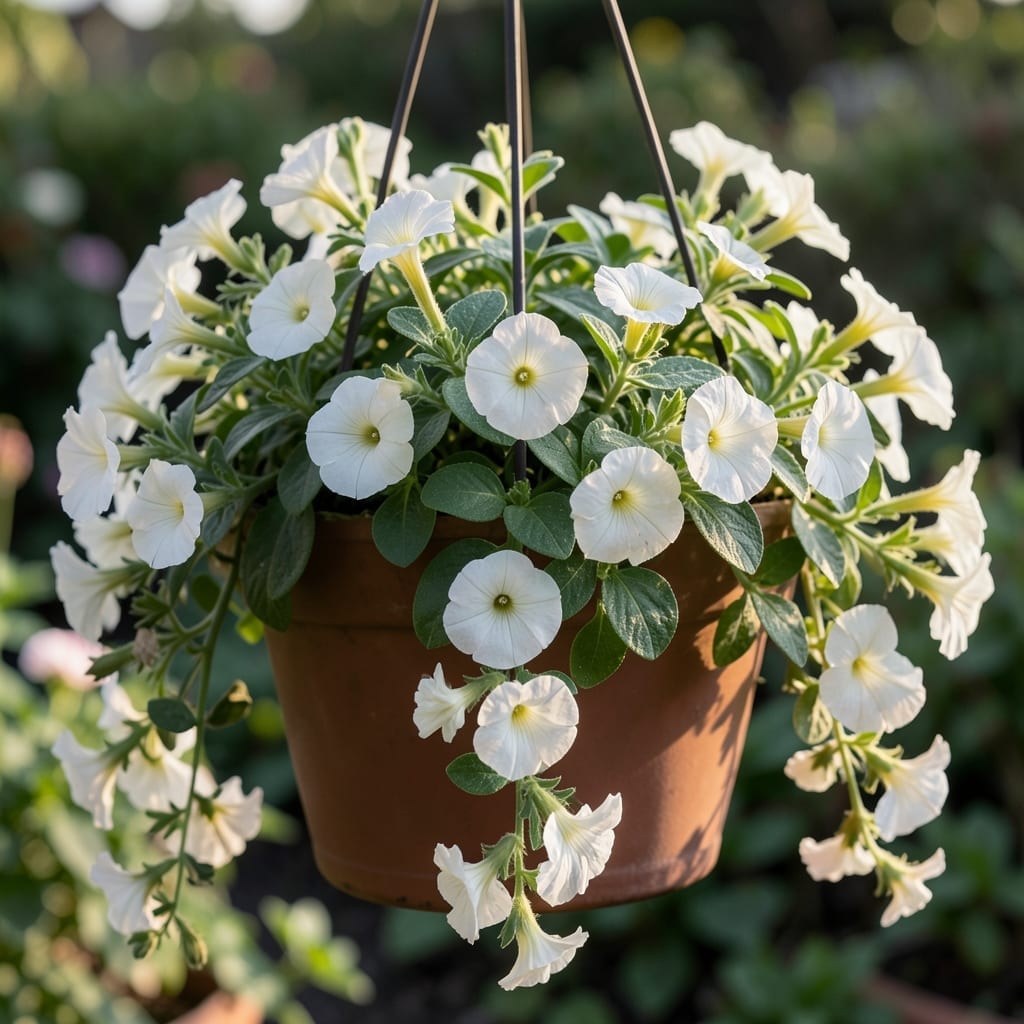
White petunias spilling over the edges of containers changed my summer garden game. The Supercascade variety creates a waterfall of pure white blooms that keep going until frost.
These thrive in full sun with regular watering, and they’ll reward you with non-stop flowers from spring through fall. Perfect for hanging baskets, window boxes, or any spot where you want cascading color.
📚 In This Guide
This method ensures vibrant, cascading blooms that will transform your garden with minimal effort.
Select a spot with full sun exposure—these petunias thrive with at least 6-8 hours of direct sunlight daily. Without enough light, they’ll produce fewer flowers and grow leggy. I’ve found that hanging baskets or elevated containers work best to showcase their trailing habit.
Ensure your containers have drainage holes to prevent waterlogging, which can rot the roots. A 12-14 inch diameter pot is ideal for one plant, but for a lush display, use larger containers and space plants about 8-10 inches apart. Terra cotta or plastic both work, though plastic retains moisture longer.
Use a well-draining potting mix designed for flowering plants. I always mix in a handful of perlite or vermiculite to improve aeration. This variety prefers slightly acidic to neutral soil, so aim for a pH between 6.0-7.0.
Before planting, water the soil lightly to settle it. The mix should feel moist but not soggy—think of a wrung-out sponge. If the soil is too dry, the roots will struggle to establish; if it’s too wet, you risk drowning the plant before it even starts.
Gently remove the plant from its nursery container and loosen the roots if they’re tightly bound. Place the root ball in the prepared soil so the top sits level with the container’s rim. Planting too deep can suffocate the stem, while planting too shallow may expose roots to air.
Backfill with soil and press lightly to eliminate air pockets. Water thoroughly after planting until you see it drain from the bottom. This ensures the roots make good contact with the soil. You’ll know it’s ready when the water runs clear from the drainage holes.
Keep the soil consistently moist but not waterlogged. I check daily in hot weather—these petunias wilt dramatically if they’re thirsty but bounce back quickly once watered. Water at the base to avoid wetting the leaves, which can lead to fungal issues.
Feed with a balanced, water-soluble fertilizer every 7-10 days during the growing season. I use a 10-10-10 or 20-20-20 formula to encourage both foliage and flower production. Deadhead spent blooms regularly to promote continuous flowering—this variety is a prolific bloomer if kept happy.
Pinch back the growing tips when the plants are about 6 inches long to encourage branching. This might feel counterintuitive, but it results in a fuller, bushier plant with more flowers. Use clean, sharp scissors or your fingers to remove the top 1-2 inches of each stem.
Throughout the season, trim back leggy stems to maintain shape and encourage new growth. If the plant starts looking straggly in midsummer, a light prune and a dose of fertilizer will rejuvenate it. Watch for pests like aphids and treat promptly with insecticidal soap if needed.
Took me a few seasons to figure these out, so here goes.
The Sunlight Factor: Don’t skimp on the 6-8 hours of direct sunlight daily from Step 1—these petunias will get leggy and produce fewer flowers if they don’t get enough light. If your space only gets partial sun, try a brighter spot or supplement with grow lights to keep them thriving.
Drainage Matters: In Step 1, drainage holes in your containers are non-negotiable. Without them, waterlogging can rot the roots, especially in plastic pots that retain moisture. If your favorite container lacks holes, drill them yourself or use it as a cache pot to hold a well-draining inner pot.
Soil Prep Secret: For Step 2, the pH range of 6.0-7.0 is key for optimal growth. If you’re unsure about your soil’s pH, a simple test kit from the garden center can save you a lot of guesswork. Mixing in perlite or vermiculite, as mentioned, ensures the roots get the aeration they need.
Pruning Timing: In Step 5, when plants reach about 6 inches long, pinch back the tips without hesitation. It feels counterintuitive, but this step encourages branching and leads to a fuller, bushier plant with more blooms. Use sharp scissors for clean cuts to avoid damaging the stems.
Keep soil moist but well-drained, and fertilize weekly with a balanced liquid fertilizer. Deadhead spent blooms to encourage continuous flowering. Ensure full sun (6+ hours daily) for vibrant, cascading white petals.
Plant after the last frost in spring when soil temperatures reach 60°F (15°C). In warmer climates, you can start seeds indoors 8-10 weeks before the last frost for earlier blooms.
Try Wave White petunias, Calibrachoa Superbells White, or Lobelia Crystal Palace White for similar cascading white flowers. Each offers slightly different growth habits and care needs.
Yellowing can signal overwatering, nutrient deficiencies, or poor drainage. Check soil moisture, adjust watering, and apply a balanced fertilizer. Ensure pots have drainage holes to prevent root rot.
Absolutely! Its trailing habit (up to 3 feet) makes it perfect for hanging baskets. Use a lightweight potting mix and water frequently, as container plants dry out faster.