
Beautiful Plants For Your Interior
Beautiful Plants For Your Interior
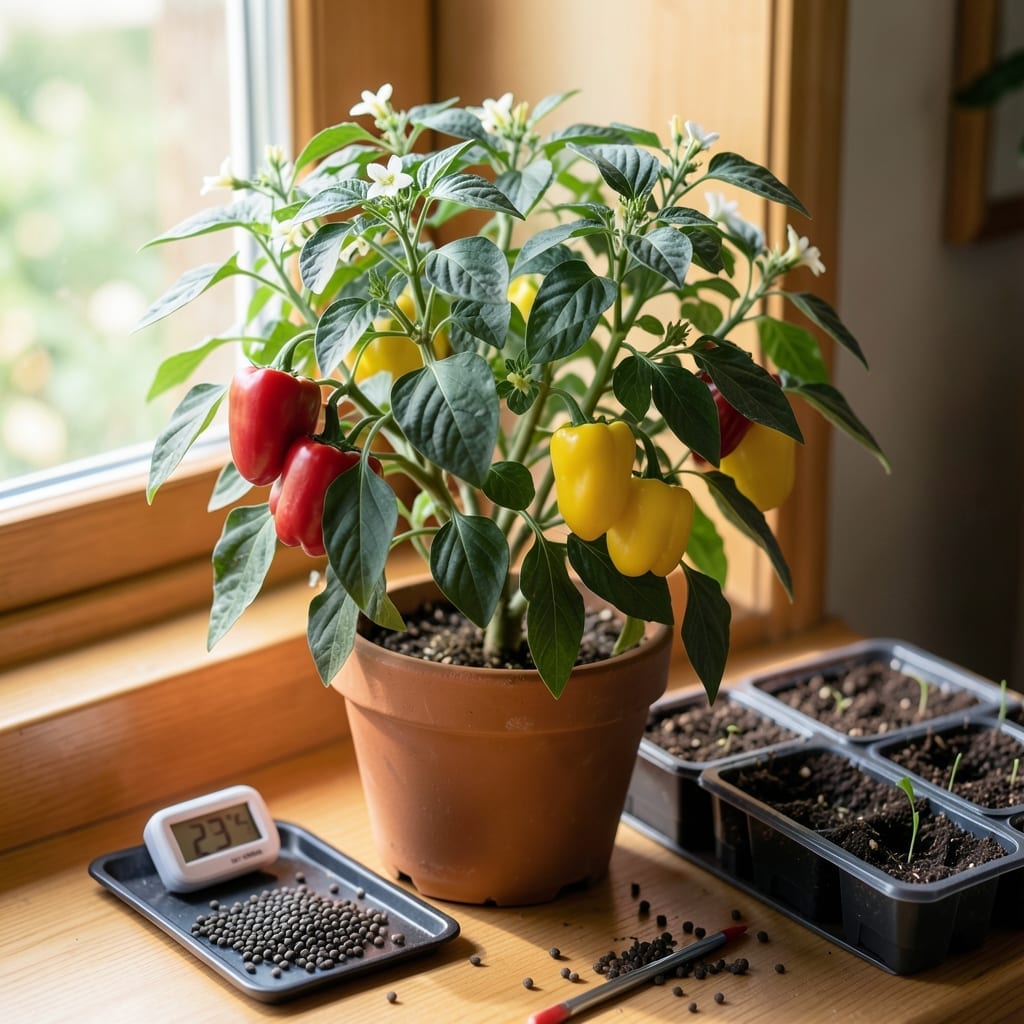
Getting 🌶️ Pepper seeds to sprout quickly starts with one critical factor: temperature. The right warmth can cut germination time in half.
While the wrong conditions leave you staring at empty seed trays for weeks. I learned this the hard way with my first failed batch.
Whether you’re growing bell or habanero varieties, the principles remain the same. You need to understand the most important element for success.
Discover how to create the perfect environment for your Pepper seeds and watch them thrive in your Zone 6 garden this spring.
I’ve learned that pepper seeds are finicky about warmth. The sweet spot for most varieties is between 70-85°F in soil temperature. Below this range, they’ll take forever to sprout—or not at all.
Different pepper types have slightly different needs. Bell peppers thrive at 75-80°F, while habaneros prefer it a bit warmer, closer to 80-85°F. Consistency is key here.
| Variety | Optimal Soil Temp | Germination Time |
|---|---|---|
| Bell Pepper | 75-80°F | 7-14 days |
| Jalapeño | 78-82°F | 10-14 days |
| Habanero | 80-85°F | 12-18 days |
| Cayenne | 75-85°F | 8-14 days |
I always use a soil thermometer to check conditions before planting. If the soil is below 70°F, I wait or use a heat mat to warm it up. Cold soil is the number one reason for poor germination.
At 85°F, most pepper seeds will sprout in as little as 7 days. But go above 95°F, and you risk cooking the seeds. They’ll dry out or enter dormancy, which is just as bad as being too cold.
For indoor starts, I place trays on top of the fridge or near a sunny window. The ambient heat from appliances often keeps the soil in the perfect range without extra equipment.
If you’re using a heat mat, set it to 75-80°F for most varieties. I’ve found that consistent warmth matters more than light during the germination phase, so don’t stress about grow lights yet.
Remember, temperature fluctuations can shock the seeds. I cover my trays with plastic wrap to trap heat and moisture, creating a mini greenhouse effect that speeds up the process.
Outdoors, I never direct sow until soil temps stay above 70°F day and night. Even a brief cold snap can set germination back by weeks, so I always check the forecast first.
For the fastest results, I combine heat mats with a humidity dome. This setup mimics the ideal tropical conditions peppers love, and I often see sprouts in under a week.
🌱Achieving the ideal pepper germination temperature is easier than you think. I’ve found that consistent warmth between 70-85°F works best for most varieties. This range speeds up sprouting and improves success rates significantly.
Without stable heat, seeds may take weeks to germinate—or worse, fail entirely. That’s why I always use a heat mat under my seed trays. It’s a game-changer for maintaining the perfect soil temperature day and night.
If you don’t have a heat mat, try placing trays near a warm appliance like a fridge or oven. Just avoid spots with temperature swings, as fluctuations can stress seeds.
Another trick I swear by is plastic wrap. It traps heat and moisture, creating a mini greenhouse effect. Just remove it once sprouts appear to prevent mold growth.
Remember, light isn’t critical at this stage—warmth is. Keep your setup in a dark, warm spot until seedlings emerge. Then, move them to bright light to prevent leggy growth.
Finally, always use a soil thermometer to monitor conditions. Guessing can lead to disappointment, but precise tracking ensures you’re in the optimal range for fast, healthy germination.
☀️