
Beautiful Plants For Your Interior
Beautiful Plants For Your Interior
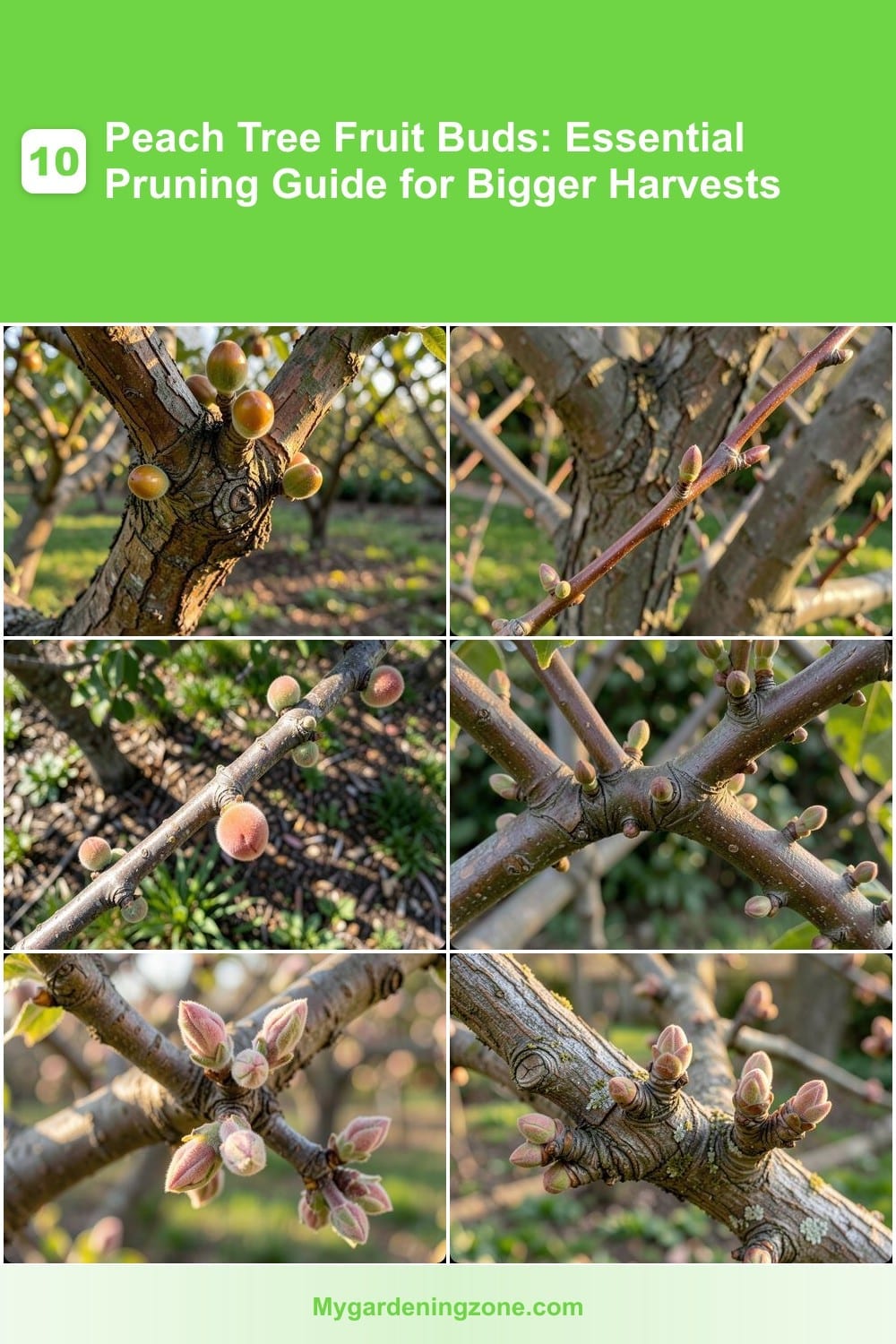
Peach tree fruit buds are the foundation of your harvest, and proper pruning ensures bigger, sweeter yields. This guide covers the 10 types of fruit buds you need to recognize and how to prune them for optimal growth and productivity.
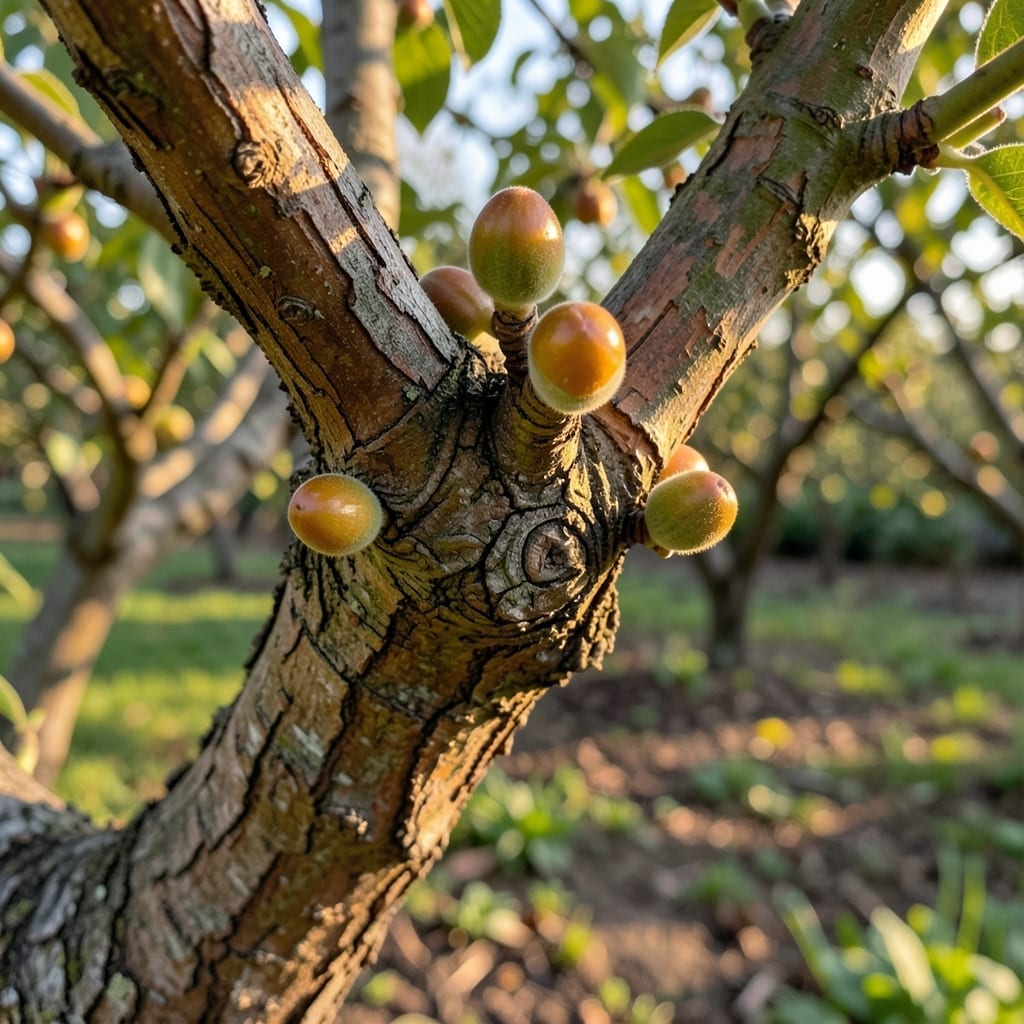
For gardeners chasing the biggest, juiciest peaches, primary fruit buds are your golden ticket. These powerhouses form exclusively on 2-3 year old wood, packing the most potential for premium fruit.
You’ll spot them as plump, rounded buds on thick, established branches. They demand minimal pruning—just protect them from overcrowding to let their energy focus on producing large, high-quality peaches. Their location on mature wood means they’ve had time to store ample nutrients.
Experienced growers prioritize these buds for maximum yield, making them ideal if you’re aiming for showstopper harvests. 🌱
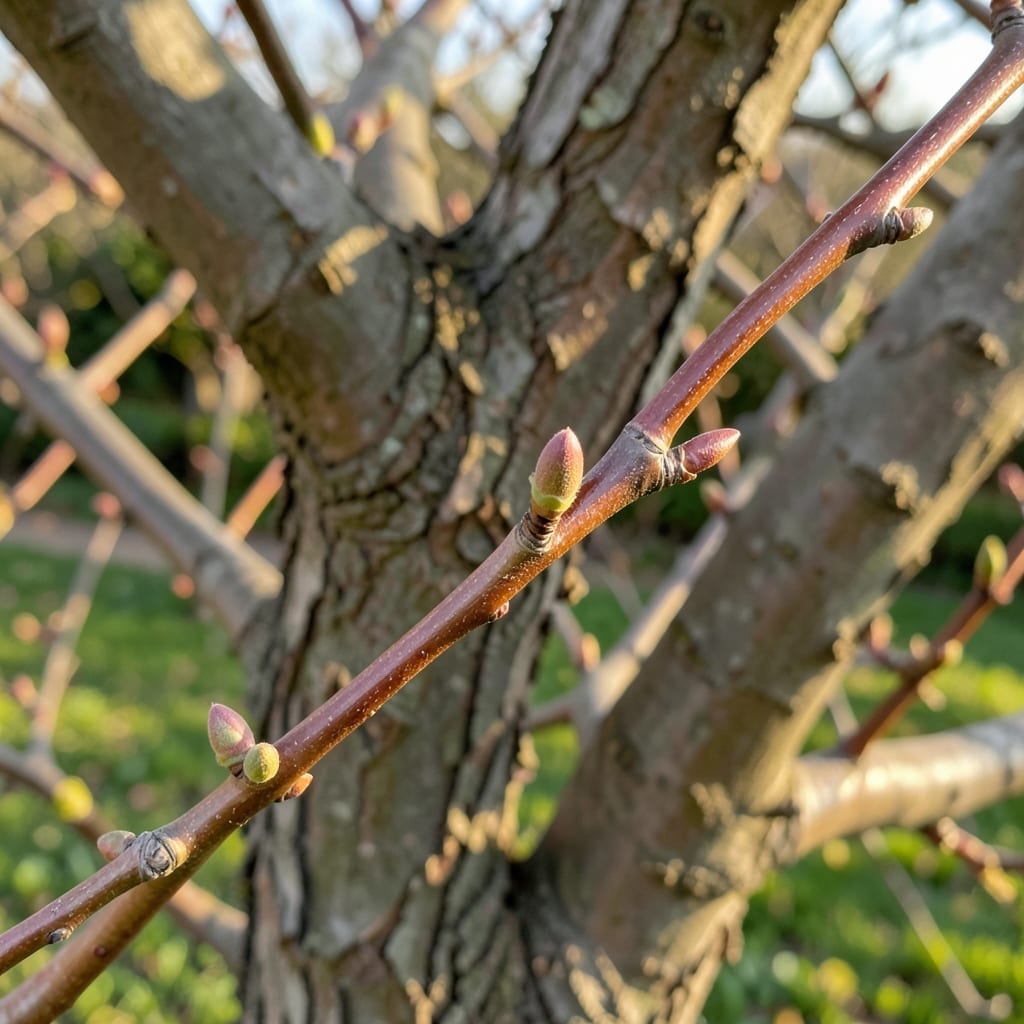
Unlike their mature-wood counterparts, secondary fruit buds form on last year’s growth, offering a balanced approach to peach production. These buds develop on slender, newer branches, ensuring your tree maintains vigor while still delivering fruit.
You’ll get medium-sized peaches from these buds, which are perfect for gardeners who want steady yields without the risk of overloading branches. They’re ideal for maintaining tree health while still enjoying a productive harvest each season.
This type of bud is a great middle-ground choice for those prioritizing both fruit quality and tree longevity. 🌿
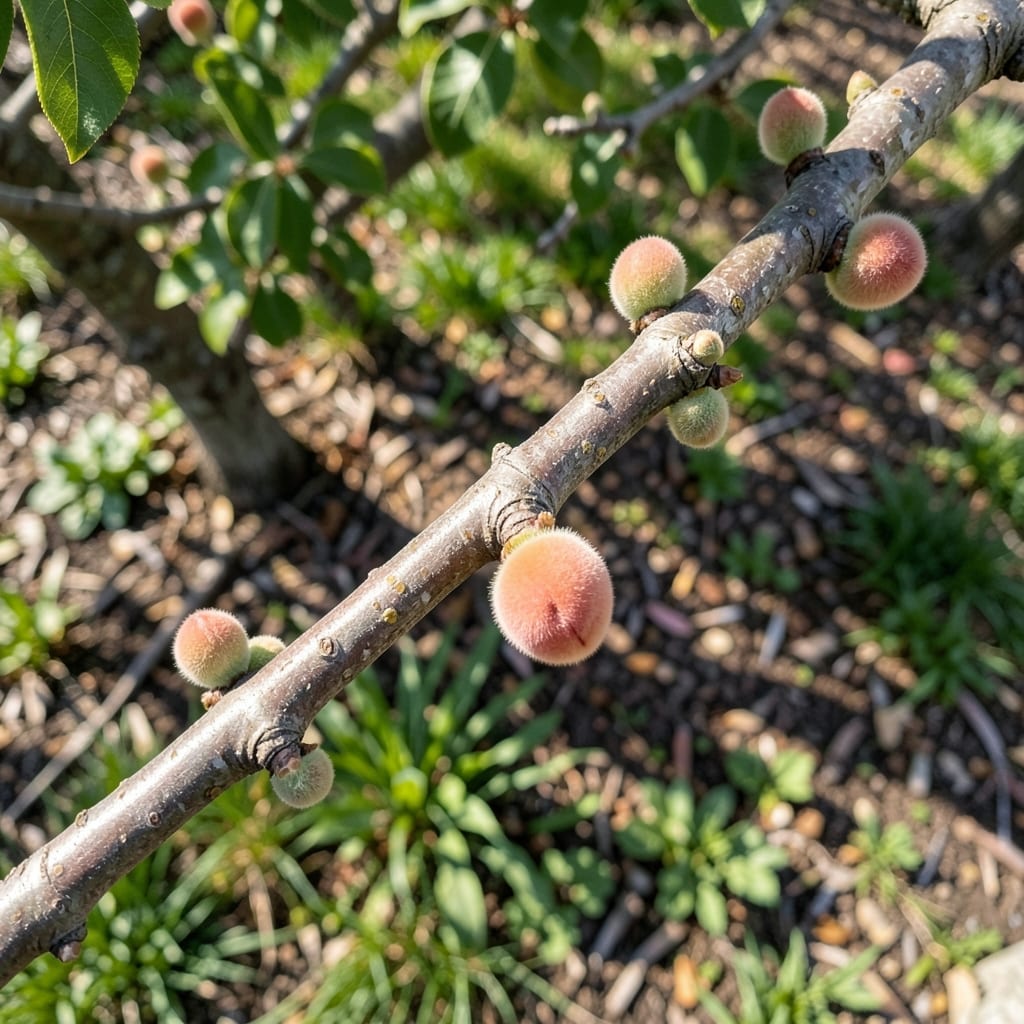
Those plump buds at the very tips of your peach tree branches may look promising, but they often create a tug-of-war between fruit production and new shoot growth. Left unchecked, these terminal buds can siphon energy from the rest of the branch.
By selectively pruning these branch-tip buds, you’ll redirect the tree’s resources to develop larger fruit elsewhere while improving air circulation. This simple cut can prevent overcrowding and reduce disease risk.
This technique is especially valuable for gardeners who want to maximize both peach size and tree health with minimal effort. 🌱
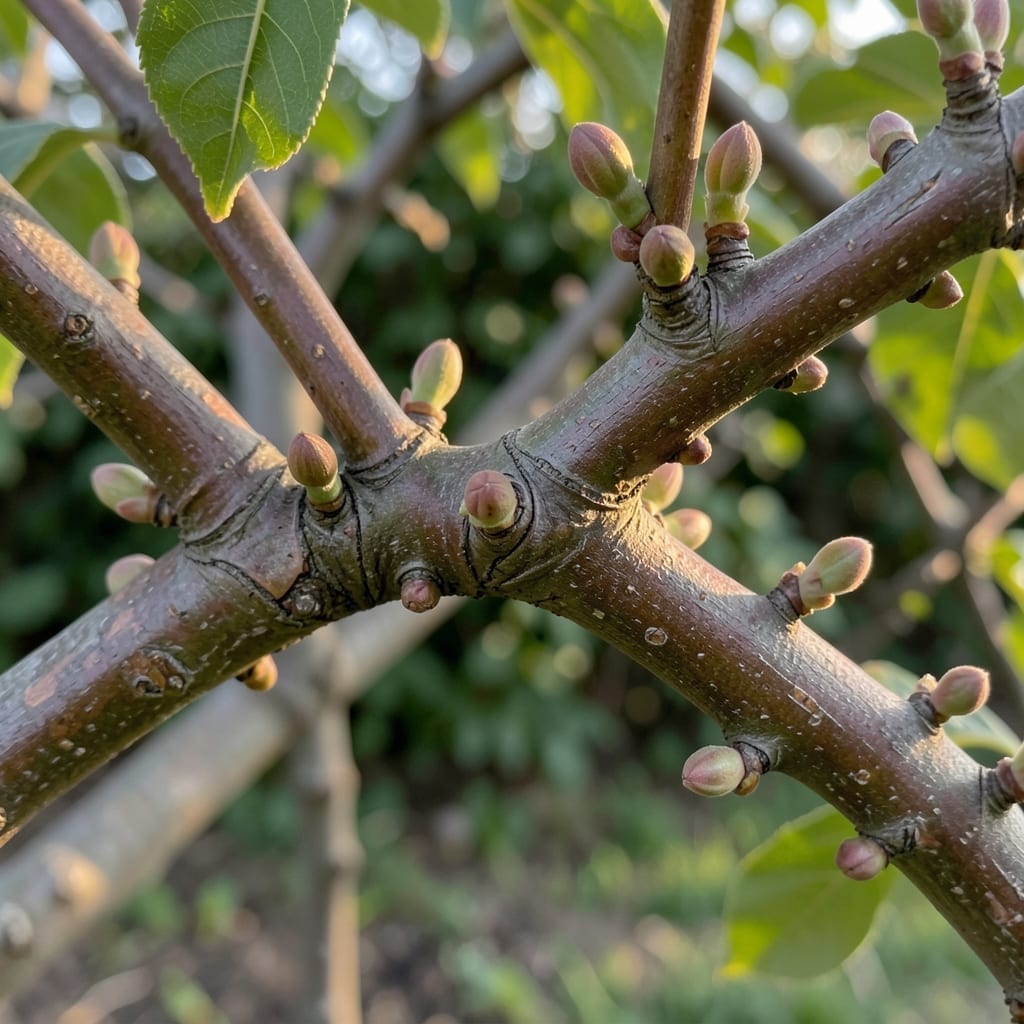
For reliable year-after-year harvests, look to the sides of your peach tree branches where lateral fruit buds quietly do their work. These understated buds form along the length of stems, ensuring consistent production without overwhelming any single branch.
Unlike terminal buds, laterals distribute fruit evenly, preventing branch strain while delivering steady yields. They’re particularly valuable for gardeners who prefer manageable harvests over boom-or-bust cycles, as they mature at a predictable pace each season.
Perfect for those who want dependable peach production without the ups and downs of less consistent bud types. 🌿
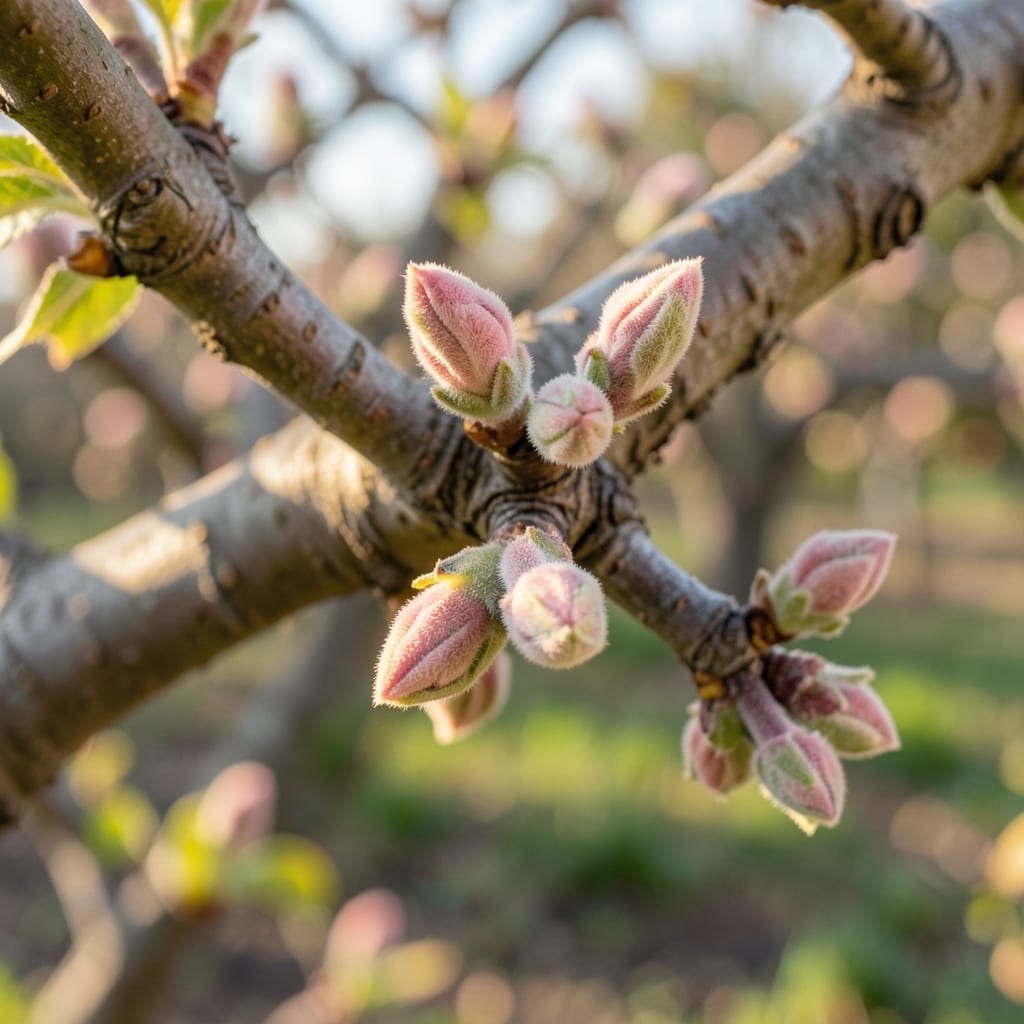
Cluster buds are nature’s way of giving you a bonus harvest—each one can produce multiple peaches from a single growth point. However, this abundance comes with a catch: without thinning, you’ll end up with small, overcrowded fruit.
You’ll need to remove excess buds when they’re about pink bud stage, leaving only the healthiest 1-2 per cluster. This ensures the remaining peaches have room to grow to their full potential.
Dedicated gardeners who don’t mind putting in extra pruning time will be rewarded with fewer but far superior peaches. 🌿
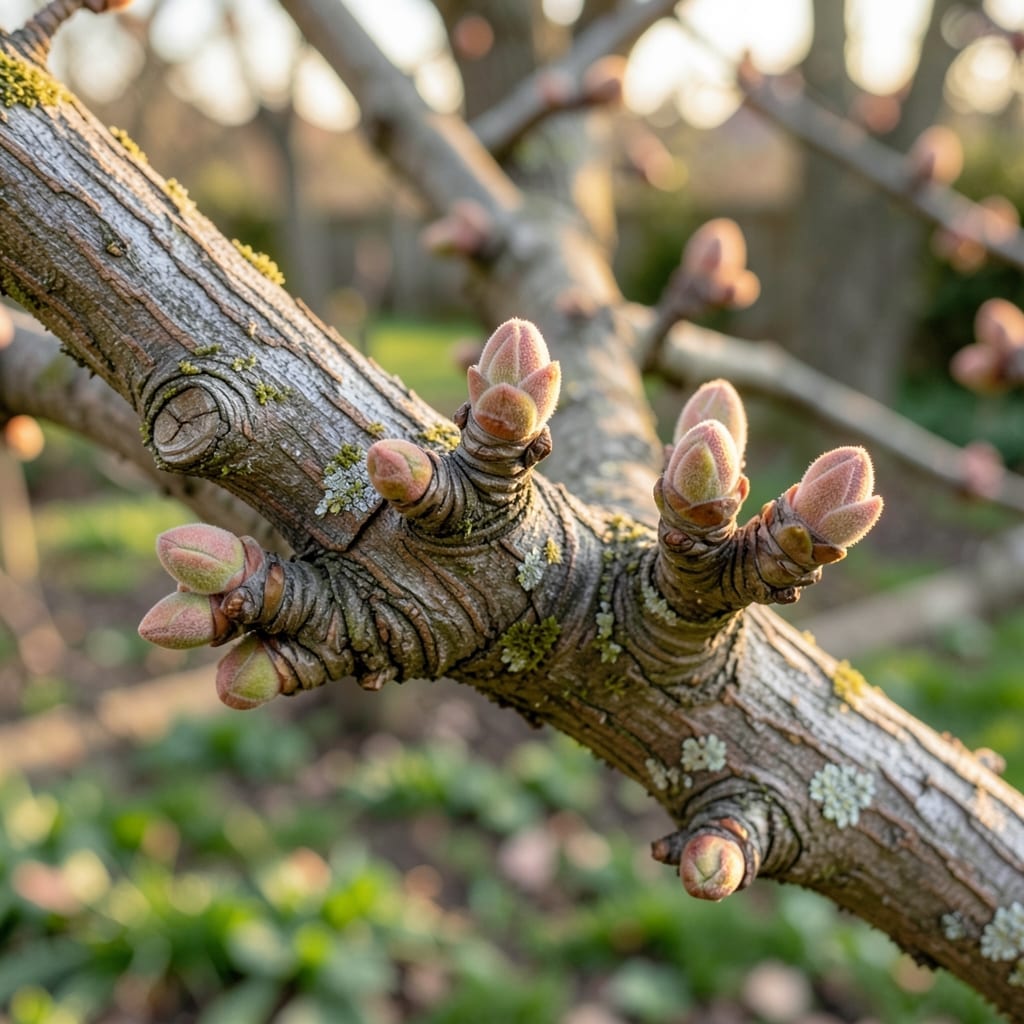
Those stubby little branches called spurs may look unassuming, but they’re powerhouses of consistent production on your peach tree. These compact growths form where fruit buds cluster tightly, delivering reliable yields without demanding much space.
Spurs typically develop on older wood and maintain their productivity for years with minimal care. Since they don’t grow long like regular branches, they’re perfect for low-maintenance gardeners who want steady fruit without constant pruning adjustments.
You’ll appreciate how these sturdy little branches keep producing year after year, making them a favorite for hassle-free harvesting. 🌿
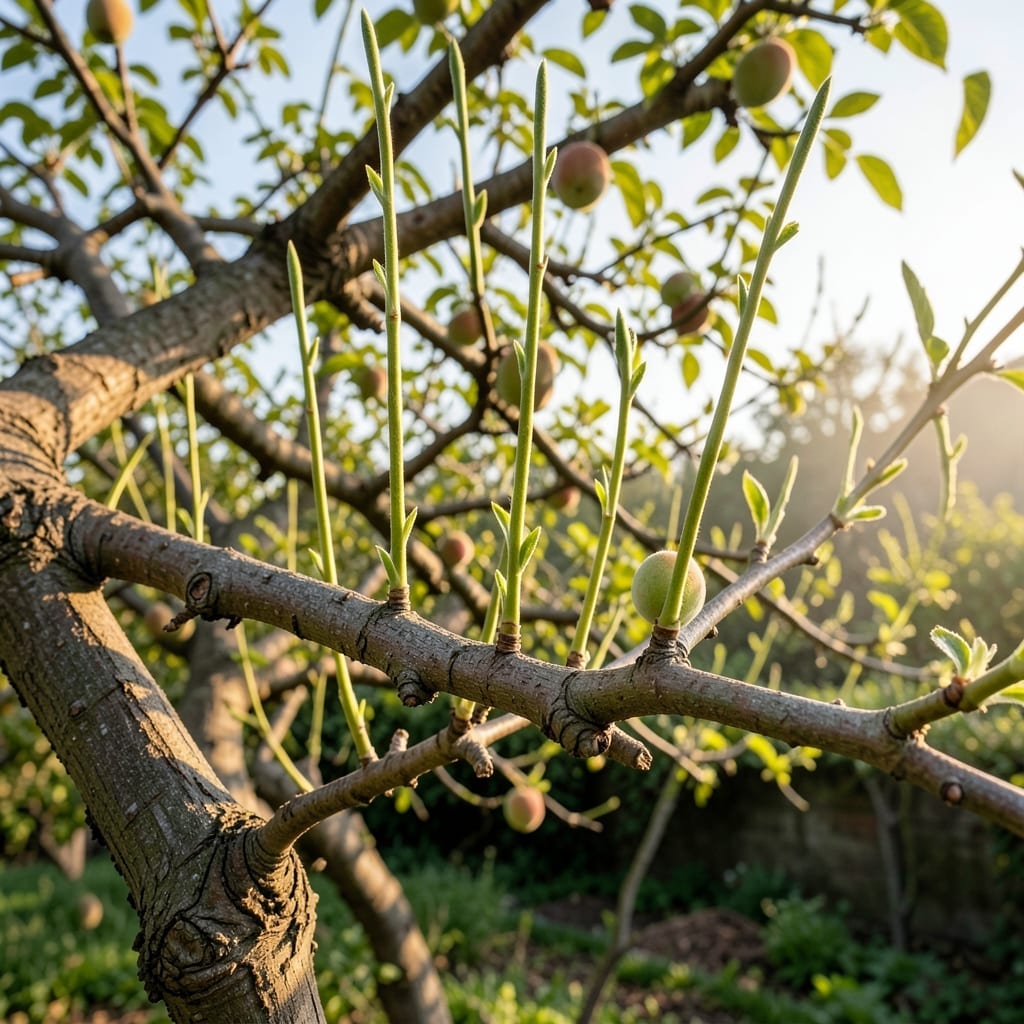
Those fast-growing vertical shoots on your peach tree might look promising, but they’re often more trouble than they’re worth. Water sprouts can produce fruit, yet the peaches tend to be smaller and lower quality compared to other bud types.
These vigorous shoots divert energy from more productive branches, so pruning them early redirects resources to buds that yield better fruit. You’ll get a healthier tree structure and more consistent harvests by removing these energy hogs during dormancy or early spring.
Perfect for gardeners who want to maximize fruit quality without wasting the tree’s precious resources. 🌱
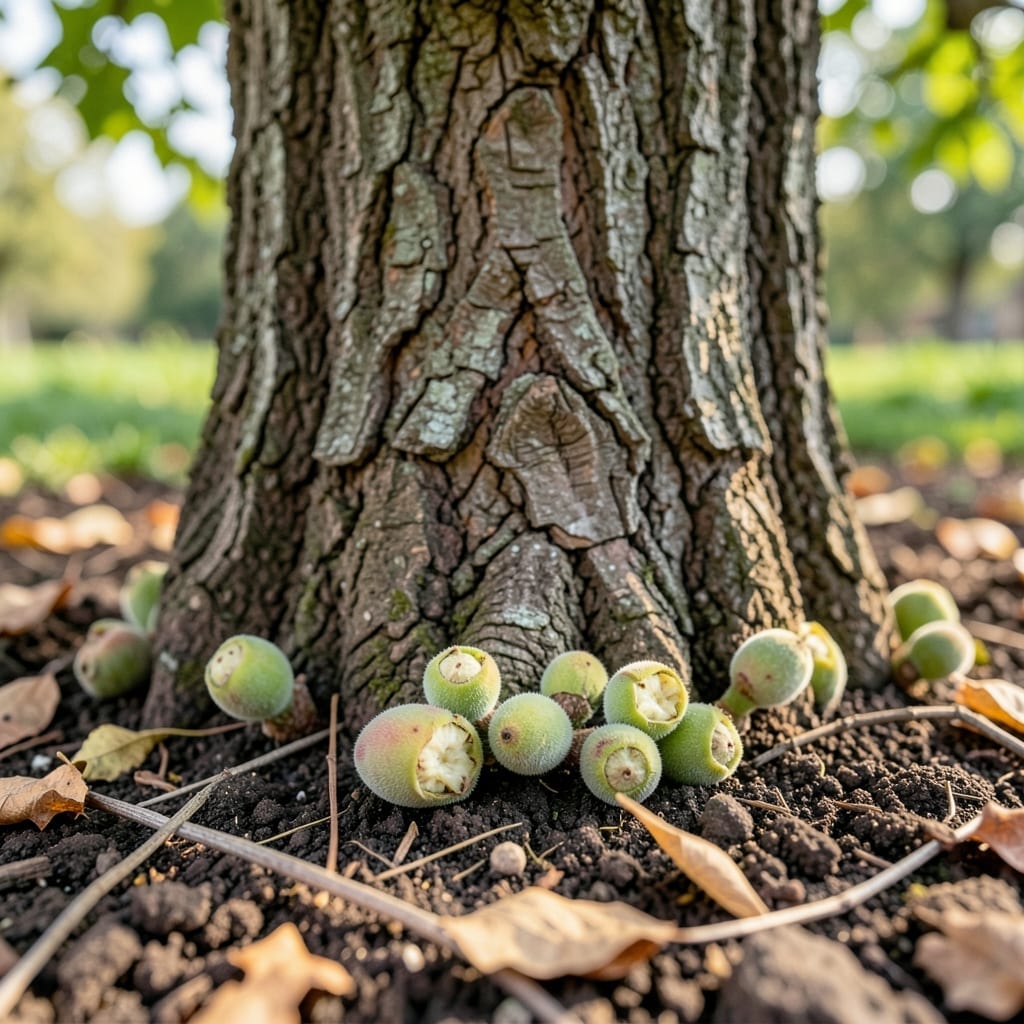
Those low-growing basal fruit buds at your peach tree’s trunk might seem promising, but they often compete with your tree’s main development. Found near the base, these buds can produce fruit, yet they typically yield smaller, less desirable peaches.
Removing them early redirects the tree’s energy to the upper canopy, where fruit quality and quantity are superior. This pruning step is especially crucial for young trees, helping establish a strong structure for future harvests.
If you’re shaping a new peach tree, prioritizing upper buds over basal ones will give you a healthier, more productive tree in the long run. 🌿
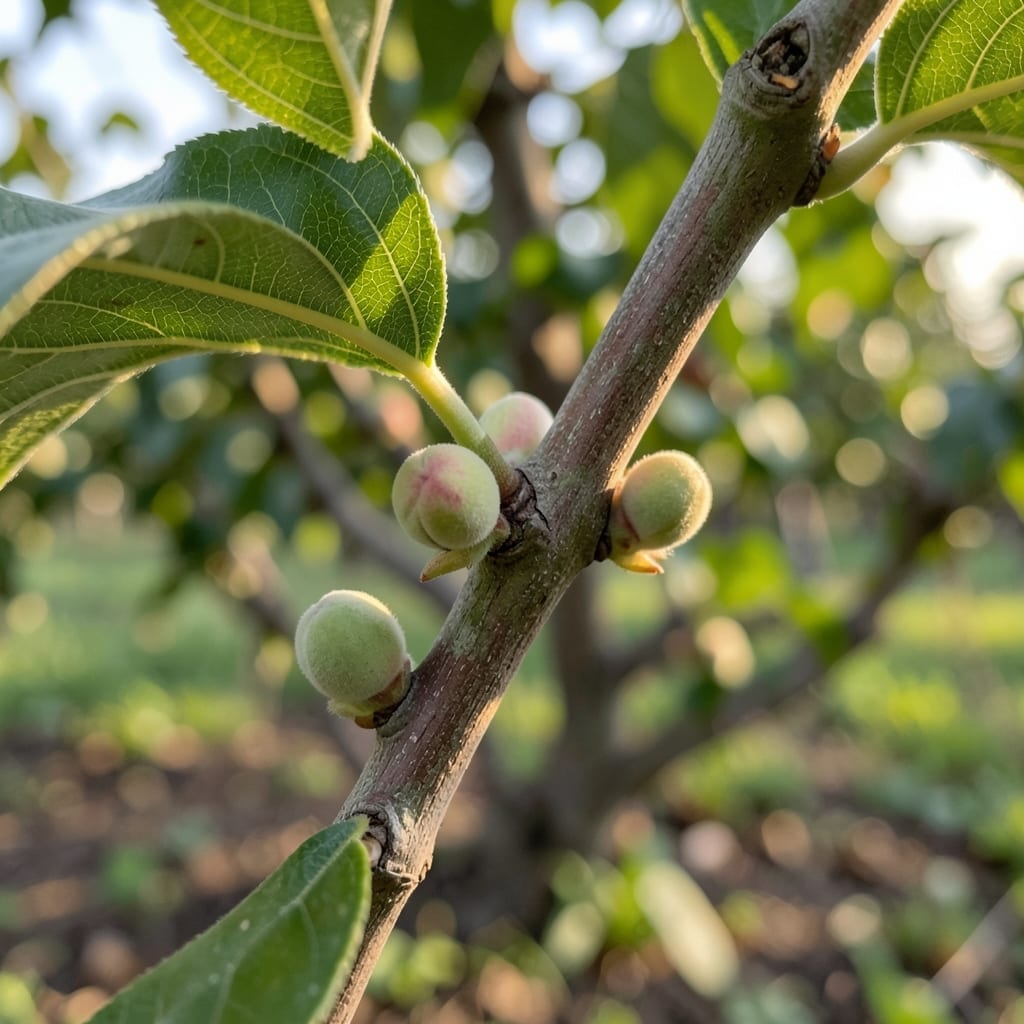
Tucked away where leaves meet stems, axillary fruit buds are the unsung heroes of your peach tree’s production. These subtle buds often go unnoticed but play a crucial role in filling gaps between larger, more dominant buds.
They form in the leaf axils, the angle between the leaf and stem, and can produce fruit that helps maximize your tree’s yield. Since they’re less obvious, they’re perfect for gardeners who want to utilize every inch of their tree’s potential without overcrowding.
If you’re aiming to squeeze the most out of your peach tree, these buds deserve your attention during pruning. 🌿
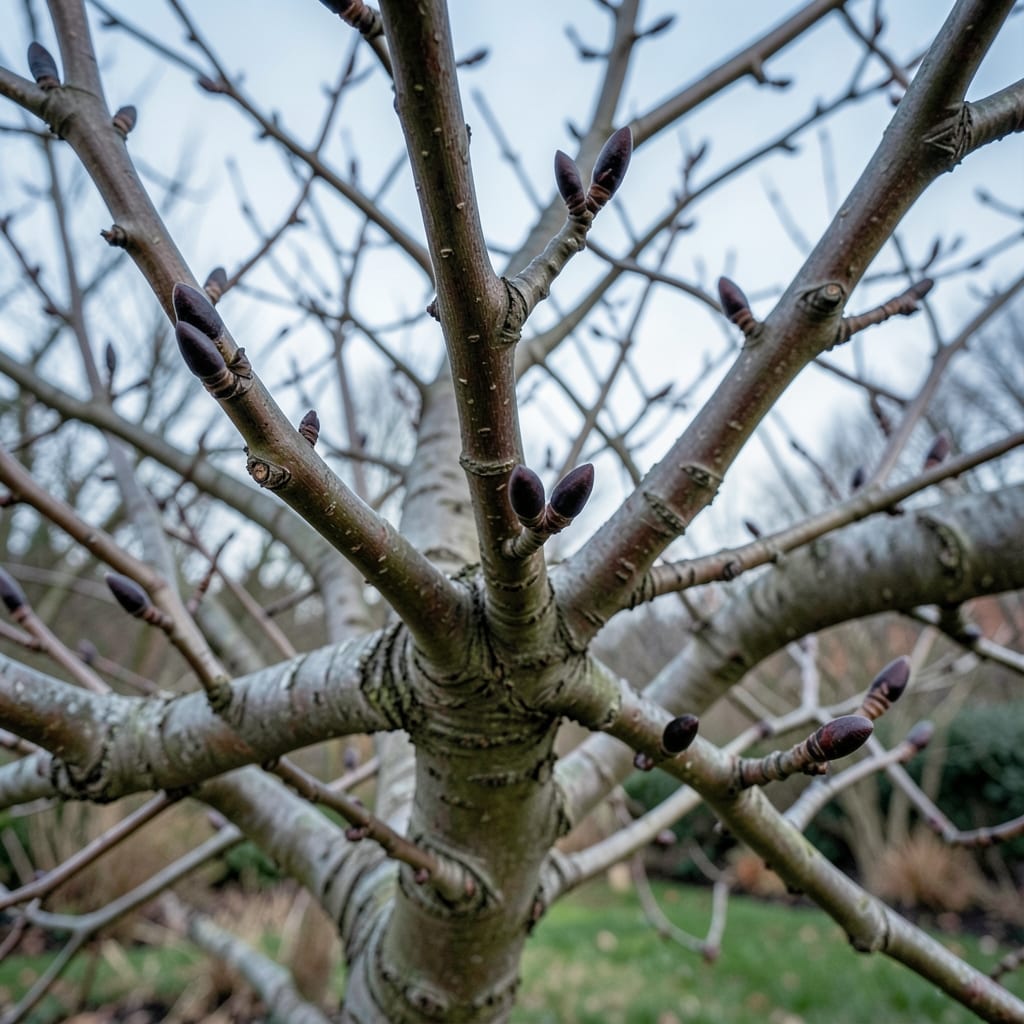
Winter is the perfect time to get ahead of your peach tree’s spring bloom by identifying dormant fruit buds. These closed, dark-colored buds stand out against bare branches, making them easier to spot when the tree is leafless.
By recognizing these buds during dormancy, you can prune with precision, removing excess growth while preserving the most productive buds for next season. This proactive approach ensures your tree directs energy where it matters most, setting the stage for a robust harvest.
Planners and forward-thinking gardeners will love this strategy for maximizing spring potential. 🌿