
Beautiful Plants For Your Interior
Beautiful Plants For Your Interior
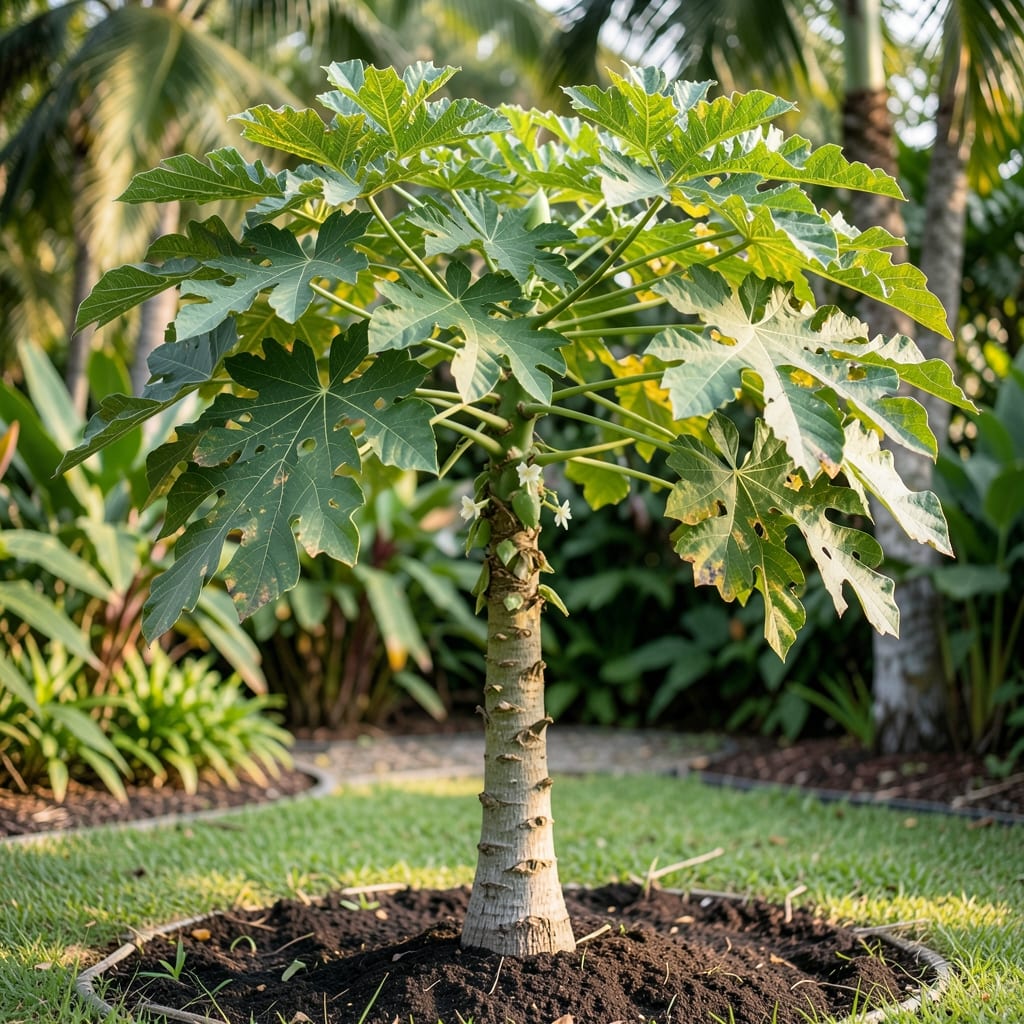
Yellow leaves on your papaya aren’t a death sentence—just a distress signal. 🌱 I’ve nursed more than a few back to health by decoding what the plant is trying to tell me.
Usually it’s overwatering, hungry roots, or uninvited pests throwing the balance off. The good news? Papayas bounce back fast when you fix the underlying issue. 3-5 days of the right care often shows visible improvement.
You’ll learn to spot the difference between nitrogen starvation and water stress, then apply the exact organic solution. No guesswork, no wasted time with the wrong fix.
Works for container-grown trees, backyard plants, or even the sad-looking nursery specimen you couldn’t resist bringing home.
Papaya plants develop yellow leaves due to several stress factors, each with distinct underlying mechanisms. Below are the primary causes, explained scientifically for clarity and actionability.
Yellowing often signals a lack of essential nutrients, particularly nitrogen, magnesium, or iron. Nitrogen deficiency causes uniform yellowing (chlorosis) starting in older leaves, as the plant mobilizes nitrogen to newer growth. Magnesium deficiency, however, appears as interveinal chlorosis—yellowing between leaf veins—while iron deficiency affects younger leaves first, turning them pale yellow or white. A soil test can confirm the deficit, allowing targeted fertilization.
Extreme temperatures, poor drainage, or excessive sunlight can stress papaya plants, leading to yellow leaves. Heat stress disrupts chlorophyll production, while waterlogged roots (from overwatering or poor soil) suffocate the plant, causing root rot and nutrient uptake failure. Papayas thrive in 70–85°F (21–29°C) with well-draining soil. Mulching and shade cloth can mitigate temperature swings.
Pests like aphids, whiteflies, or spider mites sap plant juices, reducing vigor and causing yellowing. Diseases such as Papaya Ringspot Virus (PRSV) or fungal infections (e.g., Phytophthora) also trigger discoloration. PRSV often starts with yellow mottling on leaves, while fungal issues may present as yellow patches with brown edges. Neem oil or copper fungicides can help, but prevention (e.g., crop rotation, resistant varieties) is key.
Papayas prefer slightly acidic to neutral soil (pH 6.0–7.0). If the pH drifts too high (alkaline) or low (acidic), nutrient lockout occurs—even if nutrients are present. For example, iron becomes unavailable in alkaline soils, mimicking deficiency symptoms. A pH meter and amendments like sulfur (to lower pH) or lime (to raise pH) can restore balance.
When your papaya leaves start turning yellow, act fast to restore their vibrant green. Below are targeted fixes for the most common causes, paired with prevention tips to keep your plant thriving.
If soggy soil is the culprit, stop watering immediately and let the top 2 inches of soil dry out. Repot the plant in a well-draining mix with perlite or sand if the current soil holds too much moisture. Ensure pots have drainage holes to prevent waterlogging.
Prevention: Water only when the topsoil feels dry, and use a pot with drainage holes. 💡 Pro tip: A moisture meter can help avoid guesswork.
Yellow leaves often signal a lack of nitrogen, magnesium, or iron. Apply a balanced organic fertilizer (like 10-10-10) or a foliar spray of Epsom salt (1 tbsp per gallon of water) for magnesium. For iron, use chelated iron according to package instructions.
Prevention: Fertilize monthly during the growing season and test soil pH (aim for 6.0–6.5) to ensure nutrient uptake.
Check the undersides of leaves for pests like aphids or spider mites. Spray with neem oil or insecticidal soap every 3–5 days until pests are gone. For severe cases, remove heavily infested leaves.
Prevention: Inspect plants regularly and introduce beneficial insects like ladybugs.
If leaves scorch from excessive sunlight, move the plant to partial shade (4–6 hours of morning sun is ideal). Use shade cloth for outdoor papayas during peak afternoon hours.
Prevention: Gradually acclimate young plants to sunlight to avoid shock.
Papayas hate cold drafts or extreme heat. Move potted plants indoors if temperatures drop below 50°F (10°C). For heat stress, ensure consistent watering and mulch to retain soil moisture.
Prevention: Keep plants in a stable microclimate, away from AC vents or heaters.
Water when the top 2 inches of soil feel dry. Overwatering causes yellow leaves, so ensure pots have drainage holes. In hot climates, this may mean watering every 2-3 days.
Check for pests first—spray with neem oil if found. For nutrient issues, a foliar spray of Epsom salt (1 tbsp/gallon) can restore magnesium fast. Results appear in 3-5 days.
Mild cases often recover with proper care. Severely damaged leaves may not, but new growth will be healthy. Focus on fixing the root cause—overwatering, pests, or nutrient deficiencies.
If leaves appear scorched or yellow with brown edges, it’s likely sunburn. Move to partial shade (4-6 hours of morning sun) and use shade cloth during peak hours.