
Beautiful Plants For Your Interior
Beautiful Plants For Your Interior
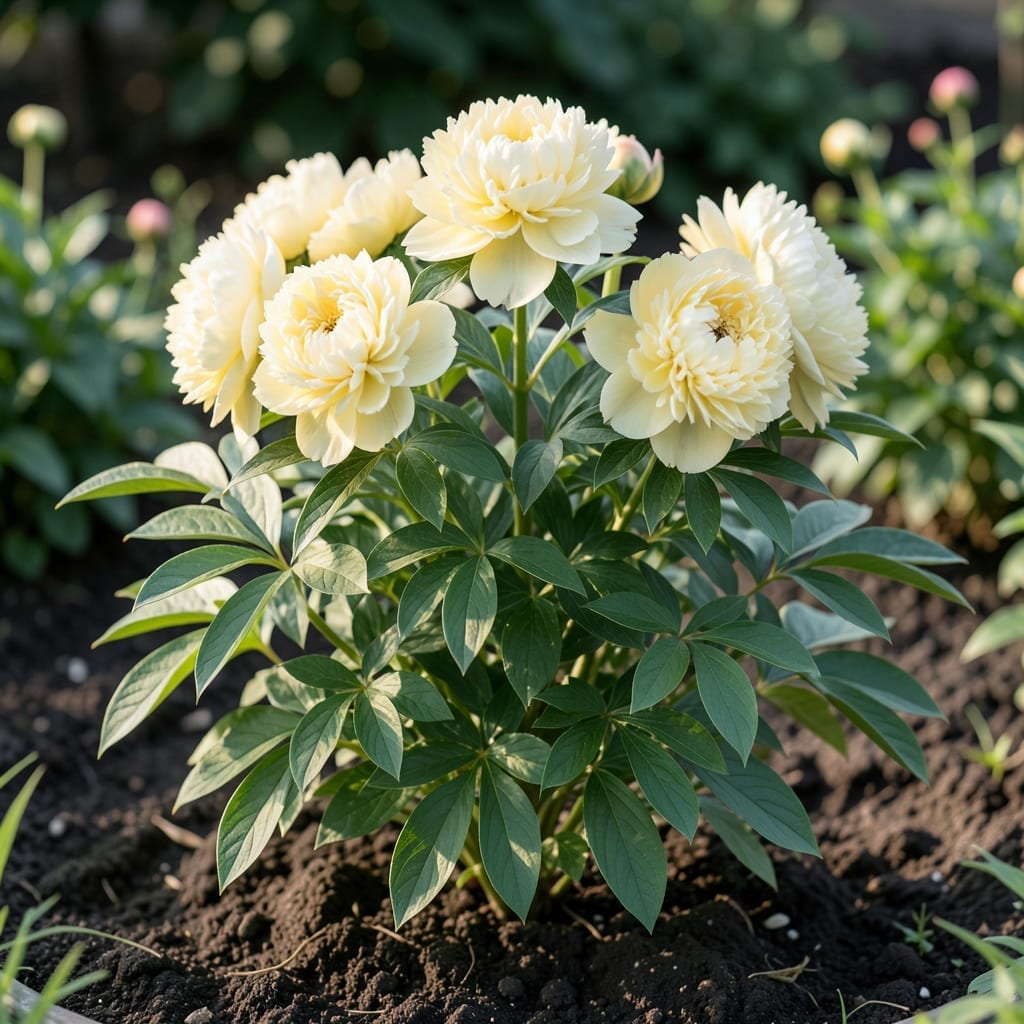
First time I saw a pale yellow peony in full bloom, I nearly dropped my trowel. These aren’t your grandma’s pink blooms—they’re buttery soft, almost glowing, and stop traffic.
They ask for surprisingly little: 6-8 hours of sun, well-draining soil, and patience. Once established, they’ll reward you with 10-15 years of show-stopping spring color with almost no effort.
📚 In This Guide
This method ensures strong, floriferous plants with those coveted soft lemon blooms every spring.
Choose a location with full sun (at least 6-8 hours daily) and well-draining soil. Peonies thrive in slightly acidic to neutral soil (pH 6.5-7.0). I always test my soil first—amending with compost or sulfur if needed to hit that sweet spot.
Dig a hole 12-18 inches deep and 2 feet wide. This gives the extensive root system room to establish without competition. Remove any rocks or debris that could obstruct root growth. The hole should look impossibly large—that’s how you know you’re doing it right.
Position the bare root division so the eyes (buds) face upward and are no deeper than 2 inches below soil level. Planting too deep is the most common mistake—it delays blooming for years. I use a ruler to verify depth, because guessing almost always leads to disappointment.
Backfill with native soil mixed with 25% compost to improve fertility without creating a “bathtub” effect that traps water. Firm the soil gently as you go to eliminate air pockets, but don’t compact it so hard that roots can’t penetrate.
Water deeply immediately after planting, then maintain consistent moisture during the first growing season. You want the soil to feel like a wrung-out sponge—not soggy, not dusty. A 2-inch layer of mulch helps retain moisture while keeping roots cool.
Apply a balanced 10-10-10 fertilizer in early spring when new growth appears, then again after blooming. Avoid high-nitrogen fertilizers late in the season—they produce leafy growth at the expense of next year’s flowers. I stop fertilizing by mid-July to let the plant prepare for dormancy.
Install peony rings or stakes in early spring before new shoots emerge. These heavy blooms need support—their weight can snap stems in rain or wind. I use metal rings with adjustable heights to accommodate growth.
Deadhead spent blooms promptly to prevent seed formation, which drains energy from the plant. However, leave the foliage intact until fall—it continues photosynthesizing and storing energy for next year’s display. Cut back to ground level only after the first hard frost turns leaves brown.
Divide peonies every 3-5 years to maintain vigor and flower quality. The best time is in fall, about 6 weeks before the first frost. Dig carefully to preserve as many roots as possible, then separate the crown into sections with 3-5 eyes each.
Replant divisions immediately or store them in a cool, dark place for up to a week if necessary. Reestablishment takes time—don’t expect full blooms the first year after dividing. Patience here pays off with decades of spectacular pale yellow flowers.
These insights will help you avoid the most common pitfalls when growing these beautiful flowers.
The Sun Factor: Don’t underestimate the 6-8 hours daily of full sun requirement in Step 1. Morning sun is best, but they’ll tolerate afternoon shade in hotter climates. I’ve found that plants in partial shade produce fewer blooms and weaker stems. Confession: I learned this the hard way after planting some in a shady spot and wondering why they never bloomed.
Depth Matters: In Step 2, those 2 inches below soil level for the eyes are critical. Planting deeper can delay blooming for years. I use a ruler to measure—guessing leads to disappointment. The bare root should sit so the eyes face upward with just enough soil to cover them, no more.
Fertilizer Timing: The mid-July cutoff for fertilizing in Step 3 isn’t arbitrary. Late-season nitrogen encourages leafy growth at the expense of next year’s flowers. I mark my calendar to stop by July 15th at the latest, giving the plant time to prepare for dormancy.
Brown blooms often signal fungal issues like botrytis. Improve air circulation, avoid overhead watering, and remove affected blooms promptly to prevent spread.
Plant in early fall (September-October) to allow roots to establish before winter. This gives them a head start for vibrant spring blooms.
Yes! Choose a large pot (12-18 inches deep) with drainage, use well-draining soil, and ensure full sun. Container-grown peonies may need extra winter protection in cold climates.
Weak stems often result from over-fertilizing or poor light. Stake plants, reduce high-nitrogen fertilizer, and ensure 6+ hours of sunlight daily. Prune lightly to encourage stronger growth.
Try ‘Bartzella’ (Itoh peony) for similar yellow tones or ‘Claire de Lune’ for soft, pale blooms. Both offer comparable beauty with slight variations in shade and form.