
Beautiful Plants For Your Interior
Beautiful Plants For Your Interior
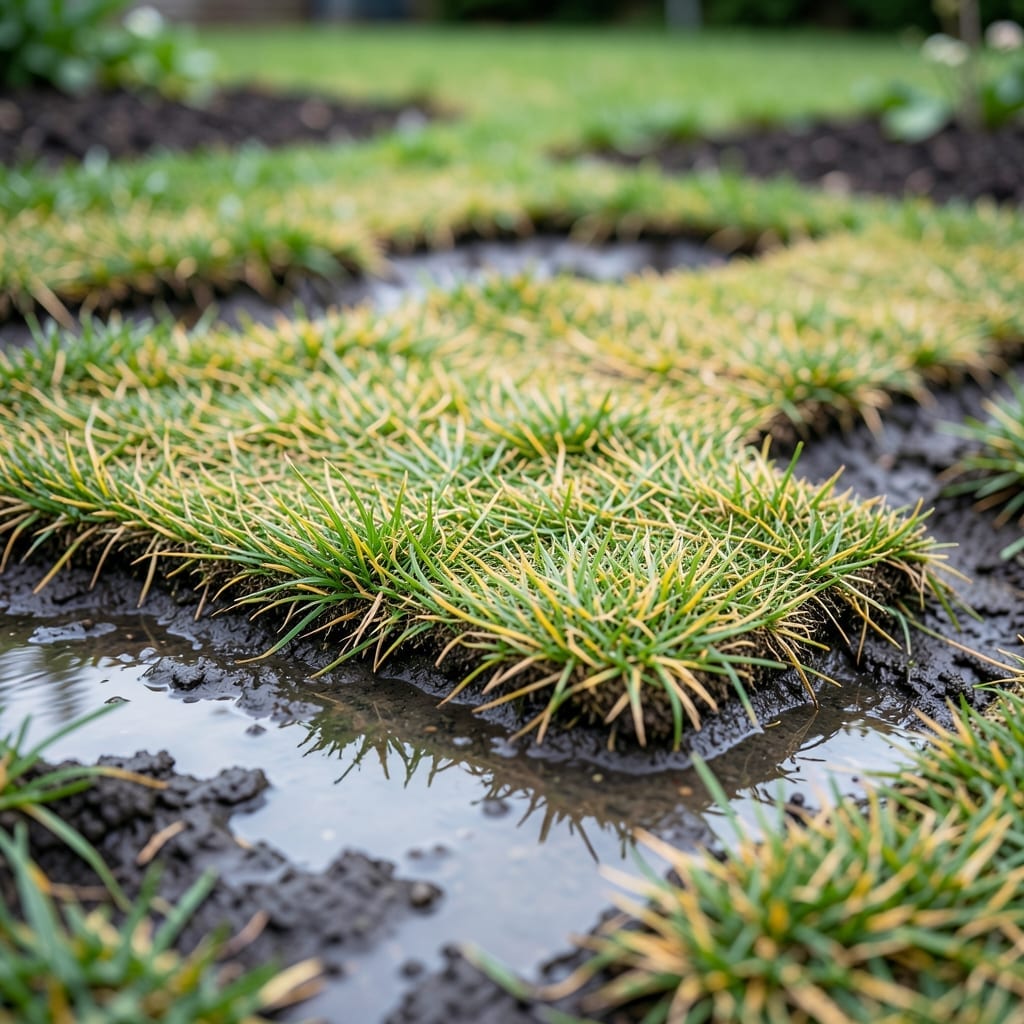
Yellow patches in your lawn aren’t always from drought. I’ve seen more sod ruined by kindness than neglect—too much water suffocates roots and invites disease.
Soggy grass turns spongy underfoot, and the yellowing spreads fast. The fix starts with turning off the sprinklers and letting the soil breathe. Most lawns need 1-1.5 inches of water weekly, including rain.
Once the top inch of soil dries, you’ll see recovery in 5-7 days. Aerating helps, but first confirm it’s overwatering—not fungus or pests—by checking for a sour smell.
Prevent it next time with a rain gauge and a simple schedule. Your lawn will thank you with deeper roots and richer color.
Overwatering sod often stems from a few common but fixable issues. Here’s why it happens:
Many homeowners set sprinklers on autopilot, assuming more water equals healthier grass. However, sod typically needs 1–1.5 inches of water per week, including rainfall. Overwatering saturates the soil, displacing oxygen and suffocating roots. Rhizobacteria and beneficial microbes—critical for nutrient uptake—drown in waterlogged conditions, weakening the sod’s resilience.
Clay-heavy or compacted soil drains poorly, trapping water at the surface. Without proper grading or aeration, puddles form, and roots can’t access air. This creates an anaerobic environment where Pythium and other waterborne fungi thrive, leading to root rot. Test drainage by digging a small hole and filling it with water—if it doesn’t empty within 4–6 hours, your soil needs amendment.
New sod requires moisture to establish, but overwatering during the first two weeks can delay root growth. The top layer may stay soggy while roots remain shallow, unable to penetrate deeper soil. Stick to light, frequent watering (twice daily for 10–15 minutes) early on, then taper off as roots take hold.
Humid climates or shaded areas retain moisture longer, yet many water on a fixed schedule regardless of weather. Use a rain gauge or soil moisture sensor to adjust irrigation. Early morning watering reduces evaporation, but evening watering can promote fungal growth—aim for 5–9 AM to balance absorption and drying.
Here’s how to nurse your lawn back to health when it’s drowning in too much water. Address the root causes first, then focus on recovery.
If puddles linger for hours after rain or watering, your soil is likely compacted or the grade is off. Aerate the lawn with a core aerator to create channels for water to escape. For severe cases, consider installing French drains or regrading low spots. Prevention tip: Test drainage by digging a small hole, filling it with water, and timing how long it takes to absorb—ideally under 4 hours.
Most sod only needs 1–1.5 inches of water per week, including rainfall. Use a rain gauge or tuna can to measure. Water deeply 2–3 times weekly (early morning) instead of daily light sprinkles. Switch to a smart irrigation controller or soaker hoses for precision. Prevention tip: Check soil moisture 2–3 inches down—if it’s damp, skip watering.
Yellow patches with a slimy or musty smell often signal fungus. Apply a fungicide labeled for lawns (like copper-based or azoxystrobin) at the first sign. Rake up thick thatch (over ½ inch) to improve airflow. Prevention tip: Aerate annually and avoid evening watering to reduce humidity.
If roots are black, mushy, or smell foul, stop watering immediately. Let the top 2–3 inches of soil dry out completely. For small areas, tent the sod with plastic sheeting to speed drying (remove after 24 hours). Prevention tip: Plant drought-tolerant grass like Bermuda or Zoysia if your climate is prone to excess moisture.
💡 Pro Tip: After fixing the issue, overseed bare spots with a fast-germinating grass mix to help the lawn recover uniformly.
Look for spongy grass underfoot, yellowing patches, or a sour smell from the soil. If puddles remain 4+ hours after watering, that’s a red flag.
Water lightly 2-3 times daily for 10-15 minutes the first week, then taper to 1-1.5 inches weekly. Always water in the early morning.
Yes, if you stop watering and let the soil dry out. Recovery typically starts in 5-7 days. Aerating helps speed up the process.
The odor comes from anaerobic bacteria thriving in waterlogged soil. It’s a sign of root rot, which requires immediate drying and potential fungicide treatment.