
Beautiful Plants For Your Interior
Beautiful Plants For Your Interior
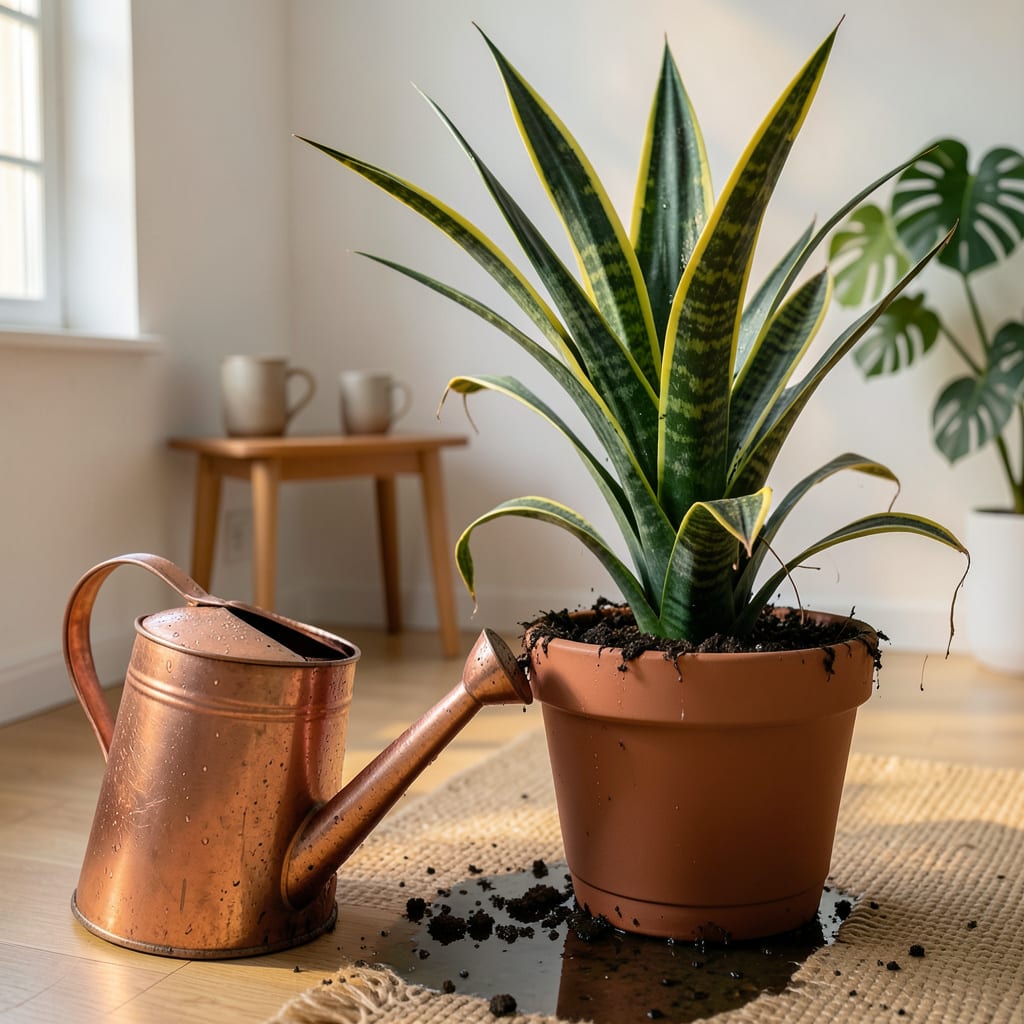
An overwatered snake plant shows yellowing leaves, mushy stems, and root rot. Stop watering immediately, remove damaged roots, and repot in fresh, well-draining soil to revive it. Allow soil to dry completely between waterings.
Snake plants are desert natives, so their roots literally drown when overwatered. 🌵 The yellowing happens because waterlogged soil blocks oxygen, suffocating root cells and preventing nutrient uptake. What many don’t realize is that mushy stems indicate irreversible cell damage—this is your plant’s SOS signal. I’ve seen cases where people mistake these symptoms for nutrient deficiency, but the fix is always about moisture control first.
Timing matters when rescuing your plant. The faster you act, the better its chances—delaying even a week can mean the difference between recovery and replacement. 💛 A pro tip: after repotting, place it in bright, indirect light to accelerate recovery without adding stress from direct sun.
💡 In This Article
When your snake plant gets too much water, the roots can’t breathe—literally. The soil becomes saturated, pushing out oxygen and creating an anaerobic environment where roots suffocate. 🌱 This triggers a chain reaction: root cells die, nutrient absorption stops, and the plant begins starving.
The first visible sign is usually yellowing leaves, which happens because chlorophyll production slows down without proper nutrient flow.
The progression of symptoms follows a clear pattern. Early stages show soft, bendy leaves that feel unusually pliable—healthy snake plant leaves should be firm and upright. As the issue worsens, you’ll notice mushy stems at the base where water pools. This isn’t just excess moisture; it’s cellular damage from ruptured plant cells.
In severe cases, the roots turn black and emit a foul, rotten odor—this is bacterial and fungal growth taking over the decaying tissue.
Here’s how to distinguish overwatering from other issues: Underwatered plants have dry, crispy leaf tips, while overwatered ones feel soggy. Pest damage typically shows as localized spots or webbing, not uniform yellowing. A quick test: Gently squeeze the soil—if water drips out or it feels like a wet sponge, you’ve confirmed overwatering.
The soil should crumble slightly when dry, not clump together.
The science behind this is fascinating. Snake plants store water in their thick leaves, evolved for desert survival. When overwatered, their natural water storage system becomes overwhelmed, leading to edema (cell bursting) in the leaves. The plant essentially drowns from the inside out.
This is why recovery focuses on drying out the soil and restoring oxygen flow to the roots.
Temperature plays a role too. Cooler conditions (below 60°F) slow evaporation, making overwatering more dangerous. In warm environments (70-80°F), the same watering frequency might be fine because moisture evaporates faster. Always adjust your watering schedule seasonally—what works in summer can be deadly in winter.
Pro tip: Check the pot’s drainage holes. If roots are growing out of them, that’s a sign the plant is struggling to find oxygen. Healthy roots should be white or tan, not brown or black.
The difference between a recoverable plant and a lost cause often comes down to how quickly you notice these subtle changes.
Wait 5-7 days after repotting before watering again. Then follow the “soak and dry” method: water thoroughly until it drains, then wait until the top 2 inches of soil are completely dry. In most homes, this means watering every 3-4 weeks in winter and 2-3 weeks in summer.
If all roots are black and mushy, recovery is unlikely—but you can try propagating healthy leaf cuttings. Cut 4-6 inch sections from firm, green leaves, let them callous for 2-3 days, then plant in fresh soil. This gives you a chance to grow new plants from the original.
Yellowing may continue for 2-3 weeks as damaged leaves can’t recover. Focus on new growth at the base—tiny green shoots are positive signs. If yellowing spreads, check for hidden stem rot; you may need to cut back to healthy tissue and propagate the top portion.
Yes, a 3% hydrogen peroxide solution (mixed 1:10 with water) is safe and effective. Soak roots for 10 minutes to kill bacteria and fungi. This mimics natural oxygenation while disinfecting—just rinse gently with clean water afterward before repotting.
Use a fast-draining mix: 2 parts potting soil, 1 part perlite, and 1 part coarse sand. This mimics desert conditions, allowing roots to breathe. Avoid dense garden soil or compost-heavy mixes—they retain too much moisture for snake plants.
