
Beautiful Plants For Your Interior
Beautiful Plants For Your Interior
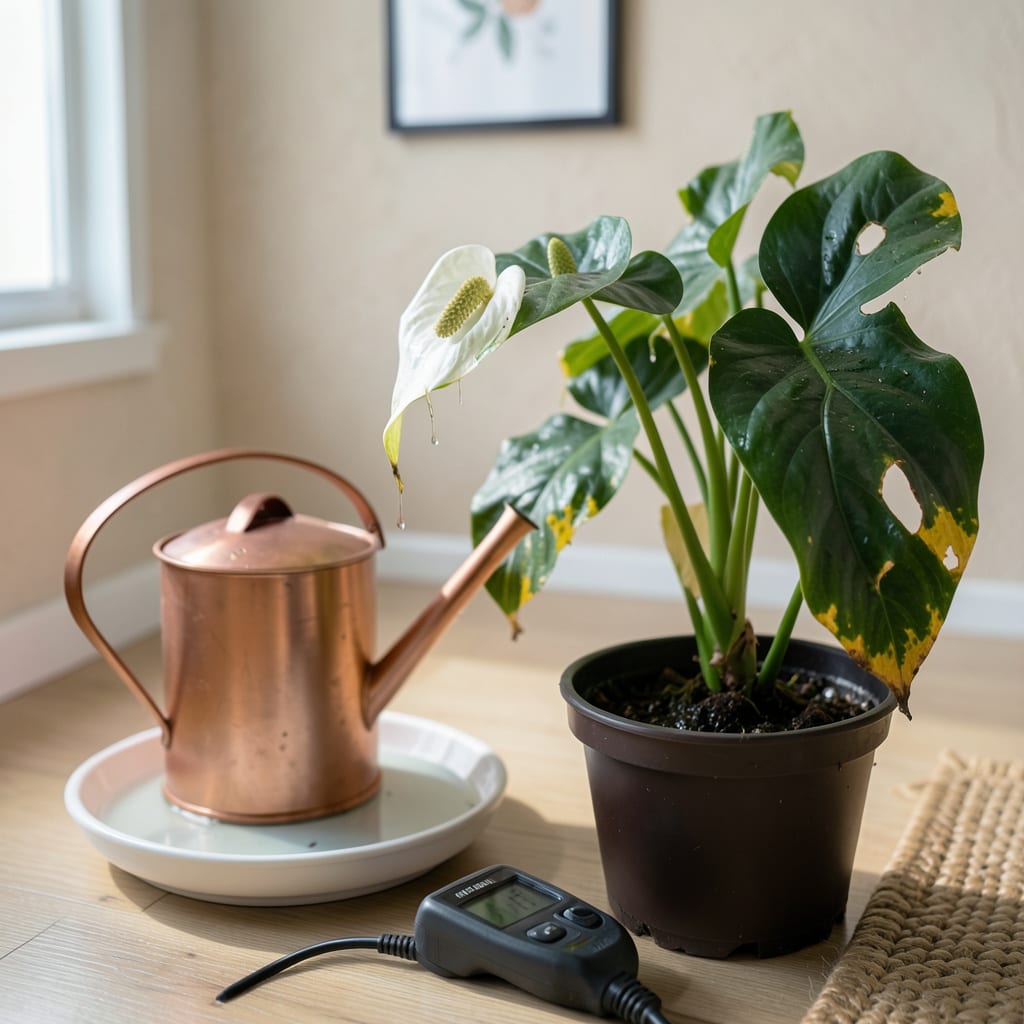
An overwatered peace lily shows yellowing leaves, drooping stems, and soggy soil. Stop watering immediately, improve drainage, and trim damaged roots to revive it. Recovery takes 1-3 weeks with proper care.
Peace lilies are surprisingly resilient, but their roots need oxygen just as much as water. 🌱 When soil stays saturated, it creates a perfect storm: roots can’t breathe, fungi thrive, and the plant essentially drowns from the bottom up. What’s tricky is that these symptoms often mimic nutrient deficiencies, leading gardeners to mistakenly add fertilizer—which only worsens the problem.
I’ve found the paper towel method works wonders for drawing out excess moisture quickly. The key is acting before the roots turn mushy—once they’re black and slimy, you’re dealing with irreversible rot. Proper revival means not just fixing the water issue, but also giving the plant stable conditions to rebuild its root system. ✨
💡 In This Article
Peace lilies thrive in moist but not soggy conditions because their roots need oxygen to function. When soil stays waterlogged, the air pockets between soil particles fill with water, cutting off the oxygen supply.
This suffocation triggers a chain reaction: roots can’t absorb nutrients properly, and anaerobic conditions create the perfect environment for Pythium and Phytophthora fungi to attack. 🌱
The first visible sign is often leaf chlorosis—yellowing between the veins—because the roots can’t deliver magnesium and iron to the leaves. Unlike underwatering (where leaves turn crispy and brown), overwatered leaves feel soft and mushy. The stems may develop dark, water-soaked spots where cells have burst from excessive water pressure.
I’ve seen cases where the entire plant wilts dramatically within 48 hours of severe overwatering.
What’s happening below the soil is even more critical. Healthy peace lily roots should be firm and white, but waterlogged roots turn brown, then black as they rot. The rot spreads quickly because the fungi release enzymes that break down plant cell walls.
At this stage, the plant can’t recover unless you remove all affected roots and provide fresh, well-draining soil. The damage becomes irreversible when more than 60% of the root system is compromised.
The science behind this involves osmotic pressure. Plant roots normally absorb water through osmosis, but when the surrounding soil is oversaturated, water can’t move into the roots properly.
This creates a reverse flow where nutrients actually leak out of the roots—a condition called “nutrient efflux.” That’s why overwatered plants often show deficiency symptoms even when the soil contains adequate nutrients.
Temperature plays a surprising role too. Peace lilies in cooler environments (60°F) tolerate excess moisture better than those in warm rooms (75°F+), where fungal growth accelerates. The ideal soil moisture for peace lilies sits between 40-60%—enough to feel damp but never soggy.
You can test this by squeezing a handful of soil: it should hold its shape briefly then crumble, not stream water. ✨
Here’s what most gardeners miss: the pot size matters tremendously. A peace lily in a container that’s too large holds excess water in the unused soil, while a properly sized pot (just 1-2 inches wider than the root ball) allows for better oxygen circulation.
The material matters too—terracotta pots wick away moisture faster than plastic, giving you more margin for error with watering.
Overwatered leaves turn yellow and feel soft/mushy, while underwatered leaves become crispy brown. Check the soil: if it’s soggy and smells musty, it’s overwatered; if it’s bone-dry and pulling away from the pot, it needs water.
If all roots are black and mushy, recovery is unlikely. However, if some healthy white roots remain, trim the rotten ones and repot in fresh soil. Propagate any healthy leaf cuttings as a backup—peace lilies often regrow from cuttings!
With proper care, you’ll see improvement in 7-14 days. New growth appears first, followed by firmer stems. Full recovery takes 3-6 weeks for severely affected plants. Patience is key—avoid fertilizing during this period.
A 3% hydrogen peroxide solution (1 part peroxide to 3 parts water) can help sterilize roots during repotting. Soak roots for 5-10 minutes before rinsing. This kills fungi but won’t reverse existing rot—always trim damaged roots afterward.
Drooping can persist for 2-3 days as the plant recovers. If it continues, check for: insufficient light, low humidity (40% ideal), or remaining root damage. Move to brighter indirect light and maintain consistent moisture (not soggy) to help it perk up.
