
Beautiful Plants For Your Interior
Beautiful Plants For Your Interior
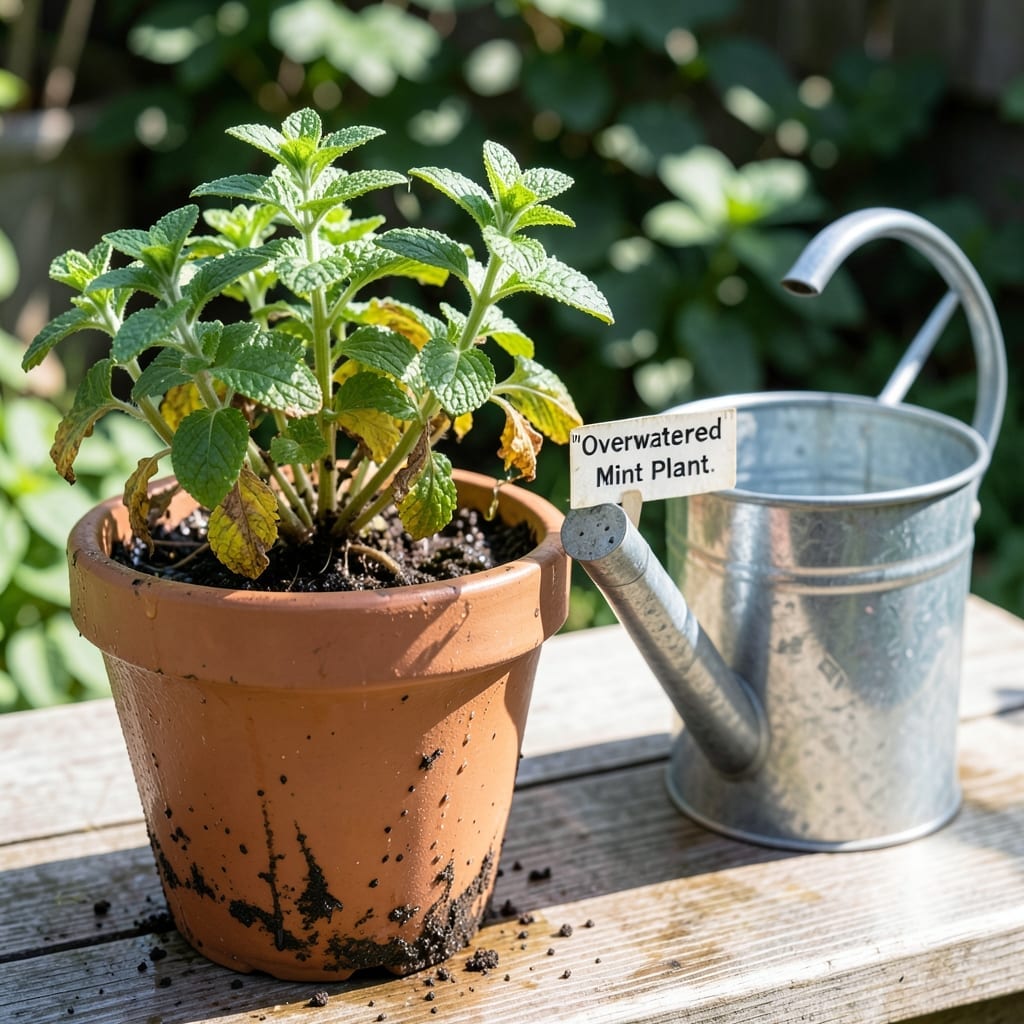
Yellow leaves and soggy stems mean your mint is drowning. I’ve revived countless overwatered plants, and mint bounces back surprisingly fast with the right approach.
First sign is usually wilting despite wet soil. The roots can’t breathe, so the plant collapses. Left too long, root rot sets in and the damage gets harder to fix.
Recovery starts with stopping the water immediately. Let the soil dry out completely, then check the roots. Healthy ones are white and firm.
Within 2-3 weeks of proper care, you’ll see fresh growth. The key is patience and resisting the urge to overwater again.
Overwatering mint often stems from well-intentioned but misguided care. Mint thrives in moist soil, but too much water disrupts its natural balance, leading to wilting and root rot. Below are the primary causes:
Mint roots need oxygen to respire. When planted in containers without drainage holes or heavy, compacted soil, water pools around the roots, suffocating them. Saturated soil blocks air pockets, preventing the roots from absorbing nutrients and leading to decay.
Many gardeners assume mint requires constant moisture, but its roots rot when submerged for extended periods. Watering on a fixed schedule—rather than checking soil moisture—often leads to overhydration. Stick your finger an inch into the soil; if it feels damp, hold off on watering.
Non-porous pots (e.g., plastic without drainage) trap water, while dense, clay-heavy soils retain excess moisture. Mint prefers loose, well-draining potting mixes with perlite or sand. Terracotta pots, which breathe, help evaporate excess water faster than plastic or ceramic.
In dimly lit or highly humid environments, soil stays wet longer. Mint in shade or indoor settings with poor airflow dries more slowly, increasing overwatering risks. Ensure your plant gets 4–6 hours of sunlight daily and good ventilation to balance moisture levels.
Once you’ve spotted the signs of overwatering, act fast to revive your mint. Here’s how to tackle each issue head-on:
Fix: Trim the affected leaves with clean scissors to redirect energy to healthy growth. Reduce watering immediately—let the top inch of soil dry out before the next drink.
Prevention: 💡 Stick your finger in the soil to check moisture. Only water when the top layer feels dry.
Fix: Stop watering for a few days and move the plant to a spot with gentle airflow (but avoid direct sun). If the soil is soggy, carefully remove the plant, inspect the roots, and repot in fresh, well-draining soil.
Prevention: ✨ Use a pot with drainage holes and a saucer to catch excess water. Empty the saucer after 30 minutes to prevent reabsorption.
Fix: Gently remove the plant from its pot and rinse the roots under lukewarm water. Trim any dark, mushy roots with sterilized shears. Repot in fresh potting mix and a clean container. Hold off on watering for 3-5 days to let the roots recover.
Prevention: 🎯 Mix in perlite or sand to improve soil drainage. Water deeply but less frequently—mint prefers moist, not soaked, soil.
Fix: Scrape off the top layer of soil and replace it with fresh mix. Sprinkle a thin layer of cinnamon (a natural fungicide) on the surface. Reduce watering and increase air circulation around the plant.
Prevention: 🌡️ Avoid misting the leaves, as excess moisture encourages fungal growth. Water at the base of the plant instead.
With these steps, your mint should bounce back in no time. Consistency is key—adjust your care routine to keep it thriving!
Water when the top 1 inch of soil feels dry. Typically, this means every 2-3 days in warm weather, less in cooler conditions. Always check soil moisture first.
Yellowing leaves and wilting are early warnings. Soggy soil and black, mushy roots signal advanced overwatering. Act quickly to prevent permanent damage.
Yes, if caught early. Trim affected roots, repot in fresh soil, and avoid watering for 3-5 days. The plant often recovers within 2-3 weeks.
Use containers with drainage holes. Terracotta pots are ideal as they allow excess moisture to evaporate. Avoid plastic without drainage.