
Beautiful Plants For Your Interior
Beautiful Plants For Your Interior
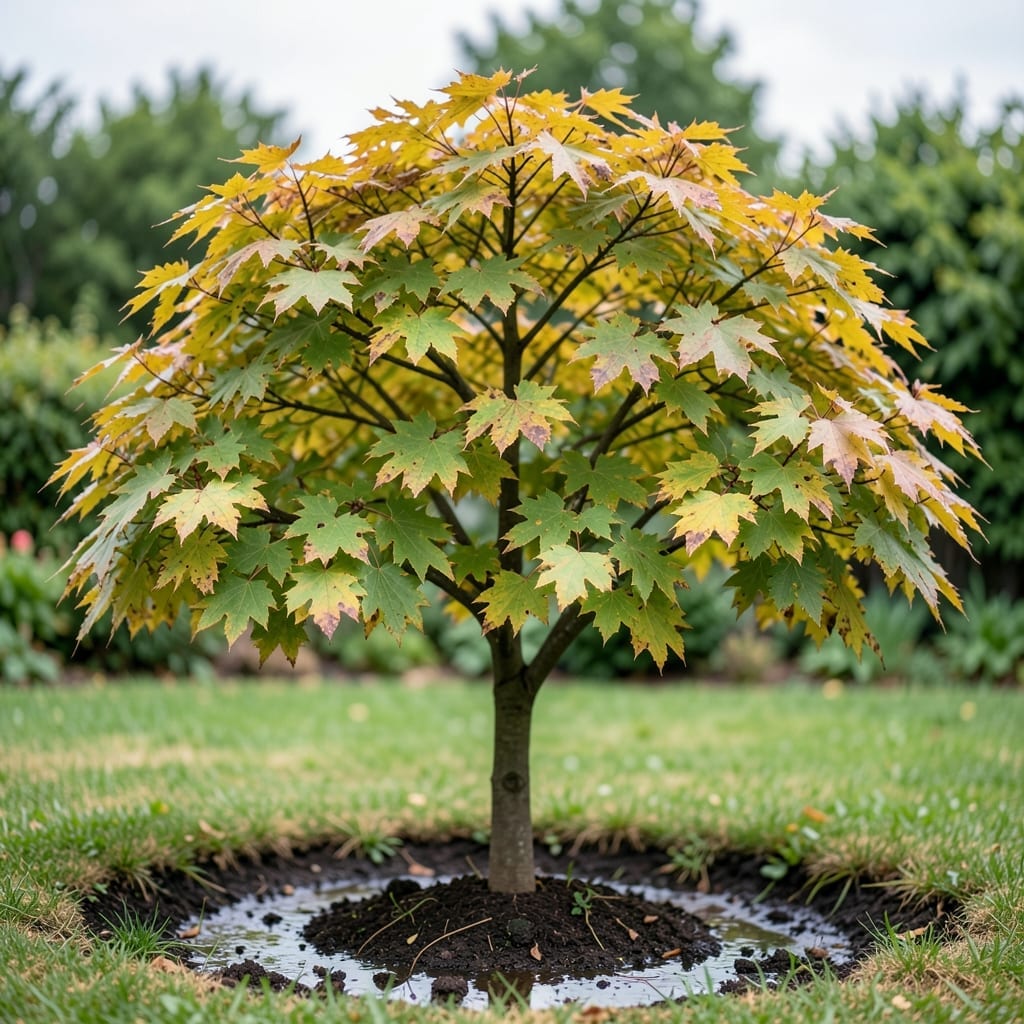
Yellowing leaves on your maple aren’t always a death sentence. I’ve nursed several back from the brink by catching the problem early—usually too much water smothering the roots.
Overwatering does more damage than drought for these trees. The soil stays soggy, roots can’t breathe, and fungus moves in. Within 2-3 weeks, you’ll see leaves turn pale, then brown at the edges.
First step is letting the soil dry out completely. Check 6 inches down with your finger—if it’s damp, hold off on watering. Most established maples only need 1-2 deep waterings per month in average weather.
Recovery takes patience, but I’ve seen trees bounce back within a season once the roots can dry out and heal. The key is consistency, not panic.
Overwatering a maple tree often stems from well-intentioned but misguided care. Here’s why it happens:
Maple trees thrive with deep but infrequent watering. Frequent shallow watering prevents roots from developing a strong, drought-resistant system. Over time, this leads to waterlogged soil, suffocating the roots and blocking oxygen uptake.
Heavy clay soils or compacted ground retain moisture far longer than sandy or loamy soils. If the planting site lacks proper drainage, water pools around the roots, creating anaerobic conditions that encourage root rot and fungal growth.
Automated sprinklers or drip systems set on rigid schedules can over-deliver water, especially in rainy seasons. Maple trees typically need 1–2 inches of water per week, including rainfall. Ignoring natural precipitation leads to unintended overwatering.
Potted maples or those in raised beds are more susceptible to overwatering. Containers restrict root expansion and drainage, so excess water has nowhere to go. Without drainage holes or proper soil mix, roots drown quickly.
If your maple tree is showing signs of overwatering, don’t panic—here’s how to nurse it back to health. Address each issue directly, then adjust your care routine to prevent future problems.
Stop watering immediately and let the soil dry out. If the area stays soggy, aerate the soil with a garden fork to help oxygen reach the roots. For severe cases, consider amending the soil with compost or sand to boost drainage. Prevention tip: Check soil moisture 2 inches down—only water if it’s dry. 💡
Prune yellow or mushy leaves to redirect energy to healthy growth. Reduce watering frequency and ensure the tree gets full sun (6+ hours daily). If the leaves drop excessively, a balanced fertilizer (10-10-10) can help restore nutrients. Prevention tip: Water deeply but infrequently—1-2 times a week for established trees. ✨
For potted maples, remove the tree, trim black, mushy roots with sterilized shears, and repot in fresh, well-draining soil. For in-ground trees, fungicide (like copper-based products) can combat fungal growth. Prevention tip: Avoid overhead watering—keep the base dry. 🎯
With these fixes and a watchful eye, your maple can bounce back stronger!
Check for yellowing leaves, especially at the edges. The soil will stay soggy 6 inches down even days after watering. A musty smell near the base is another red flag.
Yes, if caught early. Stop watering, improve drainage, and trim affected roots. For potted trees, repot in fresh soil. Recovery may take 2-3 months but is possible.
Established trees need 1-2 deep waterings per month. Young trees require 1 inch weekly, including rain. Always check soil moisture first.