
Beautiful Plants For Your Interior
Beautiful Plants For Your Interior
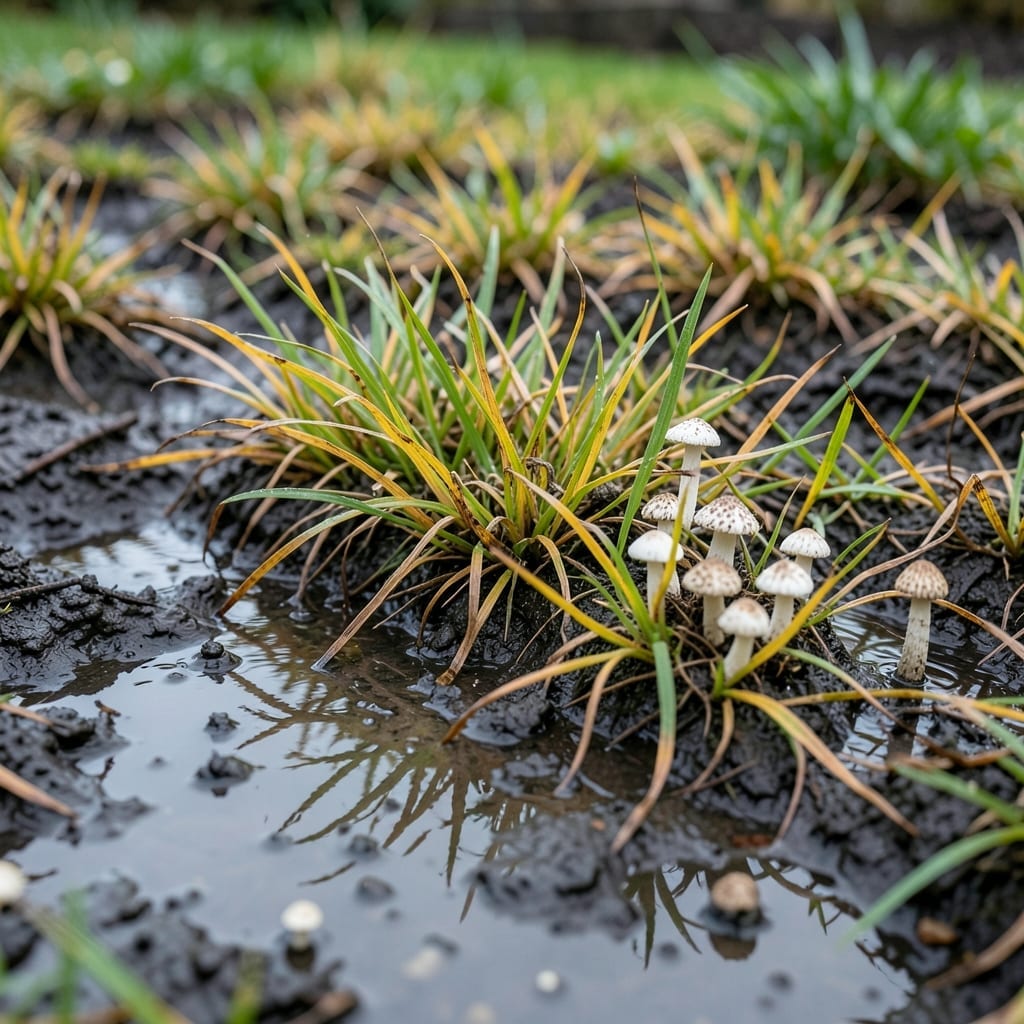
Yellow patches spreading across your grass overnight? That sinking feeling when your lawn looks worse after watering hit me hard last summer. Soggy soil and squishy turf are dead giveaways you’re dealing with too much water.
I learned the hard way that more water doesn’t mean healthier grass. The roots drown, fungi move in, and suddenly you’re watching your lawn turn into a swampy mess. But here’s the good news – it’s fixable with the right approach.
Within 2-3 weeks of proper care, you’ll see new growth pushing through the damaged areas. The key is stopping the water and letting the soil dry out completely before addressing the underlying issues.
Works for any grass type, any climate. This is how to bring your lawn back from the brink without starting over.
An overwatered lawn often stems from a few common but preventable practices. Understanding the root causes helps you adjust your care routine and restore your grass’s health.
The most direct cause is simply too much water, too often. Grass typically needs 1–1.5 inches of water per week, including rainfall. When you water daily—or multiple times a day—you saturate the soil beyond its capacity. This displaces oxygen, suffocates roots, and encourages shallow root growth, making your lawn weaker and more susceptible to disease.
Soil that doesn’t drain well (e.g., clay-heavy or compacted soil) traps water at the surface. If your lawn lacks proper grading or drainage solutions, even moderate watering can lead to pooling. Standing water prevents roots from accessing air, leading to yellowing, wilting, or fungal growth like Pythium or brown patch.
Watering on a fixed schedule—regardless of rain, humidity, or temperature—is a recipe for overwatering. For example, cool, cloudy weeks slow evaporation, while heavy rainfall may already meet your lawn’s needs. Failing to adjust your irrigation system or manual watering during these periods results in unnecessary saturation.
Automatic sprinkler systems are convenient but often miscalibrated. Common issues include:
If your lawn is suffering from too much water, don’t panic—you can turn things around with a few straightforward fixes. Address the root causes to restore your grass to its lush, green glory.
Compacted or clay-heavy soil traps water, suffocating roots. Aerate your lawn using a core aerator to create small holes that allow water to drain and air to reach the roots. For severe compaction, mix in coarse sand or compost to improve soil structure. Prevention tip: Aerate at least once a year, especially in high-traffic areas. 💡
Cut back on watering immediately. Most lawns need 1–1.5 inches of water per week, including rainfall. Use a rain gauge to track moisture, and water deeply but infrequently (early morning is best) to encourage strong root growth. Switch to a smart irrigation controller or soaker hoses to avoid runoff. Prevention tip: Check soil moisture by sticking a screwdriver into the ground—if it slides in easily, skip watering. 🎯
Leaky or misaligned sprinkler heads waste water and create soggy spots. Inspect your system for clogs, breaks, or overspray onto pavement. Adjust or replace heads as needed, and consider drip irrigation for precise watering. Prevention tip: Run your sprinklers manually for a few minutes to spot inefficiencies before setting a schedule. ✨
Overwatering invites fungal diseases like brown patch or dollar spot. Reduce watering first, then apply a fungicide labeled for your specific issue. Rake up excess thatch (more than ½ inch) to improve airflow. Prevention tip: Mow regularly, but never remove more than ⅓ of the grass blade at once to avoid stress. 🌡️
Most lawns need 1–1.5 inches of water per week, including rainfall. Water deeply 2–3 times weekly rather than daily to encourage strong root growth. Always check soil moisture first.
Look for yellow or light green patches, squishy soil underfoot, or a musty smell. Fungal growth like mushrooms or slimy algae also signals excess moisture.
Yes! Stop watering immediately, aerate compacted areas, and improve drainage. Most lawns recover within 2–3 weeks with proper care.
Keep mowing, but never remove more than ⅓ of the grass blade at once. Regular mowing helps prevent fungal spread and reduces stress on recovering turf.