
Beautiful Plants For Your Interior
Beautiful Plants For Your Interior
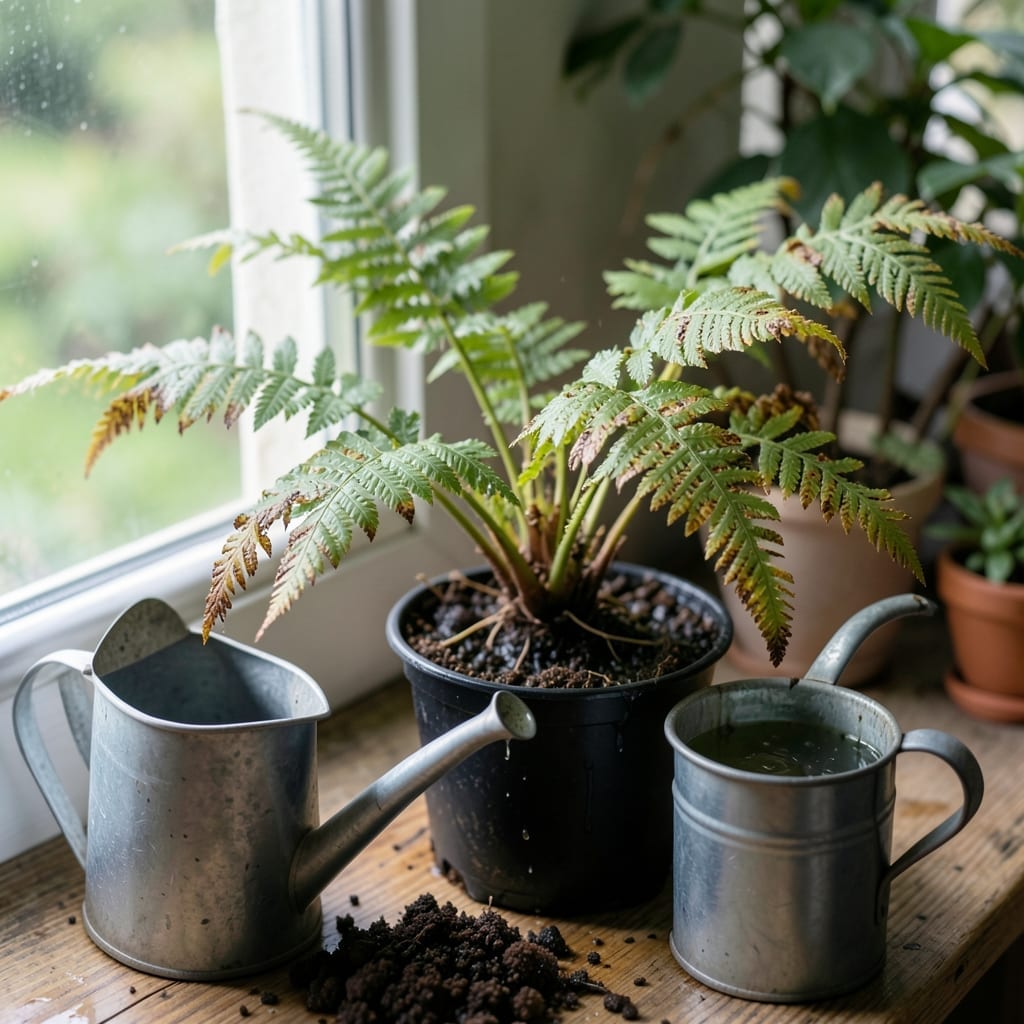
Yellow fronds and soggy soil spelled trouble for my fern last week. 🌿 The drooping leaves were a dead giveaway—this classic houseplant doesn’t handle excess water well, and neither do its roots.
I learned the hard way that most fern problems start underground. Soggy soil suffocates roots and invites rot. The fix is simpler than you think: stop watering immediately and check the drainage.
Within 2-3 days of proper care, new growth appears. The plant bounces back fast once it can breathe again. You’ll see fronds unfurling like nothing ever happened.
Prevention is even easier: water only when the top inch feels dry. This keeps your fern lush and disease-free for the long haul.
Ferns thrive in moist environments, but too much water can quickly turn a lush plant into a drooping mess. Understanding the root causes helps prevent this common issue.
Most ferns suffer when their pots lack proper drainage holes. Without an exit for excess water, the soil becomes waterlogged, suffocating the roots. Stagnant water prevents oxygen uptake, leading to root rot—a primary cause of wilting fronds.
Dense, clay-rich soils retain moisture for too long, even if the pot has drainage. Ferns need light, airy mixes (like peat-based or coconut coir blends) to allow water to flow through while still holding enough for the roots. Compacted soil also blocks oxygen, accelerating decay.
Many gardeners assume ferns need constant moisture, but frequency matters more than volume. Watering before the top inch of soil dries out—especially in cool or humid conditions—creates soggy conditions. A simple finger test (checking soil moisture 1–2 inches down) prevents overdoing it.
Low light or high humidity slows evaporation, making soil stay wet longer. Ferns in shaded corners or terrariums are especially prone to overwatering if their care routine isn’t adjusted. Match watering to the environment—less in dim, damp spaces; more in bright, dry ones.
Here’s how to nurse your fern back to health based on the issue—and stop overwatering from happening again.
Gently remove the fern from its pot and check the roots. If the soil is soggy and roots look mushy, trim the dark, soft roots with clean scissors. Repot in fresh, well-draining potting mix (add perlite or sand for airflow). Place the pot in a bright spot without watering for 5–7 days to let it recover. Prevention tip: 💡 Always use pots with drainage holes and empty saucers after watering.
Trim yellow or brown fronds at the base with sterilized shears to redirect energy to healthy growth. Reduce watering to once a week (or when the top inch of soil feels dry). Prevention tip: ✨ Stick your finger in the soil before watering—if it’s damp, wait!
For severe rot, repot the fern in a clean container with new soil. Treat remaining roots with a fungicide (like copper-based solutions) to prevent reinfection. Avoid fertilizing until the plant stabilizes. Prevention tip: 🎯 Use a moisture meter to monitor soil levels—aim for 3–4 on a 10-scale reader.
Switch to bottom-watering: Fill a tray with water, place the pot on it for 20 minutes, then remove. This lets the plant soak up only what it needs. Prevention tip: 🌡️ Group ferns with similar care needs to avoid over-attention.
Water only when the top 1-2 inches of soil feel dry. For most ferns, this means once a week in average conditions. Always check soil moisture first to avoid overdoing it.
Yellowing fronds and drooping leaves appear first. Soggy soil and a foul smell indicate root rot. Act quickly—these symptoms worsen fast without intervention.
Yes! Trim affected roots, repot in fresh soil, and withhold water for 5-7 days. Use a fungicide for severe cases to prevent further damage.
Larger pots hold more moisture, so water less frequently. Smaller pots dry out faster and may need more attention. Match pot size to your plant’s needs.