
Beautiful Plants For Your Interior
Beautiful Plants For Your Interior
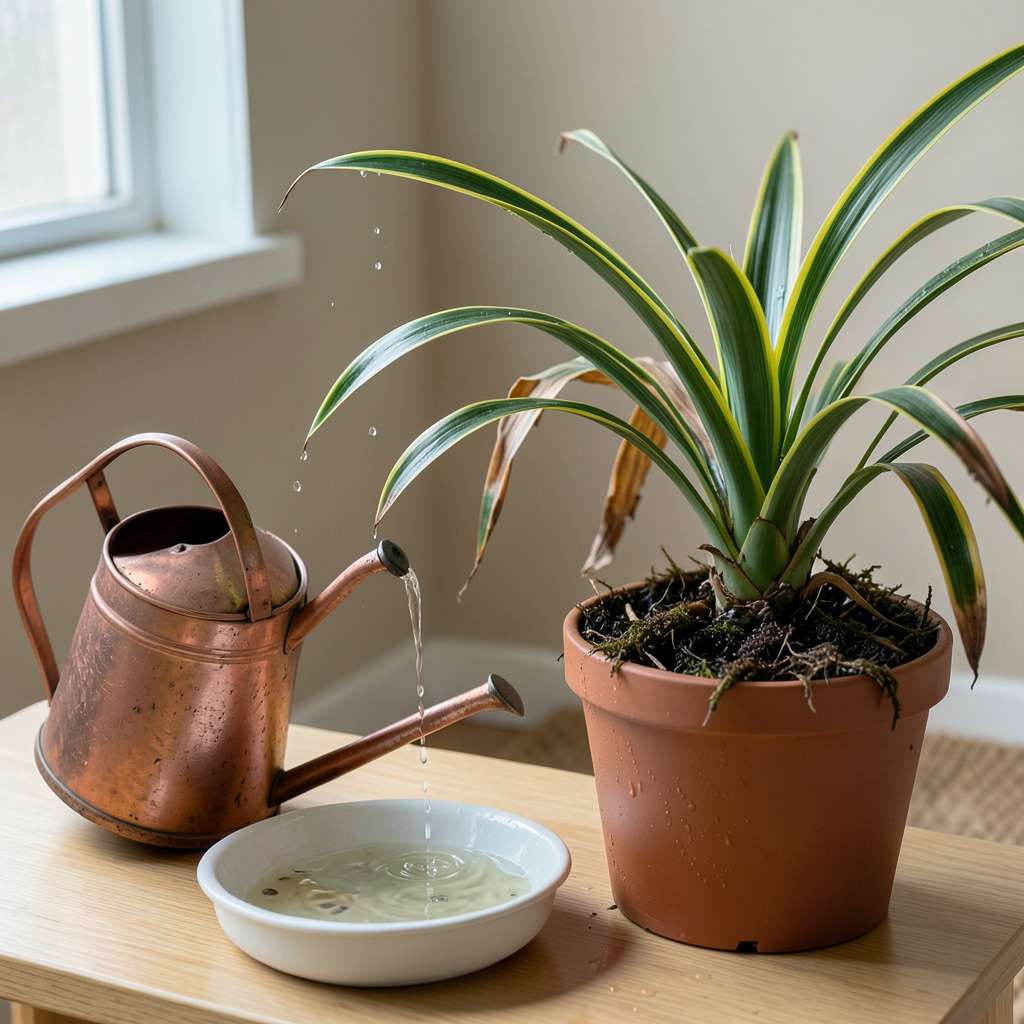
An overwatered dracaena shows yellowing leaves, mushy stems, and root rot. Stop watering immediately, trim damaged roots, and repot in fresh, well-draining soil to revive it.
I’ve learned through years of gardening that dracaenas are particularly sensitive to excess moisture. 🌱 The yellow leaves often appear first because the roots can’t absorb oxygen properly when waterlogged, essentially suffocating the plant. What many don’t realize is that the mushy stems indicate cellular breakdown from prolonged saturation—this isn’t just wilting, it’s actual tissue damage. The recovery process works because fresh soil provides proper aeration while root trimming removes the rotted sections that can’t absorb nutrients anymore.
💡 In This Article
When dracaena roots sit in soggy soil, they can’t access oxygen properly. This suffocation triggers a chain reaction: roots stop absorbing water and nutrients, leaves turn yellow from chlorophyll breakdown, and stems become mushy as cell walls collapse.
🌱 The process begins within 24-48 hours of overwatering, though visible symptoms may take 1-2 weeks to appear.
What distinguishes overwatering from underwatering is the stem condition. Overwatered dracaenas develop soft, spongy stems that may ooze liquid when pressed, while underwatered plants have dry, wrinkled stems. The soil will smell sour or musty—this indicates anaerobic bacteria growth from prolonged moisture. A healthy dracaena’s soil should smell earthy, not pungent.
Leaf drop provides another clue: overwatered plants shed leaves from the bottom up as the roots fail to support the entire plant. The yellowing pattern differs too—overwatering causes uniform yellowing across the leaf, while nutrient deficiencies create interveinal yellowing (green veins with yellow tissue).
I’ve found that gently tugging the plant reveals root health: healthy roots resist, while rotted roots pull free easily.
The science behind this involves osmotic pressure. When roots are waterlogged, they can’t regulate water uptake, causing cells to burst. This cellular damage manifests as brown, mushy spots on leaves. Unlike pest damage which creates distinct holes or patterns, overwatering damage appears as generalized softening and discoloration.
Temperature plays a role too—dracaenas in cooler rooms (65°F) show symptoms faster because their metabolism slows, making them more susceptible to root rot. In my experience, plants in terracotta pots fare better than plastic because the porous material wicks away excess moisture. The pot material can actually accelerate or delay symptom progression by 3-5 days.
Here’s what most people miss: the white, crusty deposits on soil surfaces aren’t mold but mineral salts from evaporated water. These indicate consistent overwatering over weeks or months. A single overwatering incident won’t create these deposits—it takes repeated moisture stress to develop this telltale sign. ✨
Overwatered dracaenas develop uniform yellowing across entire leaves, while underwatered plants show dry, crispy edges. Check the stems too—if they feel soft or mushy when gently squeezed, overwatering is the likely culprit. Healthy stems should feel firm and solid.
Yes, but act quickly! Remove the plant from its pot and trim away all brown, black, or mushy roots with sterilized shears. Soak remaining healthy roots in a 1:10 hydrogen peroxide solution for 10 minutes to disinfect. Repot in fresh, well-draining soil with added perlite for better aeration.
Wait 5-7 days before watering to let damaged roots heal. Place the plant in bright, indirect light during this drying period. When you do water, use the bottom-watering method: place the pot in 1 inch of water for 15 minutes, then let it drain completely.
A sour or musty odor indicates anaerobic bacteria growth from prolonged moisture. This happens when roots can’t access oxygen in waterlogged soil. The smell often appears before visible symptoms like yellowing leaves. Replace the soil immediately and check for root rot.
Only if you thoroughly clean it first. Wash the pot with hot, soapy water, then rinse with a 1:10 bleach solution to kill any remaining fungi or bacteria. Let it air dry completely in sunlight before reuse. Terracotta pots are ideal as they wick away excess moisture better than plastic.
