
Beautiful Plants For Your Interior
Beautiful Plants For Your Interior
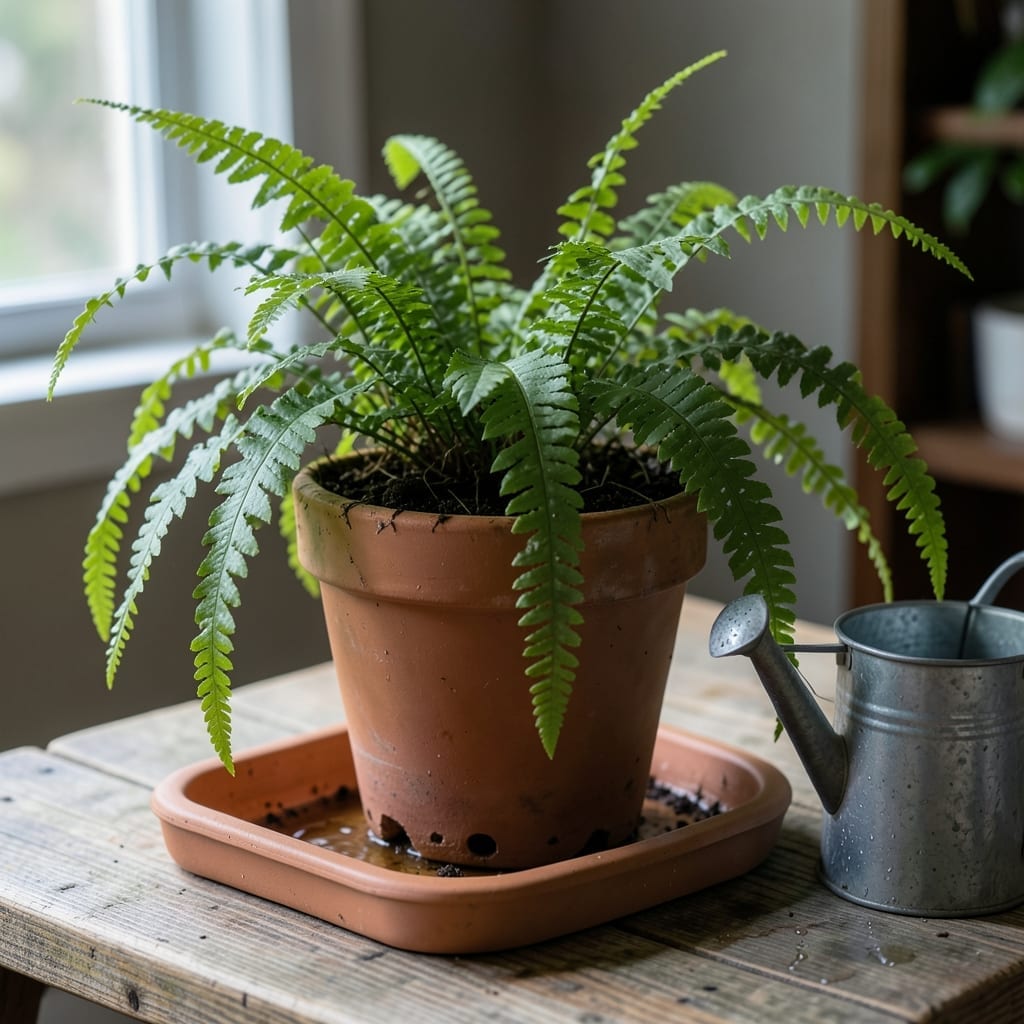
Brown, crispy fronds on your Boston fern aren’t a death sentence. I’ve revived more than a few by catching the problem early—usually root rot from too much love in the watering department.
This classic houseplant thrives on moisture but drowns in soggy soil. The fix starts with better drainage, a pot with holes, and a watering schedule that lets the top inch dry out between drinks.
Within 2-3 weeks, you’ll see new growth if the roots aren’t too far gone. The fronds bounce back greener, fuller, and more vibrant than before the overwatering.
Works for hanging baskets, tabletop displays, or any spot with bright, indirect light. Here’s how to bring it back to life.
Overwatering a Boston fern often stems from well-intentioned but misguided care. Understanding the root causes can help you adjust your routine and keep your fern thriving. Here’s why it happens:
Boston ferns require soil that drains efficiently. When pots lack drainage holes or use dense, water-retentive soil mixes, water pools around the roots. This saturates the root zone, depriving roots of oxygen and promoting Pythium or Phytophthora root rot—common fungal pathogens in waterlogged conditions.
Many plant owners water on a rigid schedule (e.g., daily or every other day) without checking soil moisture. Boston ferns prefer consistently moist but not soggy soil. Overwatering disrupts this balance, leading to edema (cell rupture from excess water uptake) and yellowing fronds.
In dimly lit or highly humid environments, soil stays damp longer. Reduced light slows photosynthesis and water uptake, while high humidity limits evaporation. Together, these factors extend moisture retention, increasing the risk of overwatering even with moderate watering.
Large containers hold more soil, which retains excess moisture longer than the fern can use. This is especially problematic in cool temperatures, where metabolic activity slows. Always match pot size to the plant’s root ball to avoid waterlogged pockets.
Reviving your soggy Boston fern starts with addressing the root of the problem—literally. Follow these targeted fixes for each common issue, paired with prevention tips to keep your plant thriving.
If your fern’s fronds are turning yellow, it’s likely sitting in waterlogged soil. Repot immediately into fresh, well-draining potting mix (add perlite or coarse sand for aeration). Trim any mushy, black roots with sterilized scissors. Prevention tip: 💡 Use a pot with drainage holes and empty the saucer after watering to avoid standing water.
Wilting despite wet soil? The roots may be suffocating. Stop watering until the top 1–2 inches of soil feel dry. Then, resume with a moderate schedule: water only when the soil is slightly dry to the touch. Prevention tip: ✨ Stick your finger in the soil—if it’s damp, wait another day or two.
Foul-smelling, dark roots mean rot has set in. Remove the plant from its pot, rinse the roots under lukewarm water, and prune all affected areas. Repot in clean, dry soil and a sterilized container. Prevention tip: 🌡️ Water in the morning so excess moisture evaporates during the day, reducing rot risk.
If the soil feels spongy or smells musty, it’s oversaturated. Move the pot to a shaded, well-ventilated area to speed up drying. Tilt the pot slightly to encourage drainage. Prevention tip: 🎯 Use a moisture meter to track soil hydration levels instead of guessing.
Look for yellowing fronds, mushy stems, or soil that smells sour. These are classic signs of overwatering and potential root rot.
Use a well-draining mix with perlite or coarse sand. This keeps roots aerated and prevents water from pooling at the bottom.
Yes! Trim the black, mushy roots and repot in fresh, dry soil. With proper care, new healthy growth should appear in 2-3 weeks.
Water when the top 1-2 inches of soil feel dry. This usually means every 5-7 days, but always check first.