
Beautiful Plants For Your Interior
Beautiful Plants For Your Interior
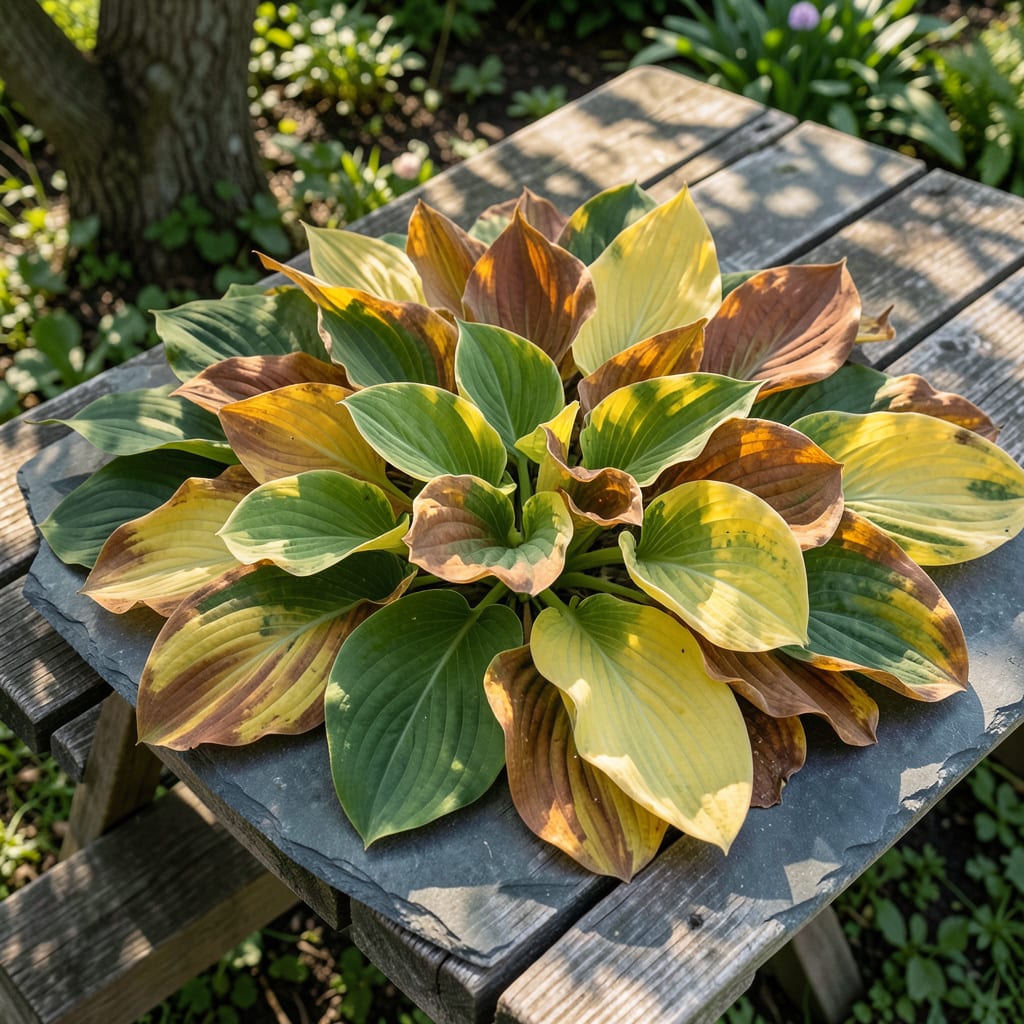
Yellow and brown hosta leaves stare back at you like an accusation. I’ve been there—watching my once-lush plants decline and wondering what went wrong.
Here’s the thing—it’s rarely just one problem. Usually, it’s a combination of soil issues, pests, or environmental stress. The good news is that most causes are fixable once you identify them.
With a little detective work, you can pinpoint whether it’s too much water, not enough nutrients, or something else entirely. The solution often starts with a simple soil test.
Your hostas can bounce back stronger than before. Let’s figure out what they’re trying to tell you.
Hostas are hardy, but their leaves can turn yellow and brown due to several stress factors. Here’s a breakdown of the most common causes, explained scientifically and with actionable insights.
Yellowing leaves (chlorosis) often signal a lack of essential nutrients, particularly nitrogen, iron, or magnesium. Nitrogen deficiency starts with uniform yellowing of older leaves, while iron deficiency causes interveinal chlorosis (yellowing between veins) in newer growth. Magnesium deficiency appears as yellowing with brown edges. Action: Conduct a soil test to identify deficiencies and amend with a balanced fertilizer or targeted micronutrients.
Hostas thrive in moist but well-drained soil. Overwatering or compacted soil leads to root asphyxiation, where roots can’t absorb oxygen. This triggers stress responses, including yellowing and browning of leaves. Action: Check soil moisture 2 inches down—it should feel damp, not soggy. Improve drainage with organic matter like compost or perlite.
Extreme heat, direct sunlight, or sudden temperature drops can scorch hosta leaves, turning them brown (necrosis). Hostas prefer partial shade; too much sun increases transpiration, leading to dehydration and leaf burn. Action: Provide afternoon shade and mulch to retain soil moisture and regulate temperature.
Pests like slugs, snails, or nematodes chew on leaves, causing irregular brown patches. Fungal diseases such as anthracnose or root rot (from Phytophthora) create yellow halos around brown spots. Action: Inspect leaves for signs of pests or fungal spores. Use organic controls like neem oil or copper tape for pests, and fungicides for diseases.
Hostas prefer slightly acidic to neutral soil (pH 6.0–7.0). Alkaline soil (pH > 7.5) locks out iron and other nutrients, causing chlorosis. Action: Test soil pH and amend with sulfur to lower it or lime to raise it, as needed.
Here’s how to address each common cause of discolored hosta leaves, with actionable fixes and prevention tips to keep your plants thriving.
Yes, it often is. Overwatering leads to root asphyxiation, where roots can’t absorb oxygen, causing yellowing and browning. Check soil 2 inches down—it should feel damp, not soggy.
Slugs, snails, and nematodes leave irregular brown patches. Look for chew marks or slime trails. Use organic controls like neem oil or copper tape for effective results.
Yes, hostas prefer partial shade. Too much direct sunlight can scorch leaves, turning them brown. Move potted hostas to a shadier spot or provide afternoon shade with a cloth.
Conduct a soil test to identify missing nutrients. Yellowing between veins often indicates iron deficiency, while uniform yellowing may signal nitrogen lack. Amend soil with targeted fertilizers.
