
Beautiful Plants For Your Interior
Beautiful Plants For Your Interior
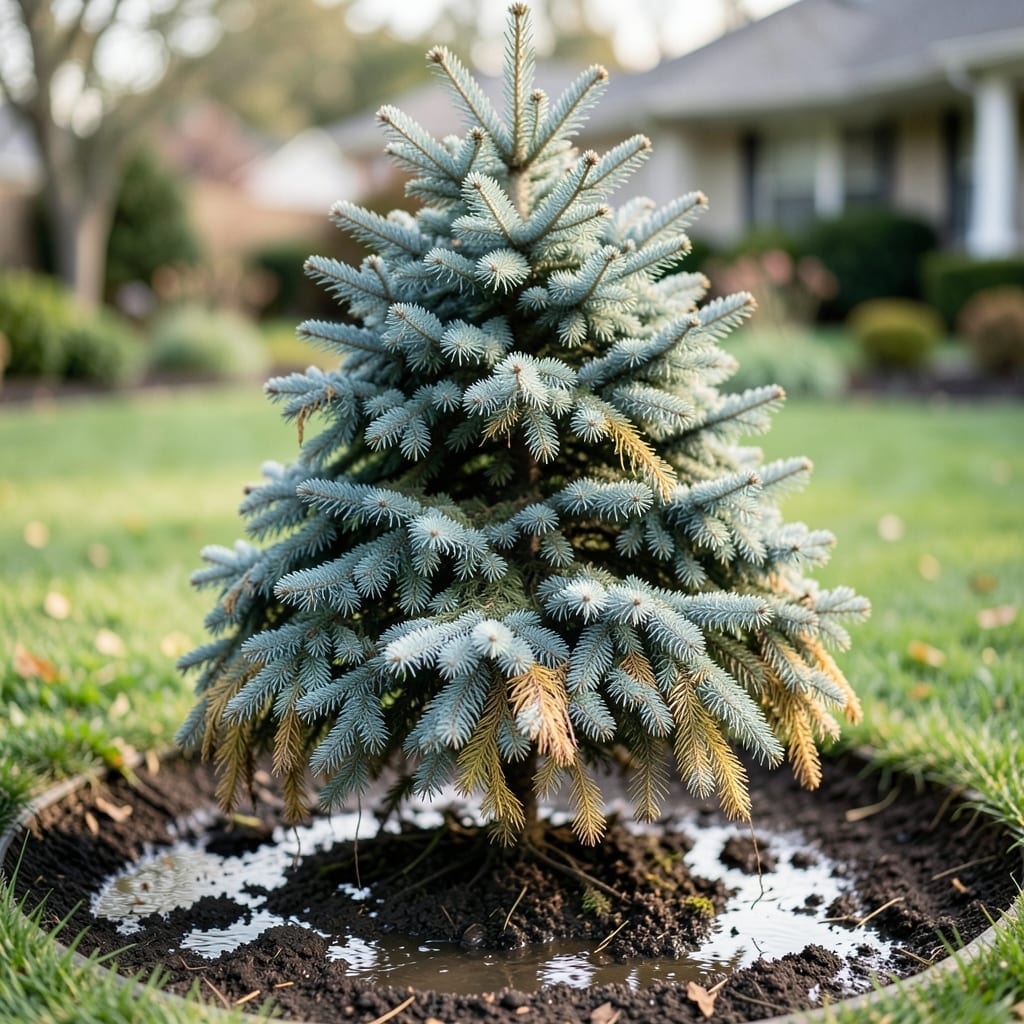
Yellowing needles on your blue spruce aren’t just unsightly—they’re a red flag. I’ve seen too many of these majestic trees decline because of well-meaning but excessive watering. The problem starts below the surface, where roots drown in soggy soil.
Overwatering suffocates the roots, cutting off oxygen and inviting rot. The first sign is often yellowing needles, followed by drooping branches. If you catch it early, the tree can recover. Left unchecked, the damage becomes irreversible.
Here’s the thing—blue spruces are drought-tolerant once established. They need deep, infrequent watering, not a daily drink. The fix involves adjusting your routine and improving drainage.
With the right steps, your spruce can bounce back. I’ll show you how to assess the damage and nurse it back to health.
Overwatering a blue spruce often stems from well-meaning but misguided care. Here’s why it backfires:
Blue spruces thrive in well-draining soil. When planted in heavy clay or compacted soil, water pools around the roots, suffocating them. Picea pungens roots need oxygen to respire; waterlogged conditions block this exchange, leading to root rot.
Many gardeners assume frequent watering is best, but blue spruces are drought-tolerant once established. Overwatering—especially in cool, humid climates—creates a breeding ground for Phytophthora and other fungal pathogens that attack the roots.
Too much mulch or the wrong type (e.g., thick organic layers) traps moisture against the trunk. This encourages bark decay and prevents the soil from drying out, stressing the tree’s vascular system.
Blue spruces need less water in fall and winter when growth slows. Overwatering during dormancy forces the tree to expend energy it doesn’t have, weakening its defenses against disease.
When your blue spruce shows signs of overwatering, quick and targeted action can restore its health. Here’s how to tackle each issue:
Stop watering immediately and check the soil. If it’s soggy, let it dry out completely before watering again. For severe cases, aerate the soil around the tree by gently loosening the top 2-3 inches with a garden fork. Add coarse sand or perlite to the soil to enhance drainage. If the tree is in a container, ensure the pot has drainage holes and consider repotting with a well-draining mix.
Prevention tip: 💡 Water only when the top 1-2 inches of soil are dry to the touch.
Trim away yellow or brown needles with clean, sharp pruners to prevent the spread of rot or disease. Focus on removing only the affected areas, and sterilize your tools with rubbing alcohol between cuts. After pruning, monitor the tree for new growth, which signals recovery.
Prevention tip: 🎯 Avoid overhead watering to keep needles dry and reduce fungal risks.
If root rot is confirmed (black, mushy roots), act fast. Carefully remove the tree from the soil and trim away all affected roots with sterilized pruners. Soak the remaining healthy roots in a fungicide solution (follow product instructions) to kill off any lingering pathogens. Repot the tree in fresh, sterile, well-draining soil.
Prevention tip: ✨ Use a moisture meter to avoid overwatering and ensure the plant’s environment stays balanced.
Dig a 12-inch hole near the base and fill it with water. If it drains slower than 1 inch per hour, your soil needs amendment. Adding compost or sand can help improve drainage.
Yes, but act quickly. Trim the affected roots and soak the healthy ones in a fungicide solution. Repot in fresh, well-draining soil to give it the best chance.
Water deeply once every 10-14 days during dry spells. Always let the top 1-2 inches of soil dry out first to prevent overwatering.