
Beautiful Plants For Your Interior
Beautiful Plants For Your Interior
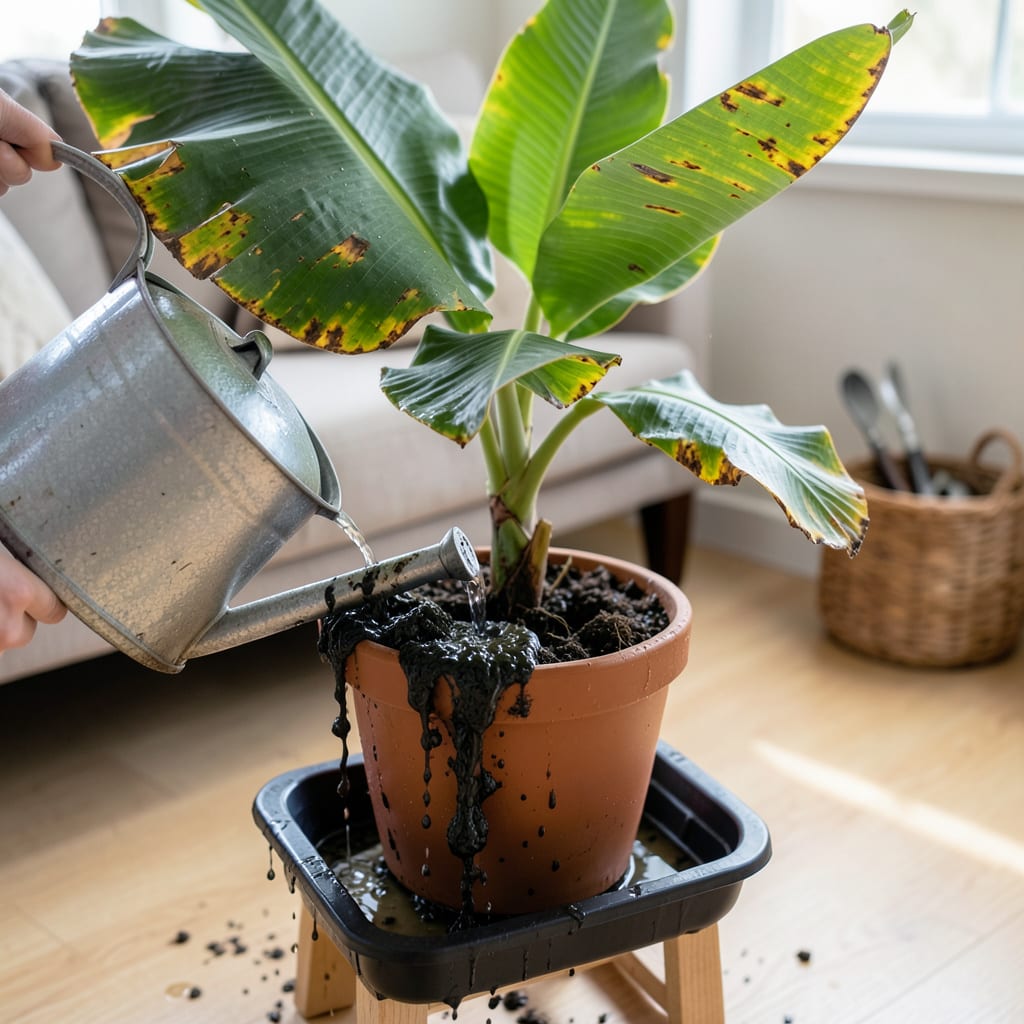
Stop watering immediately and let the soil dry out. Move the plant to a sunny, well-ventilated area, trim any yellow or mushy roots, and repot in fresh, well-draining soil if root rot is present.
Banana plants are tropical by nature, but their roots can’t handle constant soggy conditions. 🌿 The recovery process starts with cutting off the moisture source completely—this gives the roots a chance to breathe and heal. I’ve seen cases where plants bounce back within weeks when given proper sunlight and airflow, but the key is acting fast before fungal infections set in.
What many don’t realize is that overwatering symptoms often mimic underwatering—yellow leaves and wilting can confuse even experienced gardeners. The difference lies in the soil: if it’s damp days after watering, you’re dealing with excess moisture. A fast-draining soil mix with perlite or sand can prevent future issues, along with a consistent watering schedule that lets the top inch dry between sessions. ✨
💡 In This Article
Banana plants suffer from overwatering because their roots need oxygen to function. When soil stays saturated, water fills the air pockets between soil particles, creating an anaerobic environment. This suffocates the roots, preventing them from absorbing nutrients and water efficiently.
Within 24-48 hours of constant moisture, root cells begin dying, which triggers a chain reaction of symptoms above ground. 🌱
The first visible sign is usually yellowing leaves, starting with the older, lower leaves. Unlike natural aging, overwatered yellowing spreads rapidly and affects multiple leaves simultaneously. The leaves may also develop brown spots or edges, which indicates cellular damage from excess moisture.
In severe cases, you’ll notice a foul, musty odor from the soil—a clear sign of bacterial or fungal growth in the root zone. This smell comes from decomposing organic matter as roots rot.
Poor drainage is the primary culprit behind overwatering issues. Banana plants thrive in well-draining soil that allows water to flow through quickly. Heavy clay soils or compacted potting mixes retain moisture for too long, while containers without drainage holes create waterlogged conditions.
Even with proper soil, watering too frequently—especially in cool weather when evaporation slows—can lead to the same problems. The ideal moisture level should allow the top 1-2 inches of soil to dry between waterings. ✨
Root rot develops when anaerobic conditions persist. Healthy banana roots are firm and white, but overwatered roots turn brown, mushy, and may separate from the plant with gentle tugging. This decay spreads upward through the stem, eventually causing the entire plant to wilt and collapse.
The process accelerates in warm temperatures, where fungal pathogens like Phytophthora thrive in moist environments. These microbes attack weakened roots, turning recovery into a race against time. 💥
Humidity plays a surprising role in overwatering symptoms. While banana plants love humid air (ideally 50-70%), high humidity reduces evaporation from the soil surface. This means water lingers longer in the pot, increasing root rot risks. The combination of soggy soil and humid air creates the perfect storm for fungal diseases.
Outdoor plants in rainy climates are particularly vulnerable, which is why raised beds or containers with excellent drainage are essential in tropical regions.
What many overlook is that overwatering symptoms can appear differently in various banana cultivars. Dwarf varieties like ‘Super Dwarf Cavendish’ show stress faster than larger types, with leaves curling inward before yellowing. Variegated varieties may develop more pronounced brown spots on their lighter-colored sections.
The key is monitoring soil moisture rather than following a fixed watering schedule—stick your finger 2 inches deep into the soil; if it feels damp, wait another day or two before watering again. 💧
Recovery time depends on the severity of damage. Mild cases with just yellowing leaves may bounce back in 1-2 weeks after correcting watering habits. Severe root rot cases can take 4-6 weeks or longer. The key is patience—don’t resume normal watering until you see new, healthy growth emerging.
It’s challenging but possible if some healthy tissue remains. Trim all brown, mushy roots with sterilized shears, then soak the remaining roots in a 1:10 hydrogen peroxide-to-water solution for 10 minutes to kill fungi. Repot in fresh, dry soil and keep humidity low. Even if the main plant doesn’t survive, healthy pups at the base may grow into new plants.
Brown edges often indicate salt buildup from fertilizers or minerals in tap water. When roots are damaged, they can’t properly filter these salts. Flush the soil with distilled water (run water through for 2-3 minutes) to remove excess salts. Trim severely damaged leaves to redirect energy to healthy growth.
Avoid fertilizing for at least 2-3 weeks after treatment. Damaged roots can’t absorb nutrients properly, and fertilizer salts can burn vulnerable roots. Once you see new growth, use a half-strength balanced fertilizer (10-10-10) to avoid overwhelming the plant. Organic options like fish emulsion are gentler during recovery.
Yes, if the corm (base bulb) is still firm. Remove any healthy pups (small offshoots) with a clean knife, ensuring each has some root tissue attached. Let them dry for 24 hours before potting in fresh, well-draining soil. Pups often recover faster than mature plants since they’re less established and can adapt more easily to new conditions.
