
Beautiful Plants For Your Interior
Beautiful Plants For Your Interior
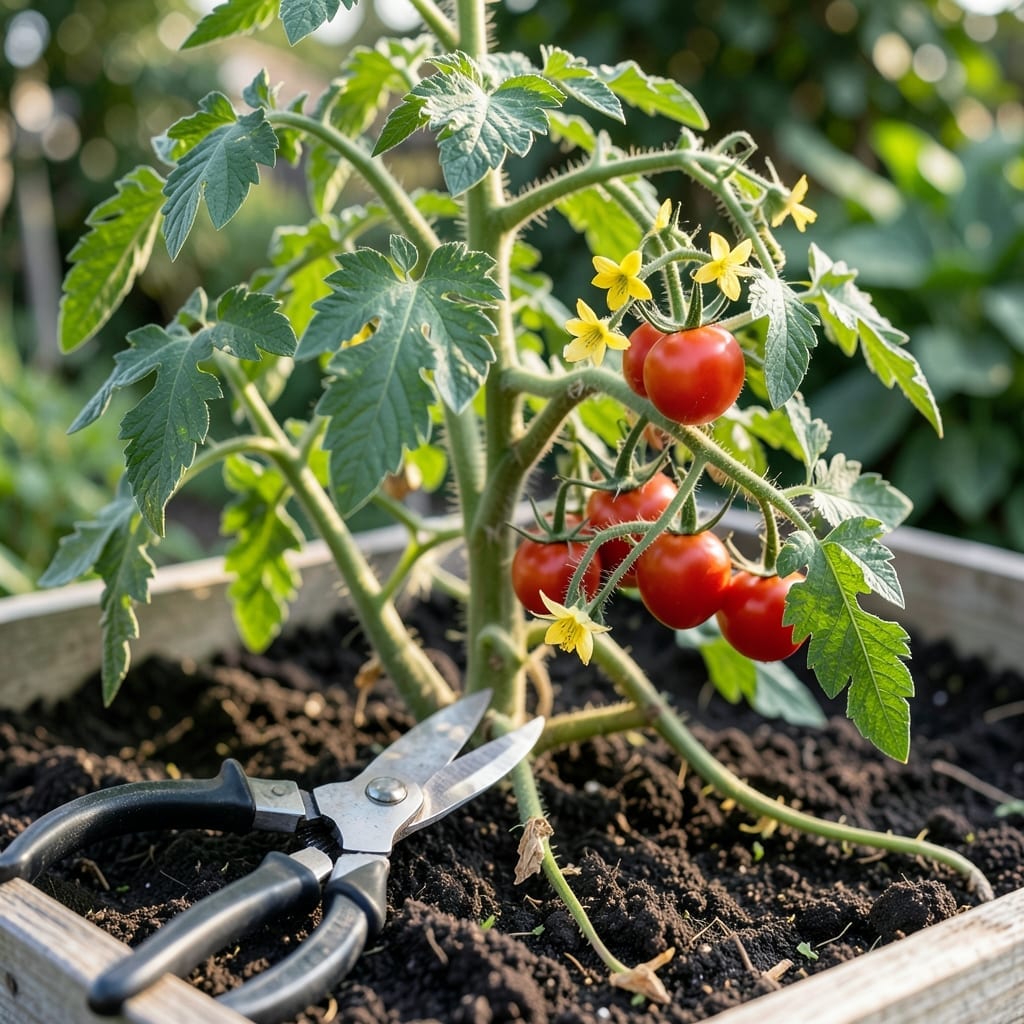
My first overgrown tomato plant looked like a jungle. It was a mess of vines and leaves with almost no fruit to show for it.
Problem is, tomatoes left to their own devices will keep growing and growing. They put all their energy into foliage instead of fruit, shading out the lower leaves and creating a perfect hiding spot for pests.
Pruning and proper support redirect that energy where it matters. You’ll get better air flow, more sunlight to ripen fruit, and a plant that’s actually manageable.
It takes 10 minutes a week once you know what to look for. Here’s how to get it under control.
Tomato plants can quickly become unruly, but understanding the root causes helps you prevent overgrown tomato plants before they take over your garden. Here’s why it happens:
Too much nitrogen in the soil promotes leafy growth at the expense of fruit production. Nitrogen encourages vegetative growth (stems and leaves), while phosphorus and potassium support flowering and fruiting. If your fertilizer has a high first number (e.g., 10-5-5), you may be feeding foliage more than tomatoes.
Irregular watering stresses the plant, triggering a survival response: rapid, leggy growth to seek moisture. Deep, consistent watering (1–2 inches per week) keeps roots stable and growth controlled. Drip irrigation is ideal for even moisture distribution.
Tomatoes, especially indeterminate varieties, grow continuously without intervention. Skipping pruning leads to excessive suckers (side shoots) and tangled stems. Regularly remove suckers and stake or trellis plants to direct energy toward fruit, not foliage.
Planting tomatoes too closely forces them to compete for sunlight and air, stretching upward aggressively. Space plants 18–24 inches apart (or 3 feet for large varieties) to allow proper airflow and controlled growth.
High heat or humidity can accelerate growth as the plant races to reproduce. Shade cloth or strategic planting times (early morning sun) can moderate these conditions and slow unchecked expansion.
When your tomato plants grow wild, a few targeted fixes can restore order—and boost your harvest. Below are practical solutions for common causes, plus tips to keep problems from returning next season.
If lush green growth is crowding out fruit, cut back on nitrogen-heavy fertilizers immediately. Switch to a balanced or phosphorus-rich formula to encourage flowering. Then, prune aggressively: remove up to one-third of the oldest leaves and suckers (the shoots in leaf axils). This redirects energy to fruit production. Prevention tip: 💡 Use compost or a slow-release fertilizer at planting, and avoid overfeeding mid-season.
Overcrowded plants compete for nutrients and space. Thin seedlings early so mature plants are 18–24 inches apart (24–36 inches for indeterminate varieties). If it’s too late to thin, transplant excess plants to another bed or container. Prevention tip: 🎯 Start seeds in individual pots or use proper spacing from day one to avoid tangles.
Flopping stems break under their own weight. Replace flimsy stakes with 6-foot bamboo or metal stakes, or install a sturdy trellis. For bush tomatoes, use cages at least 3 feet tall. Tie stems with soft cloth strips (not wire) to avoid damage. Prevention tip: ✨ Set up supports at planting time—waiting until plants are overgrown makes it harder to train them.
Uneven watering causes erratic growth and cracking fruit. Water deeply 1–2 times per week (more in extreme heat), keeping soil consistently moist but not soggy. Use drip irrigation or soaker hoses to target roots and reduce disease risk. Prevention tip: 🌡️ Mulch with straw to retain moisture and regulate temperature.
Prune weekly during active growth to stay ahead. Remove suckers smaller than 3 inches and trim lower leaves touching soil. This prevents disease and improves airflow.
Yes, but only from heirloom varieties. Hybrid plants may produce inconsistent offspring. Let fruit fully ripen, scoop seeds, and dry on paper towels for 5-7 days.
Overgrowth often means too many fruits competing for energy. Thin clusters to 3-4 tomatoes per stem. Also check for nitrogen overload or insufficient sunlight.
Avoid heavy pruning after fruit sets to prevent stress. Light maintenance pruning is fine, but never remove more than 1/3 of foliage at once.