
Beautiful Plants For Your Interior
Beautiful Plants For Your Interior
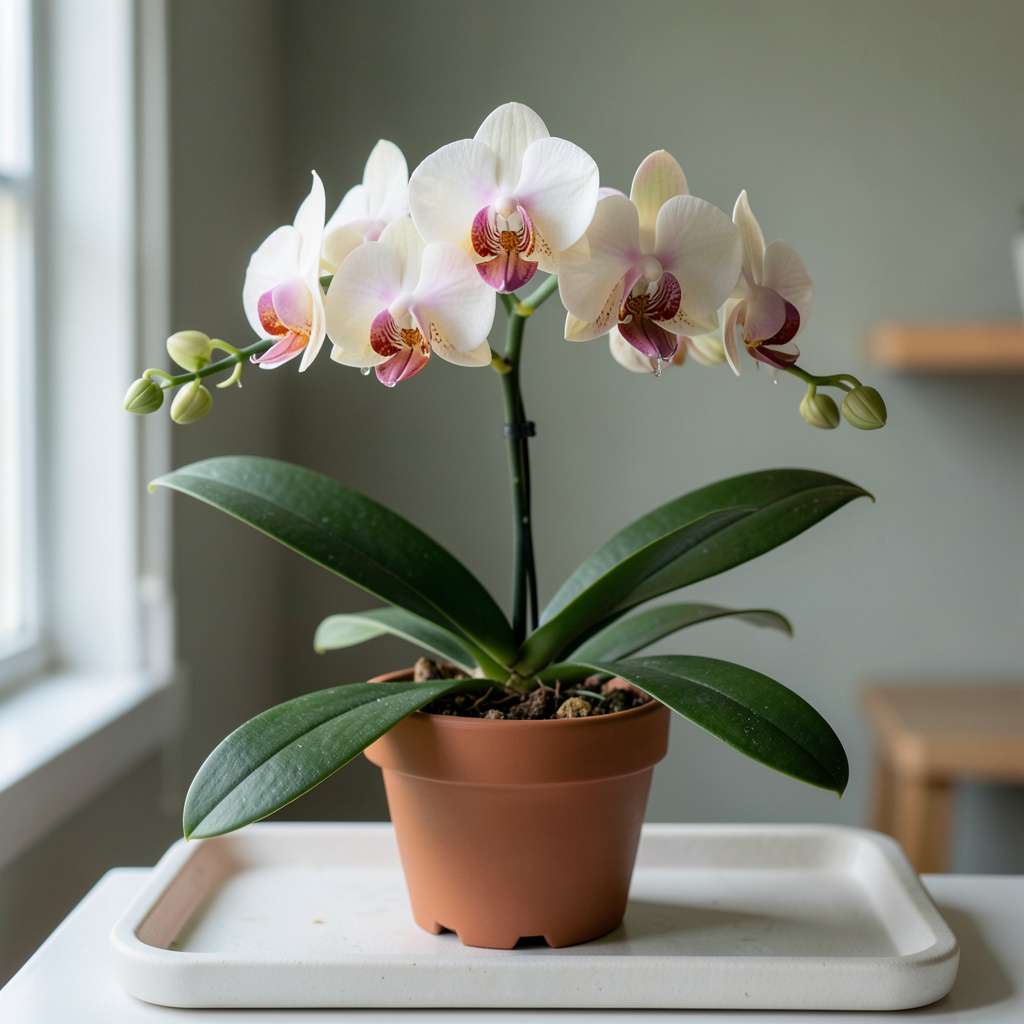
Orchids typically bloom in spring to fall, depending on species. Provide proper light, water, and humidity for optimal flowering. Regular pruning and fertilizing support healthy growth and encourage reblooming.
Understanding the blooming period of orchids is crucial for their care. 🌺 Different species have specific requirements that can affect when they flower, such as temperature and light levels. For example, Phalaenopsis orchids thrive in warm, consistent environments, while Cattleyas may need cooler nighttime temperatures to trigger blooming. By recognizing these needs, I can ensure my orchids flourish during their prime blooming seasons.
Additionally, maintaining the right humidity and watering schedule during this time significantly impacts their health. 🌿 Adjusting these factors based on the plant’s needs can lead to a vibrant display of blooms that lasts longer. I often find that a little extra attention during blooming pays off with stunning flowers!
💡 In This Article
The blooming period for orchids is intricately tied to their environmental conditions. Different species exhibit unique responses to seasonal changes, which significantly influence their flowering patterns. For example, Phalaenopsis orchids, often called moth orchids, prefer warm temperatures around 70-80°F during the day and slightly cooler nights. 🌸
Conversely, Cattleya orchids thrive when exposed to temperature fluctuations, requiring a nighttime drop to around 60°F. This drop mimics their natural habitat, triggering the blooming process. Additionally, photoperiodism—how plants respond to light duration—plays a pivotal role. Orchids like Dendrobium require a specific light cycle of approximately 12-14 hours of light to initiate blooming. 🌞
Humidity is another crucial factor impacting blooming. Most orchids flourish in environments with humidity levels between 40-60%. Maintaining adequate humidity can be achieved through misting or using humidity trays. This is particularly essential during the flowering period when water loss through transpiration increases. 🌧️
Furthermore, seasonal changes dictate not just blooming but also overall plant health. For instance, during winter months when light is scarce, many orchids enter a dormancy phase. This is a natural survival mechanism, allowing them to conserve energy until conditions improve. Recognizing these cycles helps me care for my orchids effectively. 🌿
To summarize, understanding how seasonal changes affect different orchid species is vital. By providing the right temperature, light exposure, and humidity, I can encourage vibrant blooms that last throughout their peak seasons. 🌈
