
Beautiful Plants For Your Interior
Beautiful Plants For Your Interior
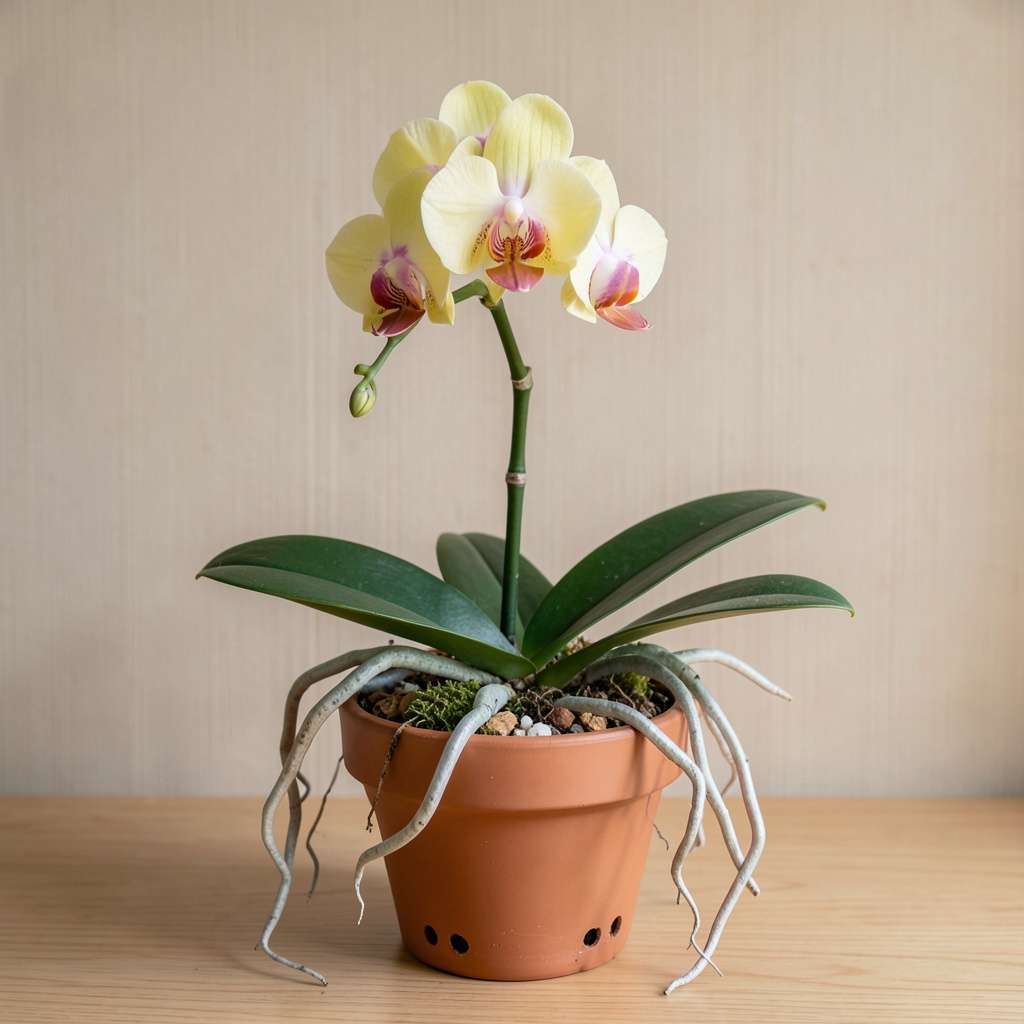
Orchid roots growing from stems are called aerial roots—a natural adaptation for water absorption and stability. They’re normal in healthy orchids but may indicate overwatering if they appear shriveled or discolored.
Aerial roots serve essential functions for orchids, such as gathering moisture from the air and providing support. 🌱 Different orchid species, like Phalaenopsis and Dendrobium, utilize these roots to thrive in their natural environments. I’ve learned that observing these roots closely can help identify issues early, ensuring my plants stay healthy and vibrant. Proper care, including humidity management and trimming when necessary, can significantly enhance their growth. 🔥
💡 In This Article
Aerial roots serve crucial biological functions for orchids, allowing them to adapt to their environments. These roots are designed to absorb moisture from the air and can also anchor the plant to nearby structures, providing stability in their native habitats. 🌱
For example, species like Phalaenopsis and Dendrobium thrive in humid tropical climates where they naturally grow on trees. Their aerial roots can sense humidity levels, allowing them to gather necessary moisture when conditions are favorable. This adaptation is essential for survival in environments where soil may be sparse or non-existent. 🔥
These roots also help orchids establish a firm grip on their surroundings. They can cling to tree bark or other surfaces, which enables the plant to grow upward toward sunlight. This vertical growth is vital for photosynthesis and overall health, as orchids rely on light to produce energy. 🌟
Additionally, aerial roots can change color and texture based on their environment. Healthy roots typically appear green and firm, while shriveled or brown roots may indicate water stress or overwatering. It’s essential to monitor these changes closely, as they provide insight into the plant’s overall health and well-being. 🌿
Understanding the role of these roots can significantly enhance your care routine. Providing appropriate humidity levels—ideally between 50-70%—and ensuring proper drainage in your potting medium can help maintain healthy aerial roots. Regularly checking these roots will help you identify any potential issues before they escalate into more significant problems. 🌈
