
Beautiful Plants For Your Interior
Beautiful Plants For Your Interior
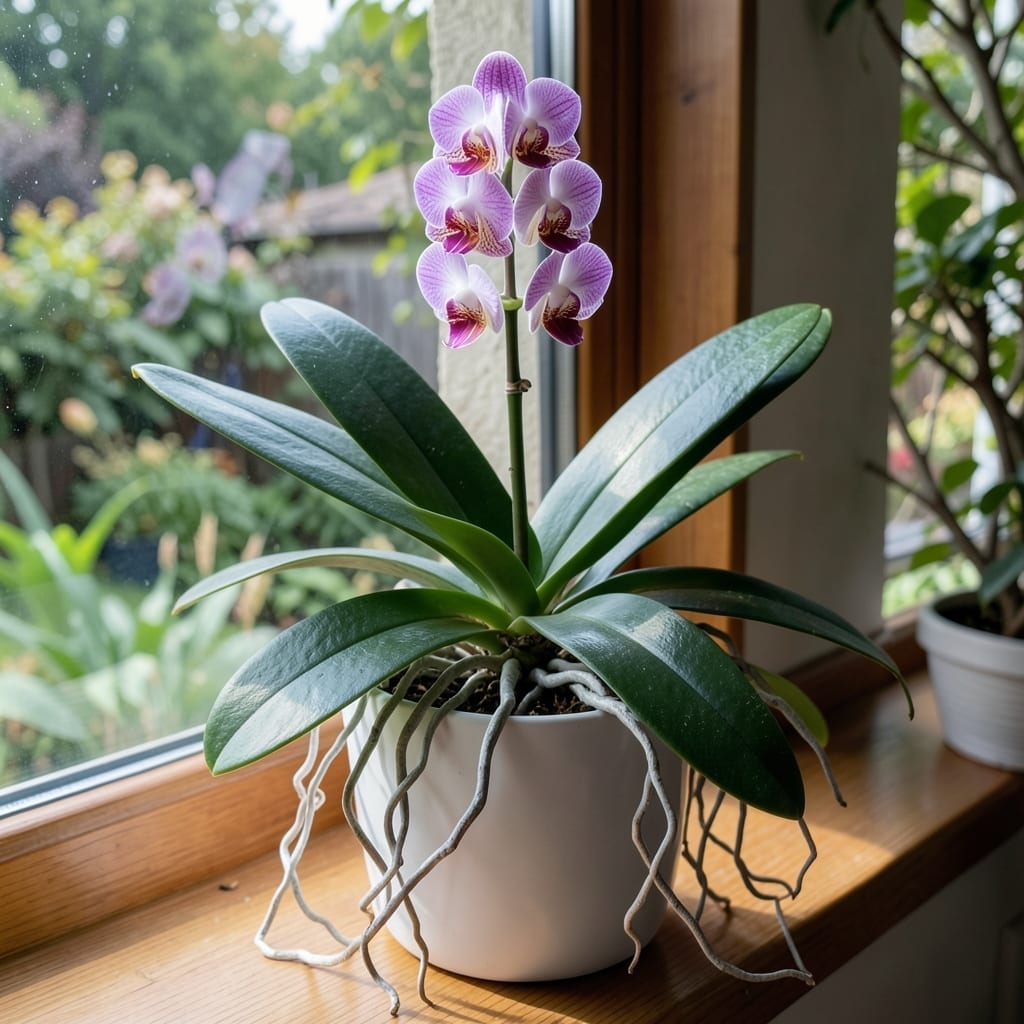
Those wild roots spilling over the pot aren’t a crisis—they’re your orchid’s survival strategy. I used to panic and stuff them back in, only to watch my plant protest with yellowing leaves.
Here’s the thing—orchids are epiphytes, meaning they naturally grow on trees with roots exposed to air. When they outgrow their home, those aerial roots are just doing what comes naturally.
You’ve got options: leave them be, guide them back gently, or repot into a slightly larger container. 30 minutes of care now prevents stress later.
Works for Phalaenopsis, Cattleya, and most common orchid varieties. No advanced skills required.
Orchids naturally grow aerial roots as part of their epiphytic survival strategy, but when these roots spill over the pot, it’s often a sign of underlying conditions. Here’s why it happens:
Many orchids, like Phalaenopsis and Dendrobium, are epiphytes—meaning they grow on trees in the wild, not in soil. Their roots cling to bark and absorb moisture/humidity from the air. In pots, this instinct drives roots to seek light, air, and space, leading to overflow. This isn’t always problematic; it’s just the plant expressing its natural behavior.
Roots escape pots when the medium stays soggy. Orchids hate “wet feet,” so if water can’t drain quickly, the plant grows roots outward to find drier conditions. Check for compacted or degraded potting mix (e.g., sphagnum moss breaking down) that traps moisture. A well-draining mix (bark, perlite, or charcoal) prevents this.
Orchids prefer snug pots but will rebel if root-bound. When roots fill every inch of the container, they have no choice but to grow over the edges. This often happens with mature plants left in the same pot for years. Repotting every 1–2 years into a slightly larger container (just 1–2 inches wider) gives roots room to spread inside the pot.
In high humidity, orchids may produce excess aerial roots to absorb moisture from the air. Conversely, in low light, the plant stretches roots outward in search of better conditions. Ensure your orchid gets bright, indirect light (east/west windows are ideal) and moderate humidity (40–70%) to balance growth.
When your orchid’s roots start escaping the pot, it’s usually a sign they’re happy—just a little too happy. 🌱 Here’s how to gently guide them back to health without harming your plant.
If roots are spilling out due to a cramped pot, it’s time for an upgrade. Choose a pot just 1–2 inches larger in diameter with drainage holes. Gently remove the orchid, soak the root ball in lukewarm water for 10 minutes to loosen the medium, then trim any dead or mushy roots with sterilized scissors. Repot in fresh, chunky orchid mix (bark, sphagnum moss, or coconut husk chips) and avoid watering for 5–7 days to let roots recover.
Prevention tip: 💡 Repot every 1–2 years or when roots circle the pot’s bottom.
Roots grow outward searching for air. If your pot lacks drainage or the medium is too dense, switch to a slotted orchid pot or add perlite to the mix. Elevate the pot on a tray with pebbles to prevent waterlogging. Water only when the top inch of mix feels dry—overwatering suffocates roots and triggers aerial growth.
Prevention tip: ✨ Use clear pots to monitor root health and moisture levels easily.
Orchids stretch roots toward light. If yours is in a dim spot, move it to a bright, indirect light source (east or north-facing windows are ideal). Avoid direct sun, which can scorch roots. Rotate the pot weekly for even exposure.
Prevention tip: 🎯 Aim for 6–8 hours of gentle light daily. A sheer curtain can diffuse harsh rays.
Fluctuating temps (especially cold drafts or heat vents) stress orchids, prompting root escape. Keep your plant in a stable environment between 65–80°F (18–27°C). Avoid placing it near AC units, heaters, or drafty windows.
Prevention tip: 🌡️ Use a thermometer to track microclimates around your orchid’s spot.
Yes! This is natural behavior for epiphytic orchids like Phalaenopsis. Aerial roots help absorb moisture and air in the wild.
Never cut healthy green or silver roots. Only trim black, mushy roots with sterilized tools. Healthy aerial roots support your plant.
Repot every 1-2 years or when roots circle the pot’s bottom. Use a container just 1-2 inches larger.
Gently tuck them in during repotting, but don’t force them. They’ll often find their way back naturally with proper care.