
Beautiful Plants For Your Interior
Beautiful Plants For Your Interior
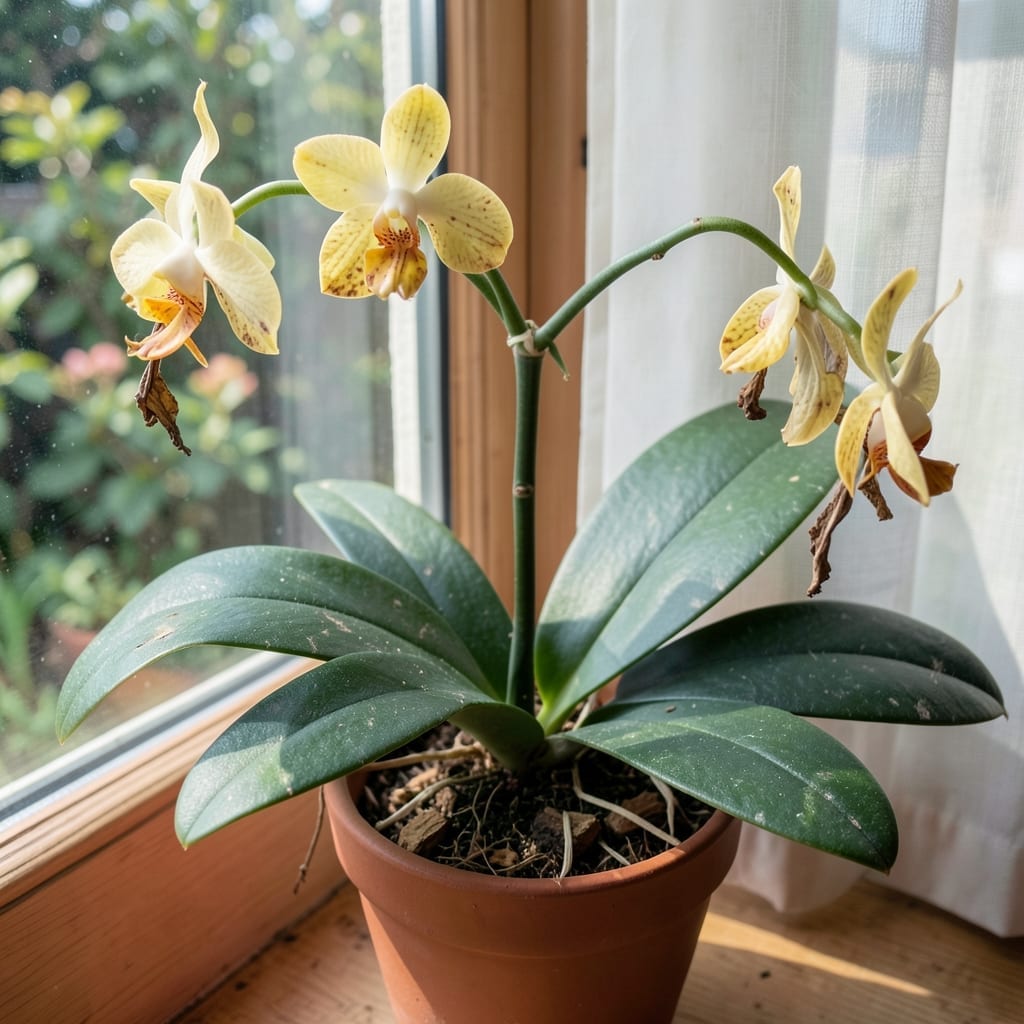
That sinking feeling when your orchid’s last bloom drops is real. I’ve been there—staring at yellowing spikes, wondering what went wrong and if the plant would ever recover.
Here’s the thing—most orchid decline comes down to simple fixes. Too much water, not enough light, or ignoring the roots usually does the damage. The good news? These plants are tougher than they look.
With a few adjustments to your care routine, you’ll see new growth in 4-6 weeks. The key is matching your orchid’s needs to your home’s conditions, not the other way around.
Works for Phalaenopsis, Dendrobium, or any store-bought orchid. Let’s get those flowers coming back.
Orchid flowers can die for several reasons, often tied to their delicate growing conditions. Understanding the underlying causes helps you prevent and address the issue effectively. Below are the most common scientific explanations behind orchid flower dying.
Orchids, particularly Phalaenopsis and Cattleya varieties, require bright, indirect light to photosynthesize and sustain blooms. Inadequate light disrupts chlorophyll production, weakening the plant. Flowers may drop prematurely as the orchid conserves energy. Place your orchid near an east-facing window or use a grow light (12-14 hours daily) to mimic natural conditions.
Orchids thrive in 60–80°F (15–27°C) daytime temperatures with a 10–15°F (5–8°C) drop at night to trigger blooming. Sudden temperature swings—such as cold drafts or heat from vents—cause cellular damage in petals. Avoid placing orchids near air conditioners, heaters, or drafty windows to prevent thermal shock.
Root rot from excess moisture is a leading killer of orchids. When roots suffocate in waterlogged bark or soil, they fail to absorb oxygen, leading to nutrient deficiencies. Flowers wilt as the plant starves. Water only when the medium is dry (test with your finger) and ensure pots have drainage holes. Use orchid-specific bark mix to prevent water retention.
Sap-sucking pests like aphids, mealybugs, or scale drain nutrients from stems and buds, causing flowers to yellow and drop. These pests also introduce pathogens that accelerate decline. Inspect leaves and stems weekly; treat infestations with neem oil or insecticidal soap at first signs of webbing or sticky residue.
Orchids need balanced fertilization (20-20-20 NPK) during active growth but low-phosphorus (10-30-20) formulas to promote blooming. Lack of potassium or magnesium weakens flower structure, while over-fertilizing causes salt buildup, burning roots. Fertilize weakly (¼ strength) weekly and flush the medium monthly to prevent toxicity.
Don’t panic if your orchid’s blooms are fading—many issues are fixable with the right care. Below are targeted solutions for common problems, along with prevention tips to keep your orchid thriving long-term.
Fix: Stop watering immediately and check the roots. If they’re mushy and brown, trim the rotten parts with sterilized scissors. Repot the orchid in fresh, well-draining bark mix and a pot with drainage holes. Water only when the mix feels dry to the touch.
Prevention: Water once a week (adjust for humidity) and always empty the saucer after watering. 💡 Pro tip: Use a clear pot to monitor root health—healthy roots are green/silver when dry and green when wet.
Fix: Move your orchid to a spot with bright, indirect light (east or west-facing windows are ideal). If leaves are dark green, it needs more light; if they’re reddish or yellow, it’s getting too much. A sheer curtain can help filter harsh sunlight.
Prevention: Rotate the pot weekly for even exposure and avoid direct midday sun, which can scorch leaves and buds.
Fix: Increase humidity around the plant. Place the pot on a tray of pebbles filled with water (keep the pot above water) or use a humidifier nearby. Grouping plants together also helps.
Prevention: Aim for 40-70% humidity. Mist the leaves lightly in the morning, but avoid soaking the flowers. ✨ Bonus: A small fan on low can improve air circulation without drying out the plant.
Fix: Use a balanced, water-soluble orchid fertilizer (20-20-20 or 10-10-10) diluted to half-strength. Fertilize every 2-4 weeks during active growth (spring/summer) and reduce to once a month in fall/winter.
Prevention: Flush the pot with water monthly to prevent salt buildup from fertilizer. Always water before fertilizing to avoid root burn.
Fix: Isolate the orchid and wipe leaves with a damp cloth or neem oil solution for pests like aphids or mealybugs. For fungal issues, remove affected parts and treat with a fungicide. Sterilize tools between cuts.
Prevention: Inspect new plants before bringing them near others. Keep good airflow and avoid overcrowding.
Water once a week in most home environments. Always check the medium first—if it feels dry 1 inch down, it’s time to water. Overwatering causes root rot, so drainage is key.
Sudden flower drop often means stress from temperature changes, drafts, or ethylene gas exposure from nearby fruits. Even healthy orchids shed blooms naturally after 6-12 weeks.
Yes, if the roots are still firm and green. Trim dead roots, repot in fresh bark mix, and provide bright, indirect light. New leaves typically appear in 4-6 weeks with proper care.
Bright, indirect light from an east or north window is ideal. Avoid harsh direct sun which can burn leaves. If natural light is insufficient, use a LED grow light for 12-14 hours daily.