
Beautiful Plants For Your Interior
Beautiful Plants For Your Interior
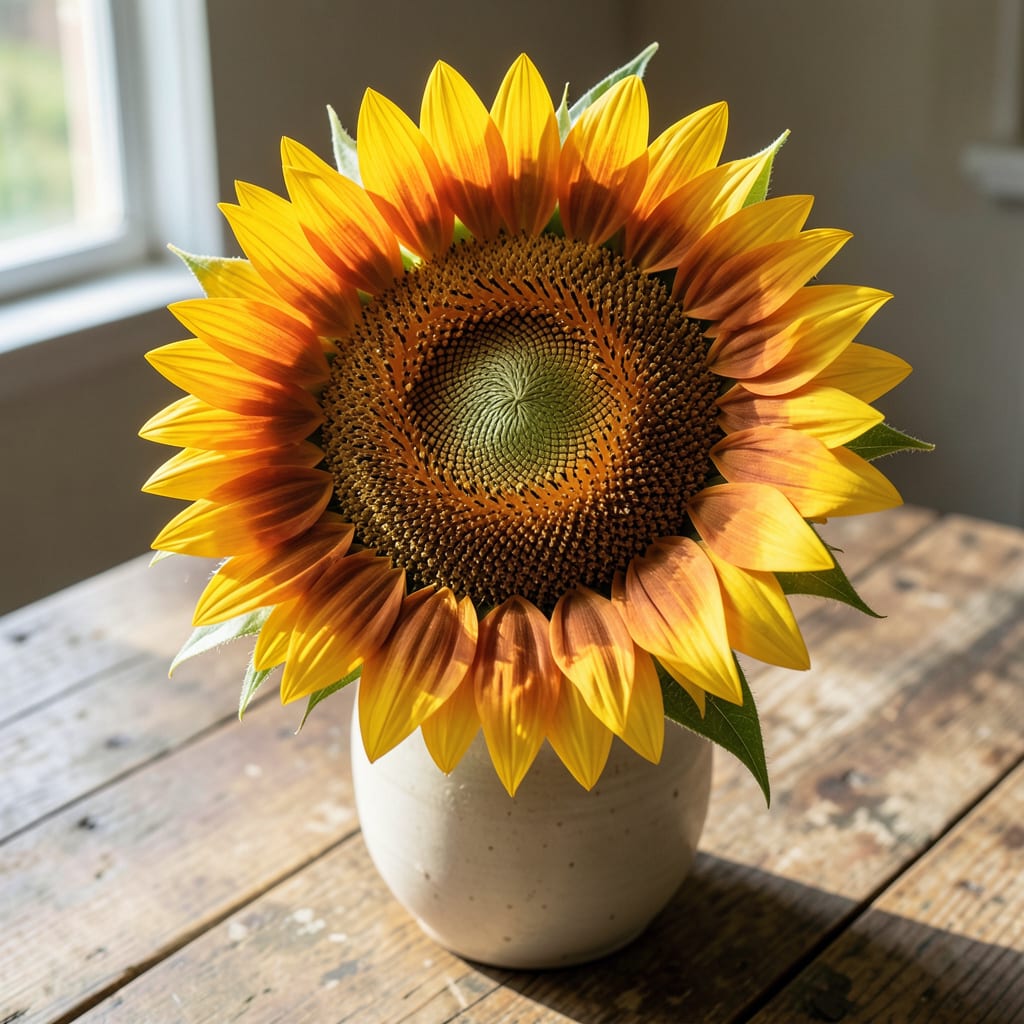
These sunflowers stop people in their tracks. The fiery oranges and bright yellows create a living color wheel that hummingbirds and bees can’t resist, and honestly, neither can I.
They’re tougher than they look—thriving in full sun with minimal fuss. Plant the seeds in spring, keep the soil moist for the first few weeks, and you’ll have towering blooms by mid-summer that keep the pollinators buzzing until frost.
📚 In This Guide
Here’s the method I use to get vibrant blooms that bees and butterflies can’t resist.
Select a spot with full sun—at least 6-8 hours of direct sunlight daily. Sunflowers thrive in well-draining soil, so avoid low-lying areas where water pools. I like to test the soil by digging a small hole and filling it with water. If it drains within 1-2 hours, you’re good to go.
Loosen the soil to a depth of 12-18 inches with a garden fork or tiller. Mix in a 2-3 inch layer of compost to improve fertility. Sunflowers aren’t picky, but rich soil gives them the best start. Remove any weeds or debris that could compete with your plants for nutrients.
Sow seeds directly outdoors after the last frost when soil temperatures reach at least 55-60°F. Plant seeds 1 inch deep and space them 6-12 inches apart for dwarf varieties or 18-24 inches apart for taller types. I always plant a few extra seeds and thin later—germination isn’t always 100%.
Water the area gently but thoroughly after planting. You want the soil moist but not soggy. A light misting with a hose attachment works better than a heavy stream, which can displace the seeds. Mark the rows with stakes so you remember where you planted them.
Keep the soil evenly moist until the seeds germinate, which usually takes 7-14 days. Once sprouts appear, water deeply 1-2 times per week, allowing the top 1-2 inches of soil to dry out between waterings. Sunflowers are drought-tolerant once established, but consistent moisture early on prevents weak stems.
If birds or squirrels are a problem in your area, cover the planting area with netting or a light row cover until the seedlings are 3-4 inches tall. I’ve lost entire rows to hungry birds before, so this step isn’t optional if you have wildlife around. Remove the cover once plants are sturdy enough to fend for themselves.
For sunflowers taller than 3 feet, provide support with stakes or a trellis, especially in windy areas. Tie the stems loosely with soft garden twine or old pantyhose to avoid girdling the plant as it grows. I learned the hard way that a single storm can snap unsupported stems in half.
Once the plants reach 1-2 feet tall, you can reduce watering slightly to encourage deeper root growth. Watch for signs of stress like drooping leaves or wilting—these usually mean it’s time to water again. A layer of mulch around the base helps retain moisture and keeps weeds down.
To encourage more blooms, remove spent flowers by cutting the stem just below the flower head. This prevents the plant from putting energy into seed production and instead directs it toward new growth. For the boldest contrast, I like to plant orange and yellow varieties in alternating rows.
If you want to save seeds for next year or for feeding birds, leave a few flower heads on the plant until they mature fully. The back of the flower will turn brown, and the seeds will loosen easily when rubbed. Cut the heads off with 12-18 inches of stem and hang them upside down in a dry, well-ventilated area to finish drying.
Here are the key details that make all the difference in growing vibrant blooms.
Sunlight Essentials: Those 6-8 hours of daily direct sunlight aren’t just a suggestion—they’re critical for strong stems and bold colors. I learned this after trying a partially shaded spot where my sunflowers grew tall but flopped over, their colors muted. Full sun means full potential. Between us, don’t skimp on this step.
Soil Preparation: When testing drainage in Step 1, if water doesn’t disappear within 1-2 hours, amending with compost or sand can improve it. The 12-18 inch soil depth for loosening ensures roots have room to anchor, which is especially important for taller varieties that might otherwise topple.
Planting Depth and Spacing: The 1 inch planting depth is precise—too deep and seeds may rot, too shallow and they can dry out. For spacing, those 6-12 inches for dwarf varieties or 18-24 inches for taller types prevent competition while allowing air circulation to reduce disease risk.
Plant seeds in well-draining soil with full sun exposure. Water regularly but avoid overwatering. These sunflowers thrive in warm climates and typically bloom in 70-90 days.
Sow seeds in spring after the last frost, when soil temperatures reach at least 55°F. For a fall harvest, plant 2-3 months before the first frost.
Pair them with pollinator-friendly plants like lavender, bee balm, or cosmos. Avoid planting near potatoes or beans, as they can stunt sunflower growth.
Check for insufficient sunlight, over-fertilization (especially nitrogen-heavy), or poor soil drainage. Ensure they receive 6-8 hours of sun daily and adjust care as needed.
Yes! Choose dwarf varieties and use large pots (at least 12 inches deep) with good drainage. Ensure containers receive full sun and water consistently.
