
Beautiful Plants For Your Interior
Beautiful Plants For Your Interior
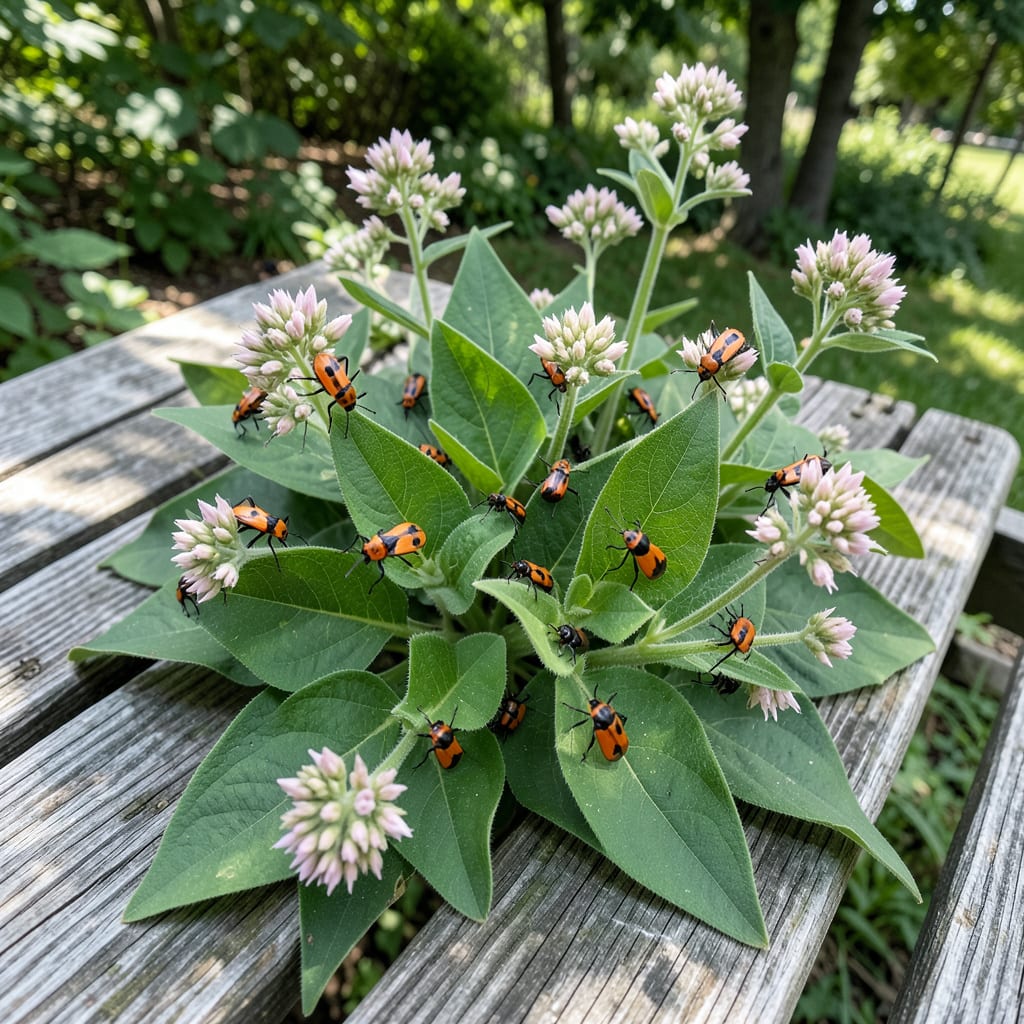
Spotted bright orange and black insects on your milkweed? Before you panic, take a closer look—these are likely monarch caterpillars, nature’s most famous pollinator helpers.
Milkweed bugs share the same colors but do minimal damage. I’ve learned to tell them apart: caterpillars transform into butterflies, while bugs just feed. No action needed for monarchs—just enjoy the show.
📚 In This Guide
Here’s how I accurately identify and address these common milkweed visitors without harming the plants.
Examine the insects closely with a magnifying glass. The most common orange and black milkweed visitors are milkweed bugs (Oncopeltus fasciatus) or large milkweed bugs (Lygaeus kalmii). Both have distinctive orange and black patterns, but the large milkweed bug has a more elongated body with a prominent black X on its back.
Check for clusters of bright orange eggs on the undersides of leaves—milkweed bugs lay these in neat rows. Nymphs appear similar to adults but smaller and without fully developed wings. This identification step prevents mistakenly targeting beneficial insects like monarch butterflies.
Count the visible insects on a single plant. A few milkweed bugs won’t cause significant harm, but 20+ per plant can stress milkweed by sucking sap. Look for wilting leaves, stunted growth, or yellowing foliage as signs of heavy infestation.
Inspect the seed pods carefully. Milkweed bugs often congregate here to feed on developing seeds, which can reduce next year’s plant propagation. I’ve found that damage is usually cosmetic unless populations explode, so don’t panic at the first sighting.
For light infestations, hand-pick adults and nymphs and drop them into a bucket of soapy water. This is most effective in early morning when the insects are slower and clustered. Wear gloves if you’re sensitive to the mild toxins milkweed bugs can secrete.
Focus on the undersides of leaves and seed pods where they hide. I use a small paintbrush to gently dislodge nymphs that cling tightly. This method protects monarch caterpillars, which often share the same plants and are vulnerable to broad-spectrum treatments.
For persistent problems, use neem oil or insecticidal soap in the early morning or late evening when bees and butterflies are less active. Spray directly on the insects until thoroughly coated, paying special attention to leaf undersides and seed pods.
Reapply every 4-7 days or after rain, as these products break down quickly. Avoid pyrethrin-based sprays—while organic, they’re non-selective and will kill monarch caterpillars. Always test a small area first to ensure the milkweed isn’t sensitive to the product.
Encourage natural predators by planting companion species like dill, fennel, or goldenrod nearby. These attract parasitic wasps and lady beetles that prey on milkweed bug eggs and nymphs.
At the end of the season, remove and destroy plant debris where eggs might overwinter. Rotate milkweed plantings if possible, as milkweed bugs often return to the same locations year after year. I’ve found that maintaining a diverse garden ecosystem naturally keeps their numbers in check.
These practical insights will help you manage milkweed pests more effectively and safely.
The Identification Factor: Use a magnifying glass as suggested in Step 1 to spot the subtle differences between milkweed bug species. The large milkweed bug’s black X pattern is easier to see with magnification, and this precision prevents accidentally harming monarchs.
Timing Matters: In Step 3, the early morning timing for manual removal is critical. Insects are less active and more clustered then, making your efforts far more efficient. I’ve found this single timing adjustment can cut removal time in half.
Targeted Application: For Step 4’s spray treatments, focus on leaf undersides where eggs and nymphs hide. The 4-7 day reapplication window accounts for the product’s breakdown rate, so sticking to this schedule maintains protection without overuse.
Prevention Strategy: Step 5’s companion planting works best with diversity. Planting dill, fennel, and goldenrod in different areas creates multiple predator habitats, which naturally balances the ecosystem against milkweed bugs.
Some, like milkweed beetles, can defoliate plants if present in large numbers. However, monarch caterpillars (also orange and black) are beneficial and should be protected. Identify the species first before taking action.
Most orange and black insects, such as milkweed bugs or beetles, are active from late spring through summer. Monarch caterpillars typically appear during milkweed’s peak growth (June to August).
Handpick non-monarch pests like milkweed beetles or bugs and drop them in soapy water. Avoid pesticides, as they can kill monarch larvae. Always check for caterpillars before treating!
Encourage natural predators like ladybugs or lacewings. Neem oil (applied carefully) can deter pests without harming monarchs. Plant companion flowers to attract beneficial insects.
