
Beautiful Plants For Your Interior
Beautiful Plants For Your Interior
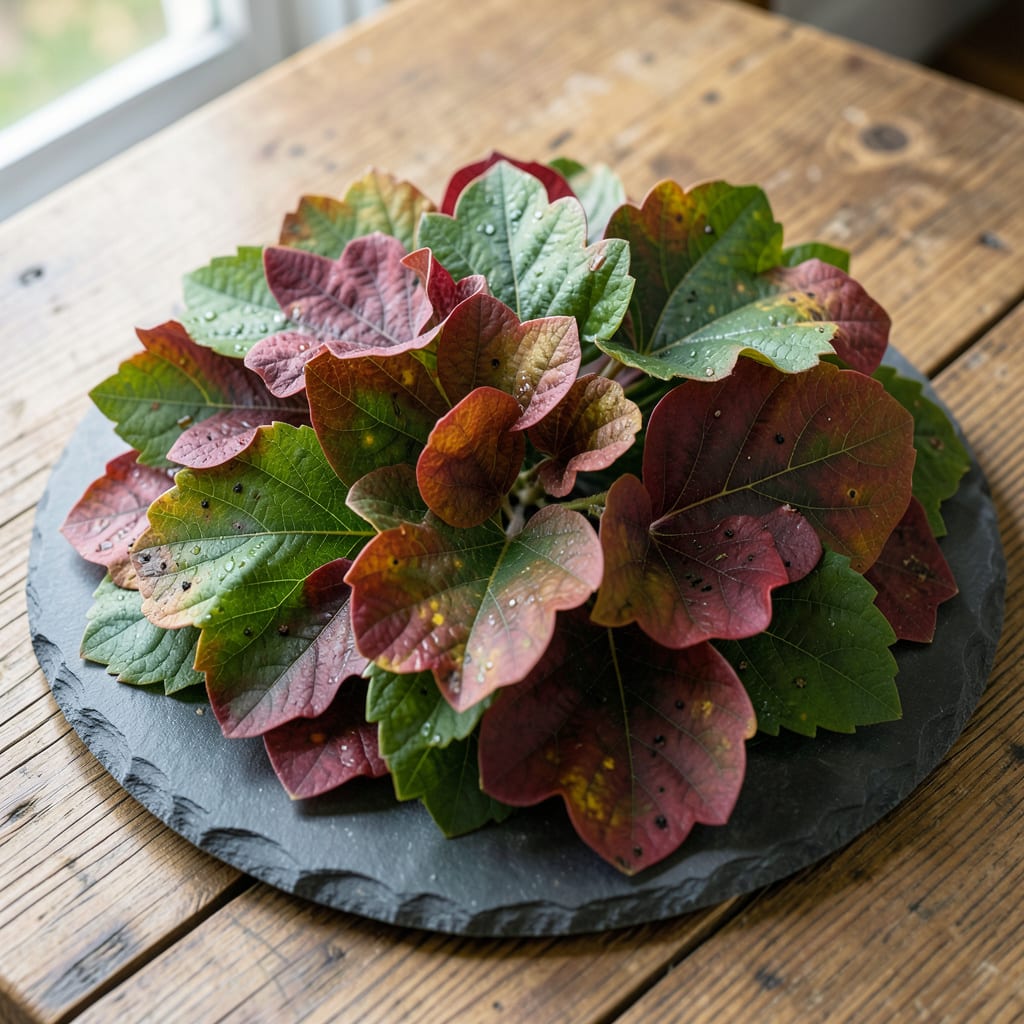
Oak leaf hydrangea leaves tell you exactly what your plant needs. I’ve learned to read the signs—yellowing edges mean too much sun, brown spots often signal a fungus, and drooping leaves usually scream for water.
Fix the issue fast and you’ll see vibrant green foliage return within 1-2 weeks. The key is catching problems early before they spread to the whole shrub.
📚 In This Guide
Here’s the method I use to diagnose and fix leaf issues before they spread.
Start by checking both sides of the leaves for any unusual colors or markings. Yellowing between veins often signals iron deficiency, while brown spots with yellow halos usually indicate fungal leaf spot. I carry a small magnifying glass to catch early signs—small black dots in the brown areas confirm fungal spores.
Look for patterns too. If discoloration appears uniformly across the plant, suspect nutrient deficiency or water stress. Patchy problems suggest localized issues like pest damage or splash from contaminated soil. Note which leaves show symptoms first—the oldest or newest growth tells you whether it’s a mobile or immobile nutrient issue.
Turn leaves over to inspect the undersides where most pests hide. Aphids leave sticky honeydew residue, while lace bugs create stippled, white-speckled patterns. Spider mites are nearly invisible but leave fine webbing and cause leaves to look dusty or bronze.
Gently tap a few leaves over a white sheet of paper. If tiny moving dots appear, you’ve found your culprits. I focus on new growth first since pests often target the most tender leaves. Yellowing that follows the vein pattern typically means scale insects are sucking plant juices from the vascular system.
Evaluate the plant’s location and recent weather. Oak leaf hydrangeas in full afternoon sun often develop scorched leaf margins, especially during heat waves above 90°F. In contrast, too much shade leads to sparse foliage and pale, undersized leaves.
Check soil moisture by digging down 3-4 inches. Dryness at this depth means the plant needs water, while soggy soil suggests poor drainage. I’ve found that leaves wilting in the afternoon but recovering by morning usually indicates heat stress rather than true water deficiency. Also note if the plant sits in a low spot where cold air or water pools.
For fungal issues, remove and destroy affected leaves immediately to prevent spread. Apply a baking soda solution (1 teaspoon per quart of water) or neem oil every 7-10 days until symptoms disappear. Always spray in the early morning so leaves dry before evening.
Pest problems often resolve with a strong blast of water from the hose to dislodge invaders. For severe infestations, use insecticidal soap or horticultural oil, following label rates precisely. Nutrient deficiencies typically require a soil test to confirm which amendment to add—I usually start with chelated iron for yellowing between veins.
Modify your care routine based on what you’ve learned. If fungal issues were the problem, improve air circulation by thinning nearby plants and watering at the base rather than overhead. Space plants so air moves freely between them.
For heat stress, add afternoon shade with a shade cloth or move potted specimens. Mulch with 2-3 inches of organic matter to maintain consistent soil moisture and temperature. I’ve found that consistent watering—1-2 inches per week during dry spells—prevents most stress-related leaf problems. Regular monitoring catches new issues early before they become serious.
Small details make the difference between early detection and a spreading problem.
Diagnosis Precision: In Step 1, use that magnifying glass to confirm fungal spores—those tiny black dots in brown spots are the giveaway. Without this close look, you might mistake fungal leaf spot for simple sun scorch or nutrient deficiency.
Timing Matters: For Step 4’s treatments, the 7-10 day interval between neem oil applications is critical. Spraying too often can harm beneficial insects, while skipping applications lets the fungus regain a foothold.
Environmental Clues: Step 3’s advice about wilting leaves recovering overnight is gold. That’s your cue it’s heat stress, not drought. Save your watering efforts for plants that stay wilted—they’re the ones truly needing hydration.
Prevention Strategy: In Step 5, the 2-3 inches of mulch isn’t just for moisture. It also keeps soil temperatures stable, which is especially important during those 90°F heat waves that trigger leaf scorch.
Brown leaves often signal drought stress or excessive sun exposure. Ensure consistent moisture (1–2 inches weekly) and provide afternoon shade in hot climates. Remove damaged leaves to redirect energy to healthy growth.
Expect stunning fall colors (red, purple, or bronze) in late September to October, depending on your climate. Cooler temperatures trigger the vibrancy, so northern regions see changes earlier than southern ones.
Yes! Leaves decompose well and add organic matter to compost. Chop them first to speed up breakdown. Avoid using diseased leaves, as they may spread pathogens to your compost pile.
White spots are typically fungal diseases like powdery mildew. Improve air circulation, avoid overhead watering, and apply a fungicide if severe. Prune affected leaves to prevent spreading.
Try Fothergilla or Itea for comparable texture and fall color. Both offer white spring blooms and low-maintenance care, though their growth habits differ slightly.
