
Beautiful Plants For Your Interior
Beautiful Plants For Your Interior
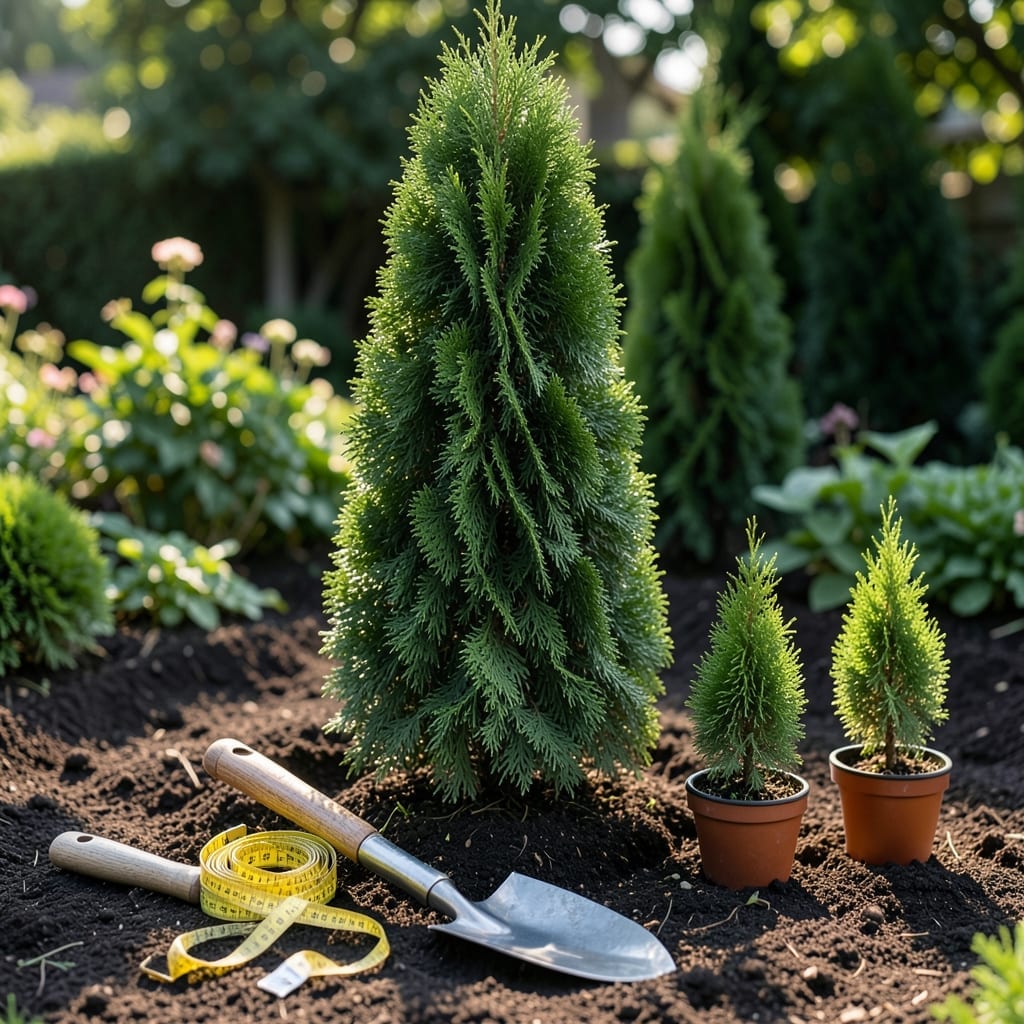
Proper North Pole Arborvitae spacing is the key to lush, healthy evergreens that thrive for decades without overcrowding or stunted growth.
I’ve seen too many gardeners struggle with sad, sparse hedges because they didn’t plan their layout properly. The 🌲 North Pole Arborvitae deserves better, and so do you.
Discover exactly how far apart to plant these beauties for full, vibrant growth that turns your landscape into the envy of the neighborhood.
Getting North Pole Arborvitae spacing right ensures your plants grow into a lush, healthy hedge without competing for resources. These evergreens typically reach 4-5 feet wide at maturity, so proper spacing is crucial.
I always recommend measuring twice and planting once. The ideal distance depends on your goal, whether it’s a privacy screen or standalone specimens. Let me walk you through the specifics.
| Planting Use | Spacing | Mature Width |
|---|---|---|
| Single Row Hedge | 2-3 feet apart | 4-5 feet |
| Double Row Hedge | 3-4 feet apart | 4-5 feet |
| Specimen Planting | 4-5 feet apart | 4-5 feet |
| Foundation Planting | 3-4 feet apart | 4-5 feet |
For a dense, seamless hedge, I space my North Pole Arborvitae 2-3 feet apart. This encourages the plants to fill in gaps naturally as they mature.
A double-row hedge needs slightly more room. I’d plant them 3-4 feet apart in staggered rows to create a thicker, fuller barrier without overcrowding.
If you’re using these as standalone specimens, give them 4-5 feet of space. This allows each plant to develop its natural shape without competition.
For foundation plantings, I stick with 3-4 feet apart. This balances aesthetics and growth space near structures.
Remember, these are mature size estimates. Young plants need less space initially, but proper spacing prevents future issues like disease spread or stunted growth.
In my experience, soil quality and sunlight exposure also influence spacing. In poorer soils, I’d lean toward the wider spacing to reduce competition for nutrients.
Finally, always consider your climate zone. North Pole Arborvitae thrive in USDA zones 3-7, but spacing may need adjustment based on local conditions.
With these guidelines, your North Pole Arborvitae will grow into a stunning, healthy landscape feature 🌲
Even experienced gardeners can mess up North Pole Arborvitae spacing. I’ve seen overcrowded hedges that struggle to thrive and under-spaced plants that look sparse and sad.
Let me share the most common mistakes and how to fix them before you start planting. Prevention is always easier than correction with these evergreens.
Avoid These Spacing Errors
Planting too close causes disease spread and stunted growth. Always measure for mature width, not current size.
One major mistake is planting too close for instant privacy. I get the temptation, but 2 feet apart is the minimum for hedges. Any closer and you’ll create a disease-prone thicket.
Another issue is ignoring soil quality. In poor or clay-heavy soil, I’d increase spacing by 1 foot to reduce root competition. These trees need room to establish strong root systems.
I’ve also seen gardeners forget about sunlight. North Pole Arborvitae need 6+ hours of sun daily. In shadier spots, they’ll grow slower, so you might need to adjust spacing accordingly.
Finally, don’t overlook your landscape goals. If you want a formal hedge, stick to tighter spacing. For a natural look, give them more room to spread. I always sketch my layout first.
With these tips, you’ll avoid the pitfalls that turn a dream hedge into a gardening headache 🌲