
Beautiful Plants For Your Interior
Beautiful Plants For Your Interior
Cherry trees deserve better than chemical warfare. After losing half a crop to aphids and brown rot one season, I switched to neem oil—and haven’t looked back. This natural solution tackles both pests and fungal issues without harming pollinators or your harvest. The trick is timing and dilution. Apply too strong, and you’ll burn leaves. […]
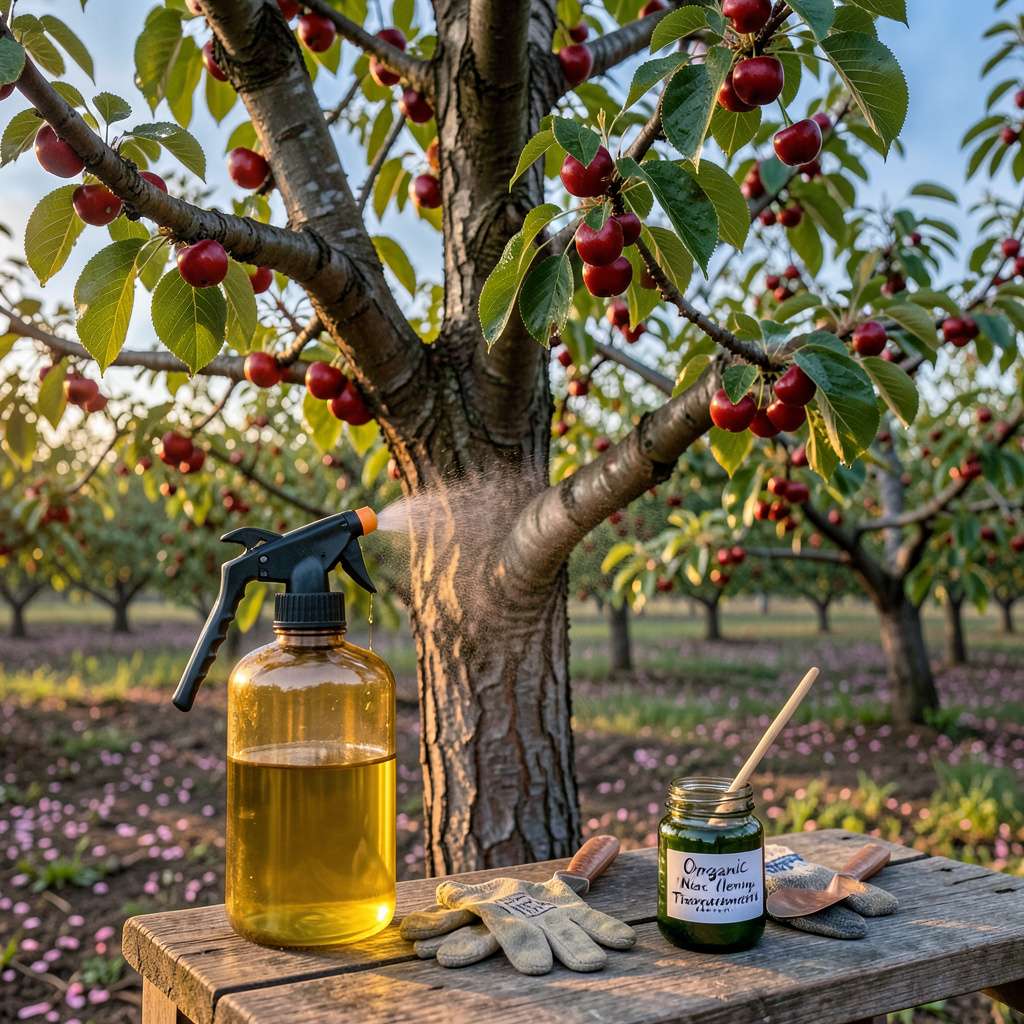
Cherry trees deserve better than chemical warfare. After losing half a crop to aphids and brown rot one season, I switched to neem oil—and haven’t looked back. This natural solution tackles both pests and fungal issues without harming pollinators or your harvest.
The trick is timing and dilution. Apply too strong, and you’ll burn leaves. Spray too late, and pests establish. My sweet cherries now stay clean through bloom and fruit set with just three well-timed applications. The oil disrupts pest life cycles while strengthening the tree’s natural defenses against powdery mildew and leaf spot.
You’ll notice fewer curled leaves within 48 hours of your first treatment. By midseason, you’ll have glossy foliage instead of sticky honeydew residue. The best part? Neem breaks down quickly in sunlight, leaving no residue on fruit.
Works equally well for dwarf patio trees and full-size orchards. Here’s exactly how to mix, apply, and time it for maximum protection without the guesswork.
📚 In This Guide
This method protects your trees naturally while avoiding common application mistakes that reduce effectiveness.
Apply neem oil in the early morning or late evening when temperatures are below 85°F. Direct sunlight combined with oil can burn leaves, and bees are less active during these cooler periods. I always check the weather forecast first—rain within 24 hours will wash away the treatment before it can work.
Spring applications should begin when buds first swell but before flowers open. For established trees, I repeat treatments every 7-14 days during active pest seasons. You’ll notice the oil has dried to a dull sheen when it’s fully absorbed—this usually takes 2-4 hours in moderate conditions.
Mix 1 tablespoon of cold-pressed neem oil with 1 teaspoon of mild liquid soap (as an emulsifier) per 1 gallon of warm water. The soap helps the oil disperse evenly in water—without it, the oil will separate and clog your sprayer. I use a clean bucket and stir vigorously until the mixture turns milky white with no oil slick on the surface.
Strain the solution through fine cheesecloth to remove any particles that could clog your sprayer nozzle. Test the mixture on a small leaf area first—if you see any browning or spotting within 24 hours, dilute the solution by half before proceeding with full treatment.
Use a pump sprayer to coat both the upper and lower leaf surfaces, stems, and trunk until the oil just begins to drip. Pests and fungal spores often hide on leaf undersides, so this complete coverage is critical. I work from the bottom up, starting with the trunk and moving outward to the branches.
Pay special attention to leaf axils (where leaves meet stems) and any visible cracks in the bark—these are prime hiding spots for pests. You’ll need about 1 gallon of solution per 10 feet of tree height for adequate coverage. Don’t spray in windy conditions, as drift reduces effectiveness and can harm nearby plants.
Check treated areas 24-48 hours after application. Healthy application shows as a thin, even film without any beading or pooling. If you see water spots or uneven coverage, you’ll need to reapply that section. I keep notes on which branches showed pest activity before treatment to track improvement.
Repeat applications every 7-14 days during pest outbreaks, or monthly as preventive maintenance. Always alternate neem oil with other organic treatments (like horticultural oil) to prevent pest resistance. After 3-4 applications, you should see reduced pest activity and healthier foliage—new growth will appear cleaner and more vibrant.
Rinse your sprayer immediately with warm, soapy water after use—neem oil residue hardens and can ruin equipment. I run clean water through the system for 30 seconds after washing to ensure all passages are clear. Disassemble the sprayer and let all parts air dry completely before storage.
Store remaining neem oil in its original container, tightly sealed, in a cool, dark place. Properly stored neem oil maintains potency for 1-2 years. Always shake the bottle well before each use, as the oil naturally separates over time. Label your storage container with the purchase date to track freshness.
After years of treating fruit trees, I’ve learned these practical details make all the difference in effectiveness.
Timing Secret: The 2-4 hour drying window mentioned in Step 1 is crucial—don’t apply if rain is forecast within this period. I once lost an entire treatment to an unexpected afternoon shower. Early morning applications work best as dew helps the solution adhere while temperatures stay below 85°F. Check your local microclimate, as urban areas often run warmer than surrounding regions.
Mixing Technique: When preparing your solution in Step 2, stir for at least 2 full minutes until completely emulsified. I use a clean paint stir stick for better control than a spoon. The milky white appearance should persist for at least 10 minutes before straining—if oil separates quickly, your soap isn’t strong enough. Dawn dish soap works reliably as an emulsifier.
Application Strategy: For the thorough coverage required in Step 3, I recommend working in sections from the trunk outward. Start at the base, spray upward to the lowest branches, then move systematically to the top. This prevents drips from upper branches washing away treatment from lower areas. Pay special attention to the leaf axils—these protected areas often harbor the first signs of pest infestations.
Equipment Maintenance: The 30-second rinse in Step 5 isn’t just suggestion—neem oil residue will permanently damage sprayer seals if left to dry. I run warm water through for a full minute, then disassemble and soak all parts in soapy water for 10 minutes. A bottle brush helps clean nozzle openings that clog easily with oil particles.
Apply neem oil every 7–14 days during the growing season (spring to early fall). For active pest infestations or fungal issues, spray every 5–7 days until resolved. Avoid spraying during extreme heat (above 90°F) or when trees are flowering to protect pollinators. Always follow up after rain, as it can wash away the oil.
Spray in the early morning or late evening to avoid leaf burn from sunlight. This also ensures bees and beneficial insects (active during the day) stay safe. If temperatures drop below 40°F, delay application—neem oil works best in mild weather (50–80°F).
Neem oil is low-toxicity but can harm beneficial insects if sprayed directly. To minimize risk, apply at dusk (when pollinators are less active) and avoid spraying flowers. Target only affected areas—neem’s systemic effects deter pests without wiping out helpful bugs like ladybugs or lacewings.
Avoid spraying neem oil within 1–2 weeks of harvest. While neem is organic, its residual taste can linger. Wash fruit thoroughly if accidental exposure occurs. For trees with ripe cherries, opt for physical barriers (netting) or kaolin clay as alternatives.
Brown or crispy leaves often signal phytotoxicity (burn) from:
Flush leaves with water, prune damaged areas, and reapply correctly diluted neem at dusk.
Neem oil is a game-changer for keeping your cherry trees thriving—naturally repelling pests, fighting fungal threats, and even boosting overall health! 🌿 With just a little consistency and the right application, you can protect your harvest without harsh chemicals.
Ready to give it a try? Start with a small test spray on a few leaves, then scale up as you see results. Your cherry trees (and future pies 🍒) will thank you!
