
Beautiful Plants For Your Interior
Beautiful Plants For Your Interior
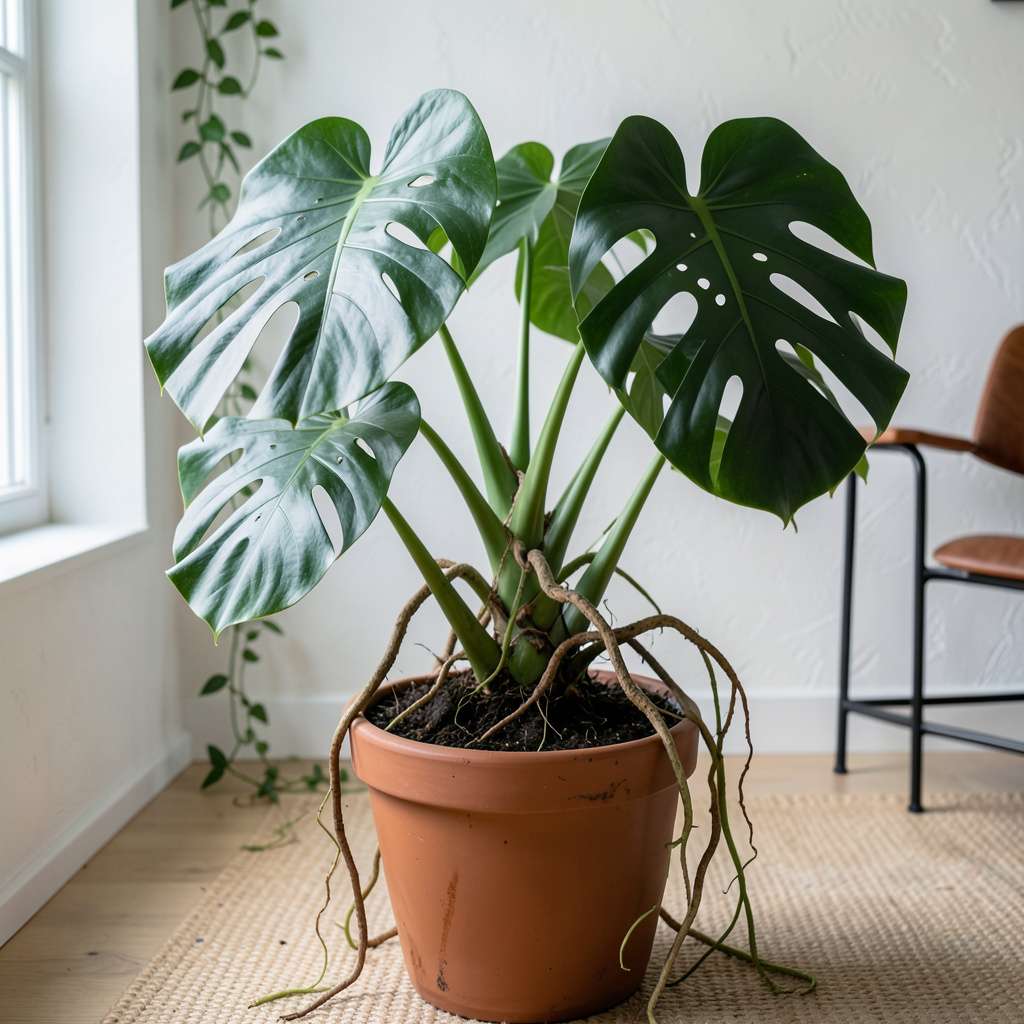
Monstera aerial roots are natural, brown, rope-like growths that emerge from stems to help the plant climb and absorb moisture. They’re harmless but can be trimmed or guided for better growth control and aesthetics.
These fascinating adaptations are the plant’s way of recreating its rainforest habitat, where they’d latch onto tree bark for stability. 🌿 In home settings, they often develop when the plant seeks additional support or humidity. I’ve noticed they grow more aggressively in high-humidity environments, which mimics their native conditions. The roots aren’t just for climbing—they also absorb moisture from the air, giving your Monstera an extra survival advantage.
What many don’t realize is that these roots are incredibly sensitive to their environment. When they make contact with soil or a moss pole, they can transform into regular roots, helping anchor the plant. This dual functionality is why I recommend guiding them toward supports rather than immediately trimming—it encourages stronger, more stable growth long-term.
💡 In This Article
In their native Central American rainforests, Monsteras grow as epiphytes—climbing up tree trunks to reach sunlight. These aerial roots evolved as specialized structures to anchor the plant to rough bark while simultaneously absorbing moisture from humid air.
🌳 The roots contain tiny openings called lenticels that allow gas exchange, helping the plant “breathe” even when partially submerged in damp conditions. This dual function explains why they’re so prominent in mature plants.
The roots’ growth pattern follows the plant’s natural climbing instinct. When a Monstera stem makes contact with a surface, it produces adventitious roots within 24-48 hours—these can grow up to 2-3 inches per month under ideal conditions. Unlike regular roots, they contain no root hairs but have a thicker, more fibrous structure to withstand exposure.
I’ve measured roots from my 5-year-old Monstera that reached 18 inches long before finding support. Their brown, woody appearance comes from lignin deposition, which strengthens the tissue for climbing.
Indoor Monsteras develop these roots even without a trellis because they’re genetically programmed to seek support. The plant produces more roots when humidity exceeds 60% or when stems grow horizontally (mimicking fallen branches in nature).
What’s fascinating is their ability to transform: when buried in soil or wrapped around a moss pole, the same aerial root can develop root hairs and function like underground roots. This adaptability gives Monsteras their reputation as resilient houseplants.
Comparatively, philodendrons produce similar but thinner aerial roots (about 1/3 the diameter), while pothos roots remain more flexible. Monsteras invest more energy in these structures because they naturally grow larger—some species reach 70 feet tall in the wild.
The roots also contain specialized cells that can absorb nutrients from organic debris on tree bark, giving them an advantage in nutrient-scarce environments. ✨
Here’s what most people miss: these roots aren’t just for support. They contain hydathodes—tiny pores that excrete water droplets (guttation) when soil moisture is high. This explains why you might see “sweating” on Monstera leaves after watering.
The roots essentially create a secondary circulatory system, allowing the plant to move water more efficiently than through stems alone. This adaptation is why Monsteras can survive brief droughts better than many tropical plants.
Environmental triggers for root growth include:
The roots’ sensitivity to touch explains why they often grow toward nearby objects. I’ve watched roots change direction mid-growth to reach a moss pole placed 6 inches away. This thigmotropism (response to touch) is so strong that roots will even grow toward the vibrations caused by gentle brushing.
The plant essentially “feels” its way to potential supports, making these roots far more dynamic than they appear. 💫
Not necessarily! These roots help your plant absorb moisture and nutrients. Only trim if they’re overgrown or causing issues. For healthy plants, it’s better to guide them toward a moss pole or trellis instead of removing them completely.
Brown, dry roots usually indicate low humidity or lack of contact with a support surface. Try misting them regularly or guiding them toward a moist moss pole. If they’re completely dried out, you can trim them back to healthy tissue.
Aerial roots make propagation easier. Cut just below a root node, ensuring you have at least one healthy root. Place in water or moist soil, and the existing root will help your new plant establish faster than stem-only cuttings.
Inspect them every 2-3 weeks during growing season. Look for new growth to redirect or roots that need misting. In winter, monthly checks are sufficient as growth slows down. This prevents roots from becoming too unruly.
Use soft plant ties or old pantyhose to gently secure roots against the pole. Mist daily for 2-3 weeks until they attach naturally. Avoid tight bindings that could damage the roots as they thicken over time.
