
Beautiful Plants For Your Interior
Beautiful Plants For Your Interior
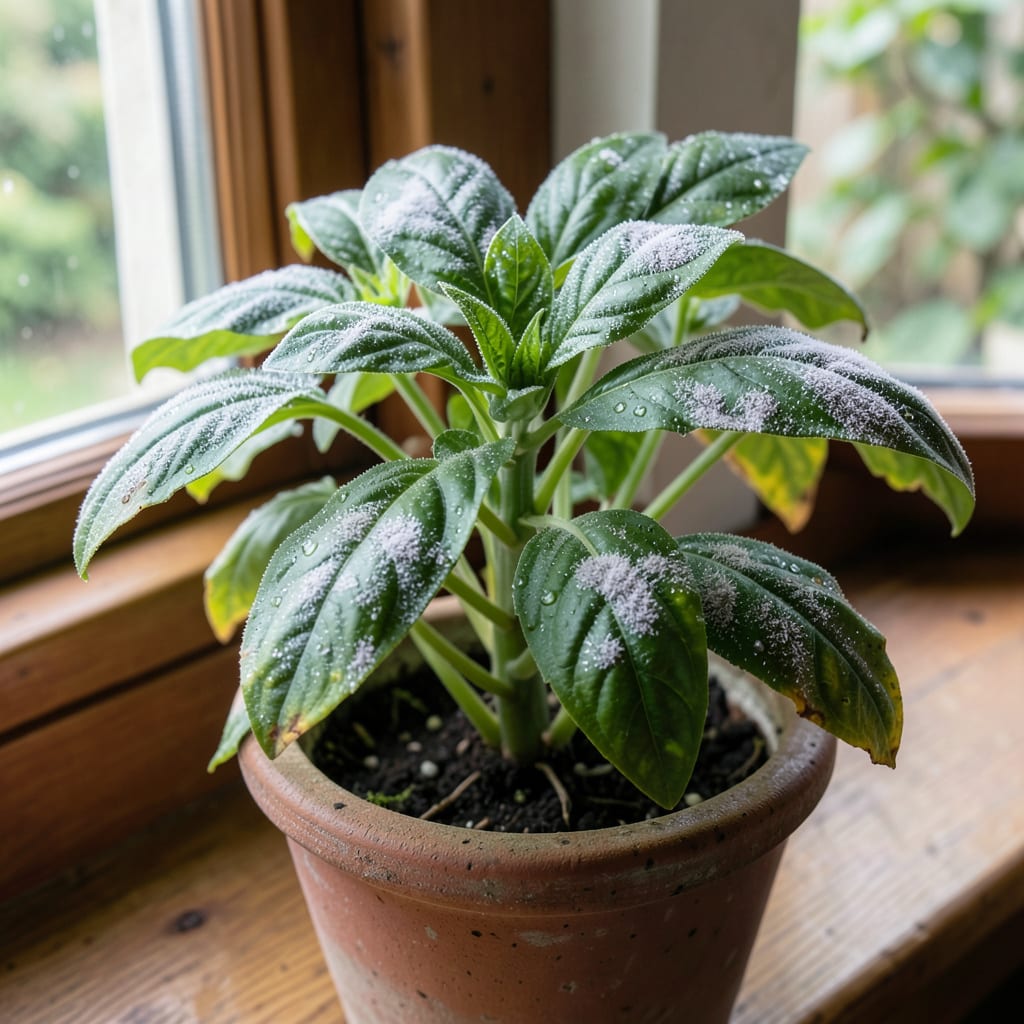
White fuzz on your basil leaves means trouble. I’ve battled this mold more times than I care to admit, and the key is acting fast before it spreads to the whole plant.
The culprit is usually powdery mildew, which loves basil’s tender leaves and thrives in damp, crowded conditions. Left unchecked, it turns those fragrant green leaves into a sad, moldy mess in just days.
You can save your plant with a few household items and a change in care routine. The solution is simpler than you think—no fancy chemicals required.
Better yet, I’ll show you how to prevent it from coming back next season. Your basil will stay lush and productive all summer long.
Mold on basil plants is typically the result of environmental conditions and cultural practices that encourage fungal growth. Below are the most common causes, explained in detail.
High humidity and excessive watering create a damp environment where mold spores thrive. Basil leaves are particularly susceptible when water sits on their surfaces for extended periods. Overhead watering can exacerbate this by keeping foliage wet, especially in poorly ventilated areas.
Stagnant air traps moisture around the plant, promoting fungal development. Crowded planting or placing basil in a corner with little airflow can limit ventilation, making it easier for mold to take hold. Proper spacing and occasional pruning can help improve air movement.
Dense foliage blocks sunlight and air from reaching inner leaves, creating a microclimate that favors mold. Regularly thinning out leaves ensures better airflow and reduces the risk of fungal infections.
Mold spores can linger in soil or on gardening tools, spreading to healthy plants. Using sterile potting mix and cleaning tools with a bleach solution can prevent contamination.
Basil thrives in full sun, and insufficient light weakens the plant, making it more vulnerable to mold. Ensure your basil receives at least 6–8 hours of sunlight daily to keep it strong and resistant.
Mold on your basil plant is unsightly and harmful, but it’s fixable with the right approach. Here’s how to tackle each type of mold and prevent it from coming back.
If you spot a white, powdery coating on leaves, act fast. Prune affected leaves with clean scissors and discard them (do not compost). Then, spray the plant with a mix of 1 teaspoon baking soda + 1 quart water + a drop of dish soap. Repeat weekly. Prevention tip: 💡 Space plants apart for better airflow and water at the base to keep foliage dry.
Dark, fuzzy mold often thrives in damp conditions. Isolate the plant immediately to avoid spreading spores. Remove infected leaves and apply a copper-based fungicide or a diluted neem oil solution (1 tablespoon neem oil + 1 gallon water). Prevention tip: ✨ Avoid overwatering—let the top inch of soil dry out between waterings.
Slimy patches usually mean excess moisture. Cut back on watering and ensure the pot has drainage holes. Move the plant to a sunnier spot (6+ hours of light daily) to dry out. Prevention tip: 🌡️ Use a well-draining potting mix with perlite to prevent waterlogging.
With these steps, your basil will bounce back—mold-free and thriving! 🌿
Yes, if you act quickly. Remove all affected leaves and treat with a baking soda solution or neem oil. Isolate the plant to prevent spreading.
Water at the base in the morning, so leaves dry before nightfall. Use well-draining soil and avoid overhead watering.
Check for white, gray, or black spots on leaves or stems. If it spreads despite treatment, discard the plant to protect others.
A diluted vinegar solution can help, but it may also harm leaves. Stick to baking soda or neem oil for safer results.
