
Beautiful Plants For Your Interior
Beautiful Plants For Your Interior
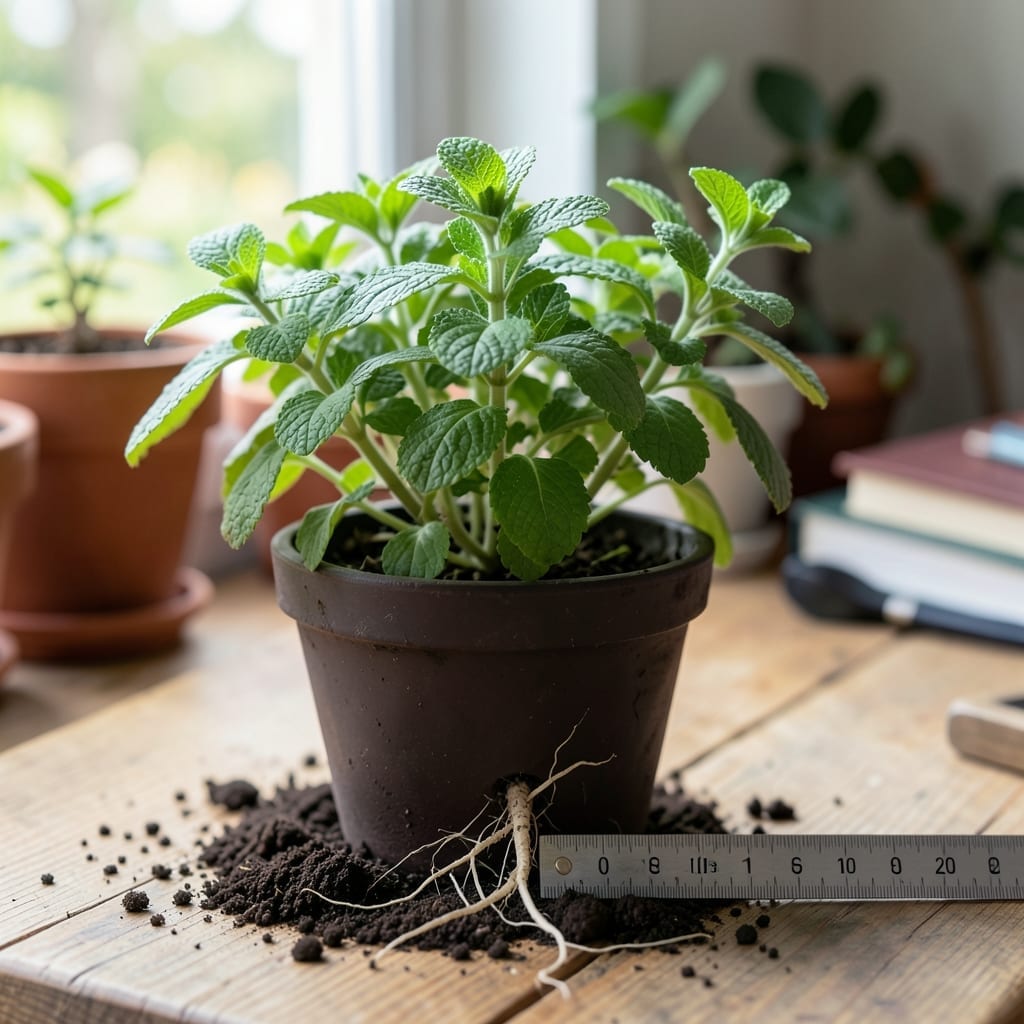
That fresh 🌿 mint flavor in your tea or mojito might be hiding a garden takeover in the making. What starts as a small herb can quickly spread its roots far and wide if you’re not careful.
I learned this the hard way when my modest mint patch began appearing 10 feet from where I originally planted it. The roots were the culprits, traveling much farther than I ever expected.
Understanding how mint roots grow is the key to keeping this aromatic herb in check. Whether you’re planting in the ground or in containers, this knowledge will save you from future headaches.
Let me share what I’ve discovered about mint’s root system and how to manage its aggressive nature while still enjoying its many benefits.
Mint’s root system is notoriously aggressive, capable of spreading far beyond where you plant it. The depth of mint roots typically ranges from 12 to 24 inches, but their horizontal spread is what causes problems.
In ideal conditions, mint roots can extend 3 to 4 feet outward in a single growing season. This rapid expansion happens because mint spreads via underground runners, or stolons, which produce new plants at nodes.
| Requirement | Specification |
|---|---|
| Root Depth | 12-24 inches |
| Horizontal Spread | 3-4 feet per year |
| Soil Preference | Moist, well-draining |
| Growth Pattern | Underground stolons |
I’ve seen mint overrun entire garden beds when left unchecked. The roots are shallow but extremely invasive, sending up new shoots wherever they travel. This makes mint ideal for containers if you want to avoid a garden takeover.
Soil type plays a role in how far mint roots spread. In loose, sandy soil, roots travel more easily than in heavy clay. Regular watering also encourages root growth, so be mindful of your irrigation habits.
Different mint varieties exhibit slightly different root behaviors. Peppermint tends to be more aggressive, while spearmint may spread a bit more slowly. However, all mints have the potential to become invasive if not managed.
If you’re planting mint directly in the ground, consider installing root barriers at least 18 inches deep to contain the spread. This is a simple but effective way to enjoy mint without it taking over your entire yard.
I always recommend container gardening for mint, especially for beginners. A pot with drainage holes and a depth of at least 12 inches will give roots enough room to grow while keeping them contained.
Remember that mint’s aggressive nature isn’t all bad. This hardiness makes it drought-tolerant once established and able to thrive in a variety of conditions. With proper management, you can have a lush mint patch without the headache of it spreading where it’s not wanted. 🌱
Monitoring your mint plants regularly is key. If you notice new shoots popping up far from the original plant, it’s a sign the roots are on the move. Early intervention can save you from a much bigger problem later. ✂️
If you’ve ever planted mint, you know its roots don’t stay put. Without control, they’ll spread aggressively, popping up far from the original plant. I’ve seen mint take over entire garden beds in just one season.
Containing mint starts with understanding its roots. These runners travel horizontally and vertically, making it tough to eradicate once established. The good news? There are proven ways to keep it in check.
5 Ways to Control Mint Roots
I recommend starting with container gardening for mint. Even buried pots with drainage holes work well. This keeps roots contained while allowing the plant to thrive.
For in-ground planting, root barriers are a game-changer. Use metal or plastic edging sunk at least 12 inches deep to block horizontal spread. This is a simple but highly effective method.
Regular root pruning is another key strategy. Every few months, dig around the plant and trim back any runners. This keeps the mint in check while promoting healthier growth.
Finally, strategic placement matters. Plant mint in an area where its spread won’t interfere with other plants. A dedicated herb bed or a corner of the garden works perfectly. 🌿