
Beautiful Plants For Your Interior
Beautiful Plants For Your Interior
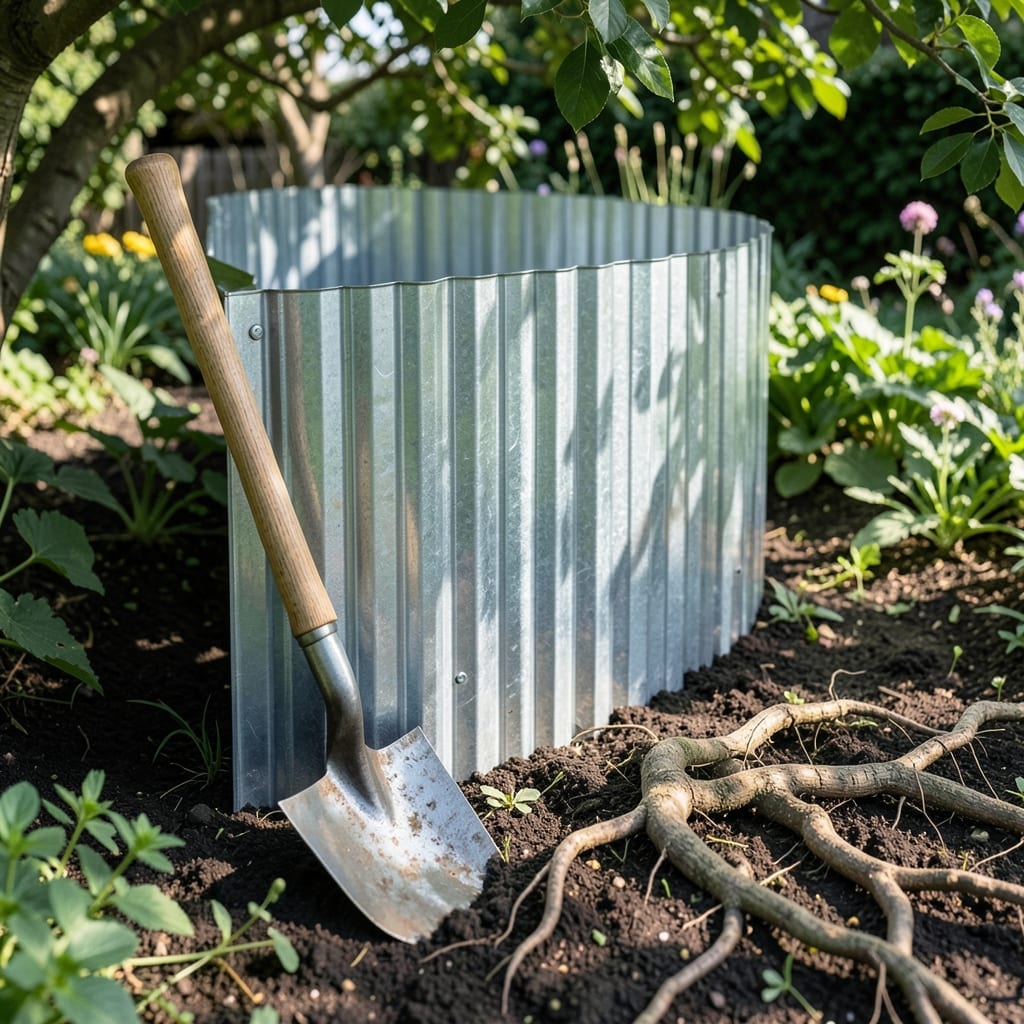
Bamboo roots ruined my neighbor’s carefully planned flower beds last summer. Metal root barriers changed everything—simple sheets of galvanized steel buried vertically stop invasive roots cold without chemicals.
They protect patios, sidewalks, and garden beds for 20+ years with minimal maintenance. Installation takes an afternoon with basic tools, and the barrier works immediately to direct roots downward where they belong.
📚 In This Guide
This method ensures long-term protection without harming your garden or nearby trees.
Start by marking the exact perimeter where you need to contain roots. I use a garden hose to outline the area—it’s flexible and lets me adjust the shape before committing. The barrier should extend 2-3 feet beyond the area you want to protect for maximum effectiveness.
Dig a trench along your marked line, making it 12-18 inches deep and 6-8 inches wide. The depth is critical; roots can dive surprisingly deep. Use a flat shovel to keep the sides as vertical as possible. If you hit large roots during digging, cut them cleanly with pruners rather than tearing them.
Place the metal barrier into the trench, ensuring it stands vertically. I prefer galvanized steel or aluminum because they resist rust and last for decades. The barrier should rise 2-3 inches above the soil line to prevent roots from growing over the top.
If your barrier comes in panels, overlap the edges by at least 6 inches and secure them with metal screws or clips. This prevents roots from sneaking through gaps. For extra stability, I sometimes backfill a few inches of soil behind the barrier as I go to hold it in place temporarily.
Fill the trench in 3-4 inch layers, tamping down each layer firmly with the back of your shovel or a hand tamper. Compacted soil prevents settling, which could create gaps at the top of the barrier. Avoid large rocks or clumps in the backfill—they can create air pockets that roots exploit.
As you near the top, slope the soil slightly away from the barrier to encourage water drainage. Standing water against the metal can accelerate corrosion over time, even with galvanized materials.
After installation, check the barrier every 6 months for the first two years. Look for roots growing over the top or through any gaps. If you spot any, trim them immediately and consider extending the barrier height if it’s a persistent issue.
I’ve found that mulching heavily on the side you’re protecting helps discourage root growth toward the barrier. Over time, the roots will naturally redirect away from the obstruction, but vigilance in the early years is key.
Here’s what I’ve learned from years of installing barriers that actually work.
Depth Precision: That 12-18 inch depth in Step 1 isn’t arbitrary—roots from mature trees can extend down 3-4 feet. If you skimp on depth, aggressive roots will simply dive underneath. Use a measuring stick to verify depth as you dig.
Vertical Alignment: In Step 2, ensure the barrier stands perfectly vertical. Even a slight lean creates a gap at the bottom where roots can slip through. I use a level against the barrier as I position it to guarantee a straight installation.
Compaction Technique: When backfilling in Step 3, those 3-4 inch layers must be tamped firmly—this isn’t just filling dirt, it’s creating a solid barrier. Use the flat side of your shovel or a hand tamper, and don’t rush. Air pockets are root highways.
Long-Term Vigilance: The 6-month checks in Step 4 are critical during the first two years. I’ve seen barriers fail because homeowners assumed “out of sight, out of mind” applied. Roots test boundaries constantly—early detection prevents costly repairs.
Metal root barriers, typically made of galvanized steel or aluminum, can last 20-50 years depending on soil conditions and material thickness. Thicker gauges resist corrosion better, making them ideal for long-term use. Regular inspections help extend their lifespan.
Yes! DIY installation is possible with basic tools. Dig a trench along the barrier line, insert the metal sheets vertically, and secure them tightly. For deep or complex setups, hiring a professional ensures proper alignment and effectiveness.
Alternatives include plastic HDPE barriers, fabric root guards, or chemical treatments. Plastic is lighter but less durable, while fabrics may degrade over time. Chemical options require reapplication and aren’t eco-friendly.
If roots breach the barrier, check for gaps, improper depth, or shallow installation. Ensure the barrier extends at least 18-24 inches deep and is free of damage. Overlapping sheets can prevent gaps.
No, they’re designed to redirect roots without harming plants. However, improper installation (e.g., too close to the trunk) can stress trees. Leave ample space for healthy root growth.