
Beautiful Plants For Your Interior
Beautiful Plants For Your Interior
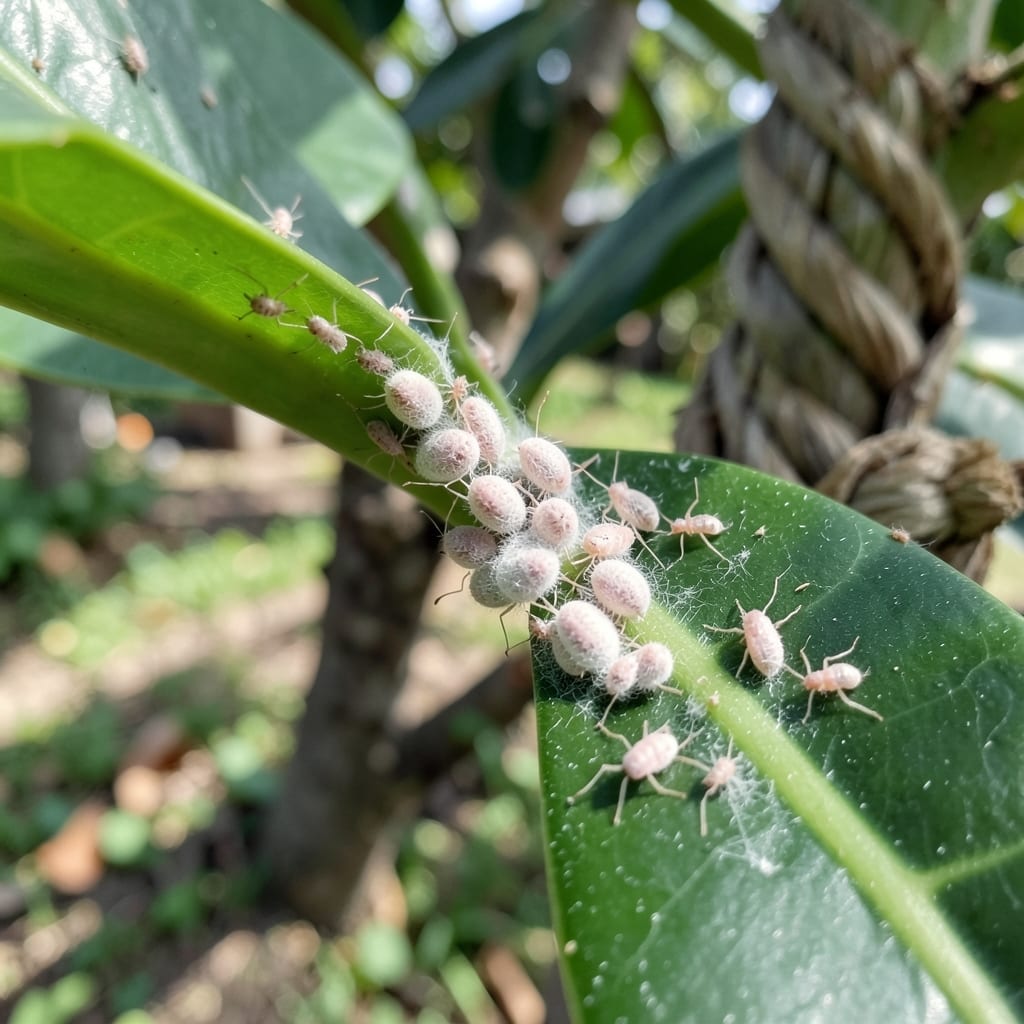
White cottony clusters on your money tree leaves mean mealybugs have moved in. I’ve battled these pests before, and the key is acting fast before they spread to every stem.
These bugs drain plant sap, leaving leaves yellowed and stunted. The good news? A simple soapy water spray or rubbing alcohol on a cotton swab knocks them out without harsh chemicals.
After treatment, isolate your plant for a week and check daily. New growth signals you’ve won the fight, and your money tree will bounce back healthier than before.
Prevention is easier than cure—keep leaves clean and inspect new plants before bringing them near. This keeps your foliage thriving long-term.
Mealybugs thrive on money trees (Pachira aquatica) due to a combination of environmental, cultural, and biological factors. Understanding these triggers helps prevent infestations and keeps your plant healthy. Below are the most common causes, explained scientifically.
Mealybugs flourish in stable, moderate humidity (40–60%) but can explode in populations when conditions swing to extremes. Low humidity stresses the money tree, weakening its natural defenses (like cuticle thickness and sap flow), making it easier for mealybugs to pierce and feed. Conversely, high humidity (above 70%) accelerates their reproductive cycle, as these pests thrive in damp, poorly ventilated spaces.
Stagnant air traps moisture around the foliage, creating a microclimate ideal for mealybugs. Money trees in crowded spaces or with dense canopies often suffer from limited airflow, which allows pests to settle undisturbed. Regularly prune overgrowth and ensure gentle air movement (e.g., a ceiling fan on low) to disrupt their lifecycle.
Inconsistent watering weakens the money tree’s resilience. Overwatering leads to root rot, stressing the plant and reducing its ability to produce defensive compounds. Meanwhile, underwatering causes dehydration, making the sap more concentrated in sugars—a prime food source for mealybugs. Aim for moist but well-draining soil to maintain plant vigor.
Mealybugs often hitchhike on new plants or contaminated tools. Without quarantine protocols (isolating new additions for 2–3 weeks) or regular inspections, they can spread unnoticed. Check the undersides of leaves, stem joints, and soil surface weekly, as these are their favorite hiding spots.
A money tree with excess nitrogen (from over-fertilizing) produces soft, succulent growth that mealybugs adore. Conversely, deficiencies in potassium or silicon weaken cell walls, making it easier for pests to penetrate. Use a balanced, slow-release fertilizer (e.g., 10-10-10) and avoid overfeeding.
Tackling mealybugs on your money tree starts with quick, targeted action. Below are practical fixes for common causes, paired with prevention tips to keep your plant thriving. 🌿
If you spot a few mealybugs early, remove them by hand. Dip a cotton swab in rubbing alcohol (70% isopropyl) and gently dab each bug. This dissolves their protective waxy layer, killing them on contact. For clusters, use a soft toothbrush dipped in soapy water to dislodge them.
Prevention tip: Inspect your money tree weekly, especially under leaves and along stems, to catch pests before they spread. 💡
Mix 1 teaspoon of mild liquid soap (like Castile) with 1 liter of water and spray the entire plant, focusing on affected areas. The soap suffocates mealybugs without harming the tree. Repeat every 3–4 days until they’re gone.
Prevention tip: Avoid overwatering—mealybugs thrive in damp conditions. Let the top inch of soil dry out between waterings. 🌡️
Introduce beneficial insects like ladybugs or lacewings to your indoor garden. These predators feed on mealybugs and help prevent future outbreaks. Purchase them from garden centers and release them near your money tree.
Prevention tip: Encourage biodiversity by adding other houseplants that attract beneficial insects. ✨
Dilute 1 tablespoon of neem oil in 1 liter of water with a few drops of dish soap (as an emulsifier). Spray the mixture evenly over the plant, ensuring full coverage. Neem oil disrupts the mealybugs’ life cycle. Apply weekly until the issue resolves.
Prevention tip: Use neem oil as a monthly preventive spray to deter pests before they appear. 🎯
Consistency is key—combine these methods for the best results, and your money tree will bounce back with lush, healthy foliage!
Inspect your money tree weekly, focusing on leaf undersides and stem joints. Early detection prevents major outbreaks.
No, vinegar can harm plant tissues. Stick to mild soapy water or rubbing alcohol for safe, effective removal.
Yes! Isolate infested plants immediately. Mealybugs crawl or hitch rides on tools and hands.
With consistent treatment, most infestations clear in 2-4 weeks. Keep treating until you see no signs for 10 days.