
Beautiful Plants For Your Interior
Beautiful Plants For Your Interior
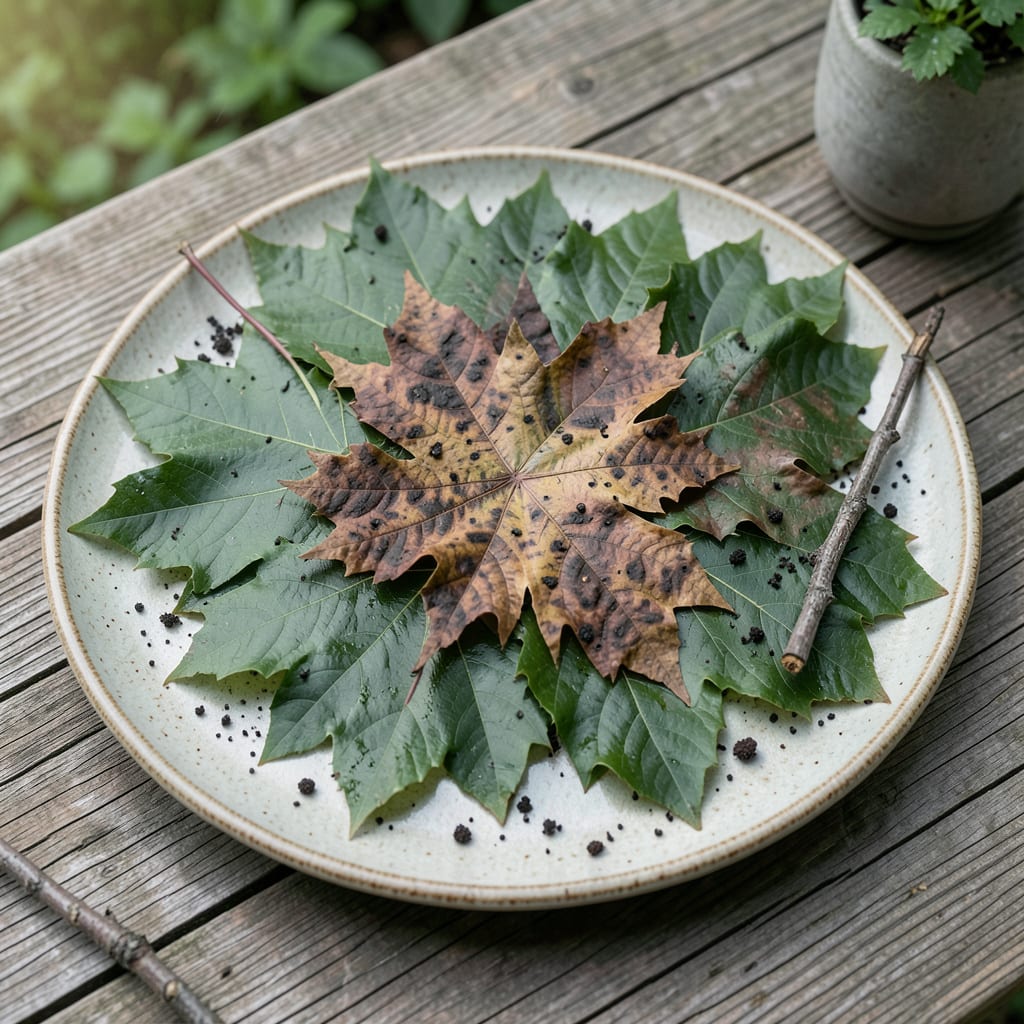
Those brown, irregular spots on your maple leaves aren’t just ugly—they’re anthracnose. I’ve watched this fungal disease turn vibrant spring foliage into a patchwork of dead tissue overnight.
It thrives in cool, wet spring weather, spreading through splashing water. What starts as small lesions along veins can merge, killing entire leaves and stunting new shoots if left unchecked.
Here’s the thing—you can stop it before it spreads. A simple cleanup of fallen leaves and proper pruning for airflow makes a huge difference. Copper fungicides work when applied at first leaf emergence.
Early action saves your tree’s health and keeps it looking its best through the season. Prevention beats treatment every time with this stubborn disease.
Anthracnose in maple trees is primarily caused by fungal pathogens, with Discula campestris and Colletotrichum spp. being the most common culprits. These fungi thrive under specific environmental conditions, leading to the characteristic leaf spots, twig dieback, and premature defoliation. Below are the key triggers behind this disease.
Prolonged periods of wet, humid weather create ideal conditions for fungal spores to germinate and infect maple trees. Rainy springs, in particular, promote spore dispersal, as water splashes carry the pathogens from infected debris to healthy foliage. Poor drainage or overhead irrigation can also contribute to excessive moisture on leaves, accelerating infection.
The fungi responsible for anthracnose overwinter in fallen leaves, twigs, and bark. If these infected materials are not removed, they serve as a continuous source of spores in the following growing season. Mulching or composting infected debris without proper heat treatment can further spread the disease.
Cool to moderate temperatures (50–65°F or 10–18°C) combined with high humidity are optimal for anthracnose development. Early spring, when new leaves are emerging, is a critical infection period because young, tender foliage is more susceptible to fungal penetration. Sudden temperature swings can also stress the tree, lowering its natural defenses.
Dense canopies or overcrowded planting restrict airflow, leading to prolonged leaf wetness—a key factor in anthracnose progression. Pruning to improve ventilation and spacing trees adequately can reduce humidity buildup and lower infection risks.
Some maple species, such as sugar maple (Acer saccharum) and red maple (Acer rubrum), are more genetically predisposed to anthracnose. Stressors like drought, nutrient deficiencies, or root damage can further weaken these trees, making them even more vulnerable to fungal attacks.
Anthracnose can be managed with a mix of cultural practices and targeted treatments. Here’s how to tackle it based on the cause:
Prune infected branches and thin out dense foliage to allow sunlight and air to circulate. Space trees properly during planting to reduce humidity buildup. Remove and destroy fallen leaves and debris, as they harbor spores.
Prevention tip: 💡 Rake and dispose of leaf litter in fall to minimize overwintering spores.
Avoid overhead watering, which splashes spores onto leaves. Use drip irrigation or water at the base of the tree early in the day so foliage dries quickly. Ensure soil drainage is good to prevent waterlogging.
Prevention tip: 🌧️ Water deeply but infrequently to keep foliage dry.
For persistent cases, use fungicides labeled for anthracnose, such as copper-based or chlorothalonil products. Apply in early spring before buds swell, and repeat every 7–14 days during wet weather as directed.
Prevention tip: ✨ Rotate fungicides to prevent resistance and follow label instructions carefully.
Strengthen your maple’s defenses with proper fertilization and mulching. A balanced, slow-release fertilizer in early spring supports vigorous growth. Mulch with organic matter to retain moisture and improve soil health.
Prevention tip: 🎯 Test soil pH and amend if needed—maples prefer slightly acidic to neutral soil (6.0–7.0).
Early signs are small, irregular brown or purplish spots along leaf veins. These expand quickly, often turning tan with dark borders as they merge. Check the undersides too—spots may appear water-soaked.
Yes! Remove fallen leaves promptly and prune for better airflow. Water at the base in the morning so foliage stays dry. These steps often reduce severity without fungicides.
Severely spotted leaves often drop within 2-3 weeks of infection. In wet springs, multiple waves of defoliation can occur, stressing the tree. Early intervention helps minimize this.
Mature, healthy maples often recover after dry weather returns. However, repeated infections weaken the tree over time. Spring prevention is key to long-term health.
