
Beautiful Plants For Your Interior
Beautiful Plants For Your Interior
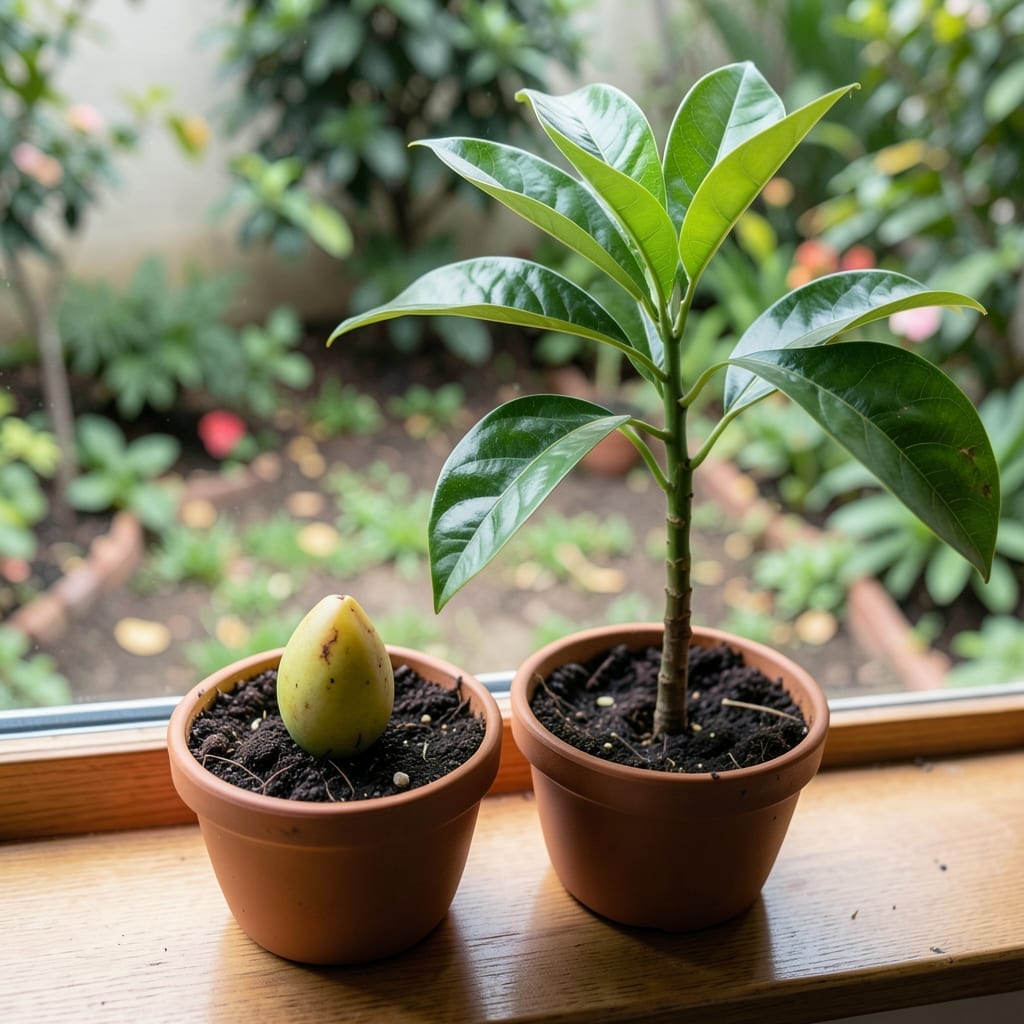
Planting a mango seed the right way can mean the difference between a thriving 🥭 tree and a failed sprout. The key? Knowing which side should face up in the soil.
It’s a common mistake to assume any orientation will do, but the mango seed has a distinct anatomy that affects germination. Getting this wrong can stunt growth or prevent sprouting entirely.
I’ll show you exactly how to identify the correct side and plant your seed for the best chances of success. Let’s get started.

When you first extract a mango seed from the fruit, you’ll notice it has a distinct shape. The seed is flat on one side and comes to a pointed tip on the other. This isn’t random—it’s nature’s way of telling you which end goes up.
The flat side is where the seed naturally rests in the fruit, and this should be the bottom side when planting. The pointed end is the top, where the sprout will emerge. But there’s one more clue to look for.
| Seed Feature | Appearance | Planting Position |
|---|---|---|
| Pointed End | Sharp, narrow tip | Faces DOWN |
| Flat Side | Wide, smooth surface | Faces UP |
| Hilum (Eye) | Small indentation or scar | Faces UP |
Look closely at the flat side of the seed. You’ll see a small, oval-shaped indentation called the hilum or “eye.” This is where the root emerges, so it should always face downward in the soil.
The pointed end is where the shoot will grow upward. Think of it like a tiny arrow pointing toward the sky. If you plant it upside down, the seedling will waste energy trying to reorient itself.
I’ve found that fresh seeds are easiest to identify. If the seed has dried out, the features might be less pronounced. In that case, look for the darkest spot—this is usually the hilum.
Another trick is to feel the seed. The hilum side often has a slightly rougher texture, while the pointed end is smoother. This tactile difference can help confirm which side is which.
Remember, the flat side with the hilum goes down, and the pointed end faces up. This orientation gives the root system the best chance to establish itself properly.
If you’re still unsure, try planting multiple seeds in different orientations. Nature will sort it out, but you’ll get faster, stronger growth when you get it right the first time.
This simple step can make all the difference in whether your mango seedling thrives or struggles.
Once you’ve identified the correct side, you’re ready to plant. The next step is preparing the soil and container for optimal germination 🌱
Now that you know the pointed end faces down and the flat side with the hilum goes up, let’s get that seed in the soil. I always start by selecting a well-draining potting mix to prevent rot.
Gently press the seed into the soil so the pointed tip is about 1 inch below the surface. The flat side should be just barely covered. This position lets the root emerge naturally while protecting the seedling.
After planting, I cover the pot with plastic wrap to create a mini greenhouse. This boosts humidity and speeds up germination. Just remove it once you see the first green shoot poking through.
Keep the soil consistently moist but never waterlogged. I check daily by sticking my finger 1 inch into the soil. If it feels dry, it’s time to water with a gentle spray.
In about 2-4 weeks, you should see a sprout. Once it reaches 6 inches tall, move it to bright, direct light. This is when your mango’s journey truly begins 🌱
Remember, the first few weeks are critical. Avoid moving the pot or disturbing the soil. Let the seedling establish its root system undisturbed for the best start possible.