
Beautiful Plants For Your Interior
Beautiful Plants For Your Interior
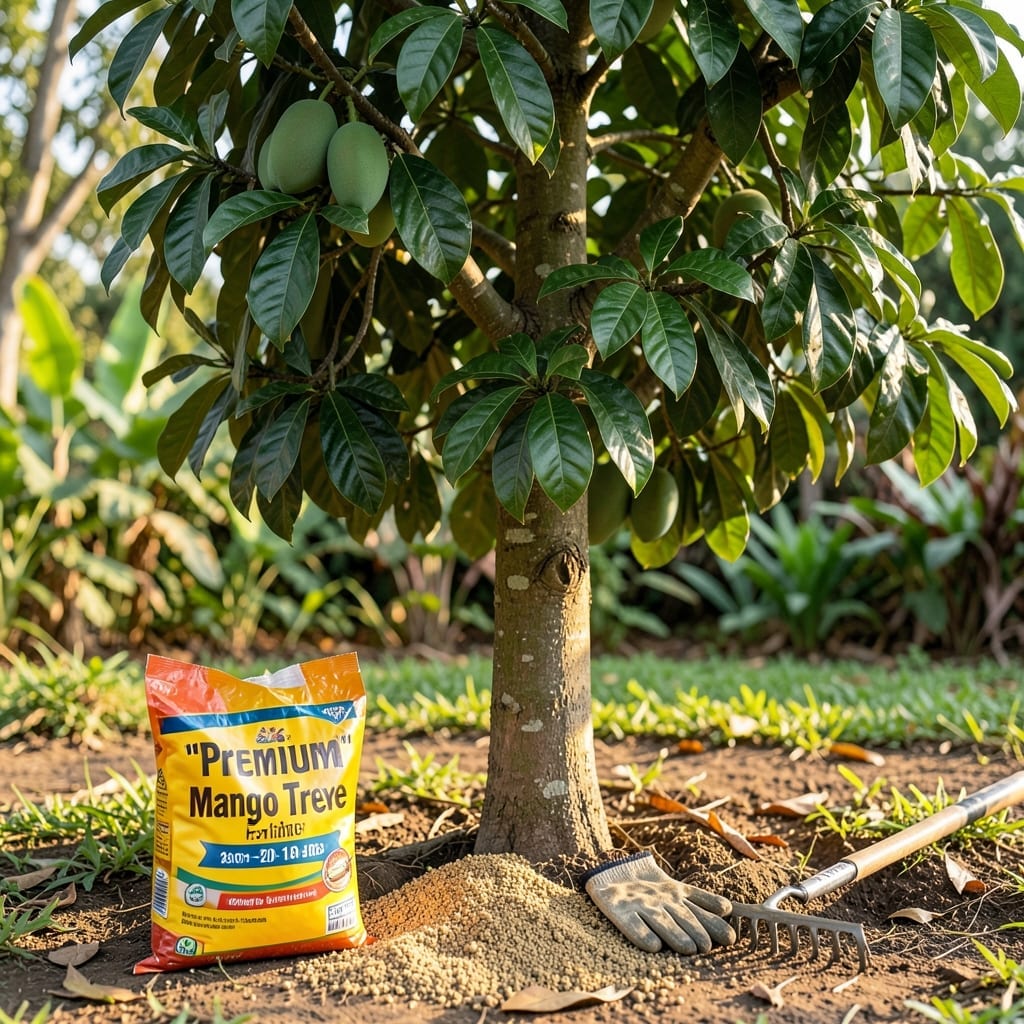
Growing mangoes in Florida’s unique tropical climate demands the right nutrient strategy. Without it, you risk a lackluster harvest instead of those sweet, juicy 🥭 we all love.
I’ve seen firsthand how a precise fertilizer approach transforms struggling trees into thriving ones. The difference lies in understanding Florida’s sandy soil and humid conditions.
What you feed your mango tree—and when—directly impacts its health and fruit production. Timing and composition are everything in zones 9a-11.
Let me walk you through how to select and apply fertilizers that will give your mango tree its best shot at a bumper crop.
Florida’s sandy soil and high humidity demand a specialized fertilizer approach for mango trees. I’ve found that the ideal N-P-K ratio is 8-3-9, with extra zinc, iron, and magnesium to combat common deficiencies in this region.
Organic options like compost or fish emulsion work well but may require more frequent applications. Synthetic fertilizers offer quick nutrient release, which can be beneficial during the active growing season. 🌳
| Fertilizer Type | Best For | Application Frequency |
|---|---|---|
| 8-3-9 Granular | Balanced growth & fruiting | Every 4-6 weeks |
| Organic Compost | Soil health improvement | Monthly |
| Fish Emulsion | Quick nutrient boost | Every 2-3 weeks |
| Micronutrient Spray | Zinc & iron deficiency | As needed |
For young mango trees, I recommend starting with 1-2 lbs of fertilizer per application. As trees mature, you can increase this to 3-5 lbs. Always water deeply after applying to prevent root burn and ensure even distribution. ☀️
Florida’s high rainfall can leach nutrients quickly, so slow-release fertilizers are particularly effective. These provide a steady nutrient supply over time, reducing the need for frequent applications.
Don’t overlook micronutrients like manganese and boron. These are often missing in Florida soils but are crucial for fruit development and tree health. A soil test can help identify specific deficiencies.
I’ve noticed that mango trees in South Florida often need more potassium to support fruiting. Look for fertilizers with a higher third number in the N-P-K ratio, especially during the flowering and fruiting stages. 🌱
For organic gardeners, banana peels (rich in potassium) and eggshells (calcium source) can be great supplemental amendments. However, these should complement, not replace, a complete fertilizer program.
Remember that over-fertilizing can be just as harmful as under-fertilizing. Follow package instructions carefully, and adjust based on tree response. Yellowing leaves or stunted growth may indicate a need to reassess your approach.
In my experience, the best time to fertilize is in early morning. This allows the tree to absorb nutrients before the heat of the day and reduces the risk of fertilizer burn. ✂️
Florida’s warm climate means mango trees need a tailored fertilizer schedule. I’ve found that spring feeding kickstarts growth, while summer light feeds prevent root burn in the heat.
In fall, a potassium-rich fertilizer prepares trees for fruiting, and winter is the time to skip feeding entirely as trees rest.
Spring (March-May): Use balanced 8-3-9 to promote new growth.
Summer (June-Aug): Light 4-6 week feeds to avoid stress.
Fall (Sept-Oct): Boost potassium for flower bud formation.
Winter (Nov-Feb): No fertilization during dormancy.
I always apply fertilizer in early morning to reduce evaporation and give roots time to absorb nutrients before the heat sets in.
For young trees, I start with 1-2 lbs of fertilizer per application, gradually increasing to 3-5 lbs for mature trees as they establish.
The sandy soil common in Florida drains quickly, so I split applications into smaller, frequent doses rather than one heavy feeding.
This approach keeps my mango trees thriving year-round in Florida’s unique conditions 🌳